November 9th
The nurse came through the door differently. Ten-fifteen on a Thursday evening, the ward settled into its overnight quiet. Sam came in holding a phone, and the way she was moving told you something before she handed it over.

The nurse came through the door differently. Ten-fifteen on a Thursday evening, the ward settled into its overnight quiet. Sam came in holding a phone, and the way she was moving told you something before she handed it over.

Tom Petty had it right, though not for the reasons most people assume. It isn’t patience—patience is something you can summon. The runway is short, the lift-off isn’t yours to control, and somewhere out there is a stranger whose story you will never fully know.

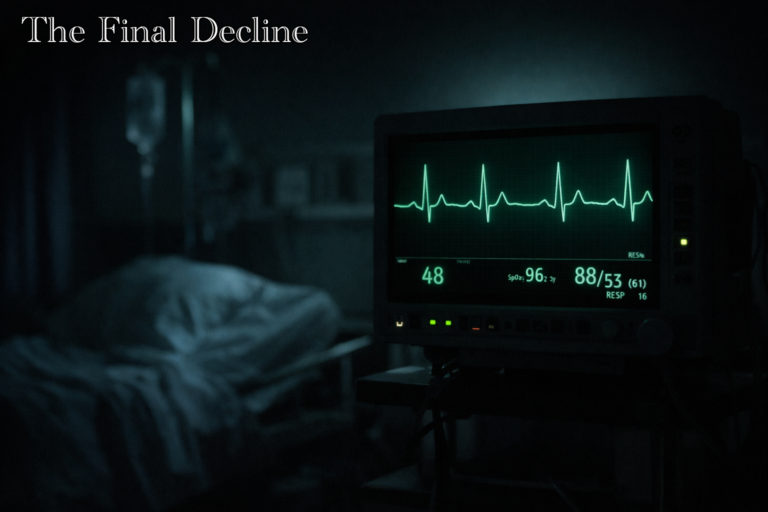
Lines in, lines out. The Impella running its quiet rhythm. The monitor glowing green behind my head. That’s what a support system looks like from the inside—not dramatic, not cinematic. It looks like logistics. It looks like someone already moving before you’ve asked them to.
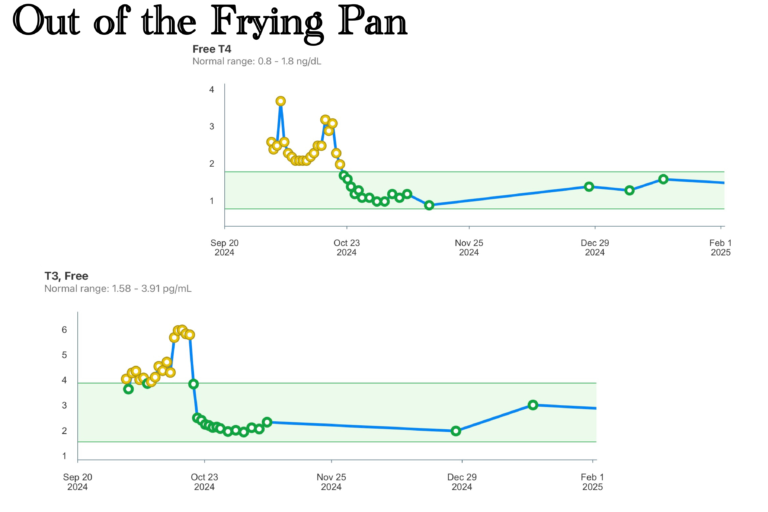
Listed on a Friday afternoon. Status 2, on an Impella, waiting. Three days of relative stability. Monday nearly killed me. By Thursday I’d walked four laps around the ward and eaten a real lunch and started to feel like a man who might survive long enough to get a heart. Then endocrine walked in.
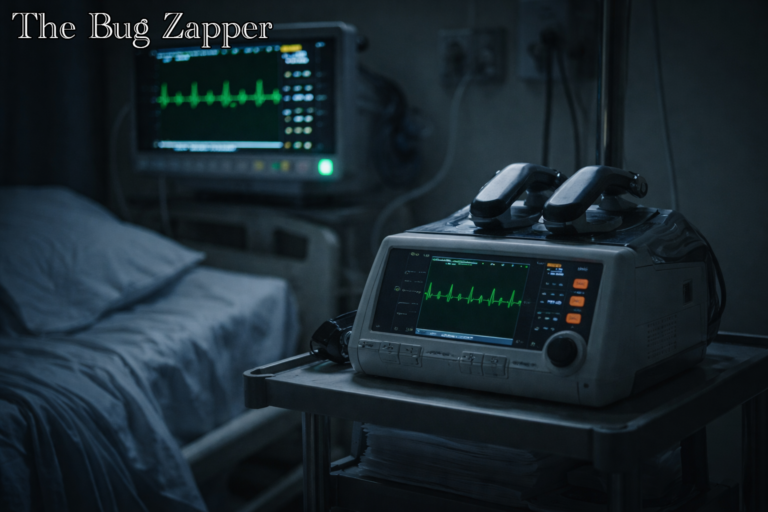
The nightmare woke me at 1:44 in the morning. I felt the kick first, electrical charge running through my chest and arm and head, and came up out of sleep certain the ICD had fired. The nurses pulled the EKG records to prove it hadn’t.
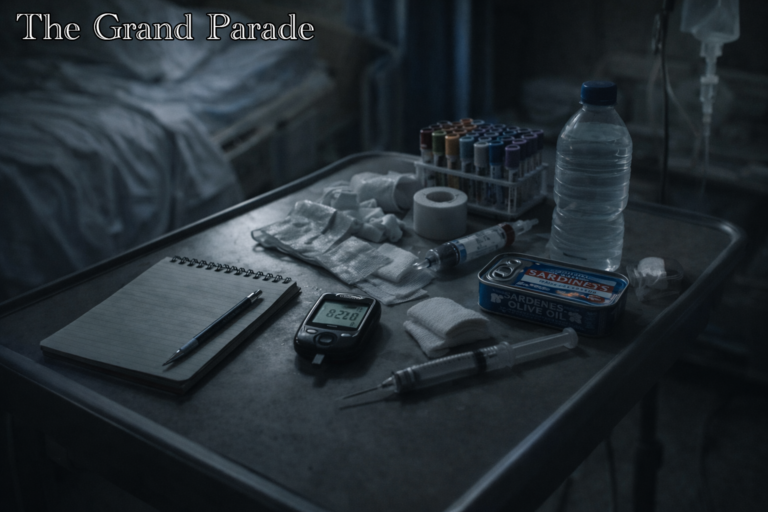
The Impella went in on October 3rd—a catheter-mounted pump threaded into the left ventricle to do the work the heart no longer could. Five percent ejection fraction going in. What happened in the hours afterward was not, primarily, a clinical experience.
My wife wanted me to go to the hospital sooner. She always did. Twenty-five years of the same standing argument: her instinct to call in the armada, mine to assess and manage. We were both right, and that’s the part that took longest to understand.
Early thirties, recently married, a second child on the way. Slightly short of breath—unusual enough to mention, not unusual enough to worry about. My cardiologist ordered the standard workup to rule things out, then came back into the room, sat down, and said my case had just become a lot more interesting.

Death came to my room more than once. The first time I was at home, alone in the dark, and woke to a figure crouched near the ceiling with the patience of something that had nowhere else to be. I had known for years I would die at fifty-five.