The Last Decline
My wife wanted me to go to the hospital sooner. She always did—that was the standing dynamic between us on anything medical, and it had been for over twenty-five years. Every setback, every symptom, her instinct was to call in the armada. Mine was to assess, monitor, and manage.
We were both right, in our own way. She was right that something was seriously wrong. I was right that I knew it, and that knowing it didn’t automatically mean the hospital was the answer yet.
Managing a long-term chronic condition is not the same as managing an acute crisis. You learn—or you should learn—the difference between what will pass and what won’t, between what belongs in an ER and what belongs in a recliner with a glass of water and a wait-and-see. I had been making that call for twenty-two years. My doctors had dozens, sometimes hundreds of patients. I had one: me. I paid attention accordingly.
What I was watching, through three weeks of September 2024, was atrial fibrillation hitting like clockwork—every single weekend, without fail. It would come on in the middle of the night and be gone by Monday morning. A day of recovery, then fine for the rest of the week. Three weeks, four weekends in a row. The damnedest pattern I had ever seen—regular enough to track on a calendar, irregular enough to mean something was seriously wrong underneath it.
There was a second complication running alongside the AFib that September—an upper respiratory infection that had taken my voice, made it difficult to breathe deeply, and was producing the kind of exhaustion that makes everything else harder to manage. Two Covid tests came back negative. I treated it the way I treated most things: elderberry, vitamin C, chicken broth, rest. The breathing concerned me more than anything else; the only real argument for the hospital at that point was access to supplemental oxygen.
There was also the cost. Twenty-two years of chronic illness management had left me acutely aware of what a hospital stay does to a person’s finances. The SSDI fight had already done its damage; I was not eager to accelerate it. A bad virus waits itself out. This felt like a bad virus.
There was also, it should be noted, the matter of my wife’s threat. She had informed me that if I died at home having refused to go to the hospital, she would cremate me and spread my ashes all over the west side of Cincinnati—ensuring I would spend eternity haunting an area I had no particular fondness for. I took this under advisement.
Then, one evening, my right leg swelled to twice its normal size. Just the right one.
I called the armada.
Mercy West
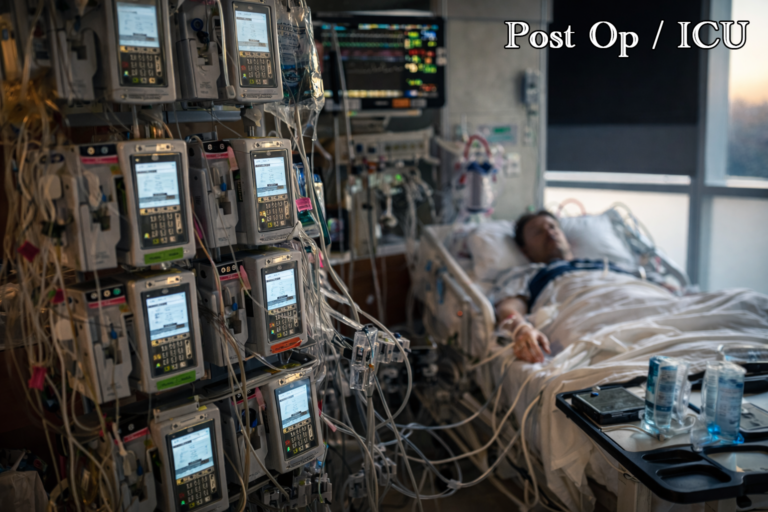
The ER at Mercy Health West was largely deserted when we arrived—late evening, quiet. We waited about an hour anyway, which is its own kind of absurdity. When they finally called me back, I made it maybe ten or fifteen feet on my own before someone tucked me into a wheelchair and wheeled me the rest of the way.
The irony of that moment: my vitals were, on the surface, not outrageous. Blood pressure, pulse, temperature, oxygen saturation—nothing that would make a triage nurse drop everything. I was in serious trouble, and I knew it, and so did they. The numbers that told the real story weren’t the ones on the intake form.
Here is the thing about being an educated, well-read patient with twenty-plus years of data on your own condition: you have access to your own chart. MyChart exists. The test results land in your portal, often before the attending has had a chance to review them, and if you know what you’re looking at—which I did—you reach the same conclusions they’re about to deliver. The doctors at Mercy West figured this out quickly. They didn’t pull punches with me because they understood, correctly, that there was no point. I was looking at the same numbers. I knew what they meant.
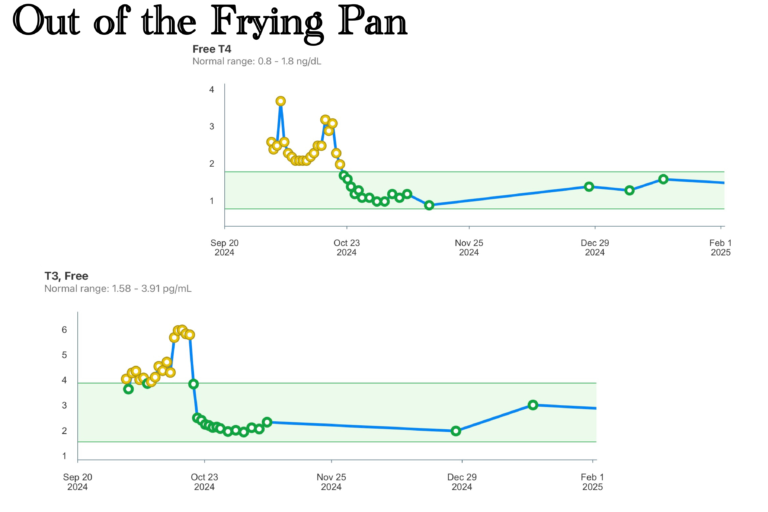
What the tests showed: hyperthyroidism, confirmed—the amiodarone had finally done its damage to the thyroid, and the problem was not one Mercy West was positioned to solve. Ejection fraction through the floor. Fluid levels that explained the leg, and then some. They had already pulled upward of twenty pounds of fluid off me and it wasn’t finished. The fat I’d thought I was losing over the preceding months had been quietly replaced by water, accumulating without the weight spikes I’d trained myself to watch for. Several conditions reaching their limits at exactly the same time. The AFib readout from the preceding weeks had shown something beyond the arrhythmia itself—ventricular tachycardia in the mix as well.
They inserted a Swan catheter to get accurate pressure readings. This is almost certainly when my vocal cord was paralyzed—a nerve nicked on the way in, we think. It would matter considerably later, but at this time I had more weighing on my mind.
The doctors did what they could. They were honest about what they couldn’t.
The Floor Lights Up
On one of those nights, the rhythm went somewhere new.
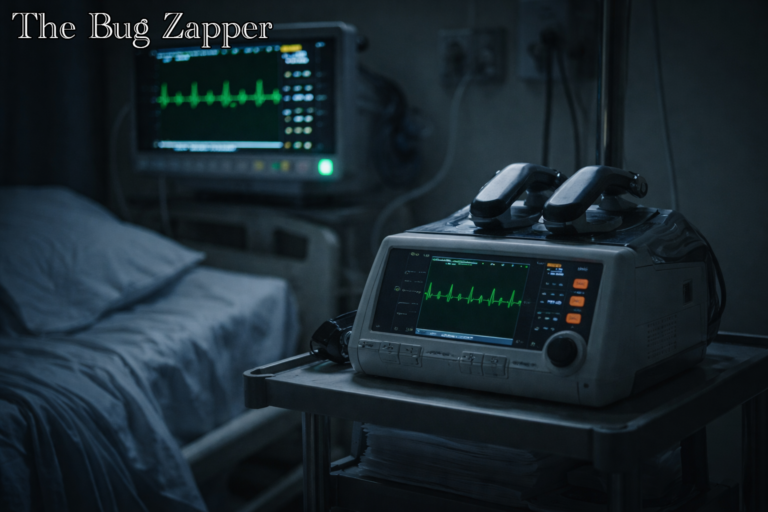
The AFib I’d been experiencing—unpleasant, familiar in its way—gave way to something else. Something that cleared the floor. Not the SVT they initially suspected, but an uncommon arrhythmia of the upper chambers that has a tendency to make cardiac ward staff move very quickly and very purposefully. Within what felt like sixty seconds, my small room held somewhere around twenty people. Nurses, attending physicians, a defibrillator unit that someone had wheeled in and affixed pads to my chest before I’d fully registered what was happening.
They read the monitors. They conferred. They decided: no cardioversion yet. Wait it out. Meanwhile, a substantial loading dose of amiodarone—several hundred milligrams—went into the line.
The rhythm self-corrected.
As the small army filtered back out of my room—me still strapped to the defibrillator, not going anywhere—one of the nurses stayed behind. She had, over the course of a few days, figured out exactly what kind of patient she was dealing with: an ex-cop with a dark sense of humor and a low tolerance for being handled carefully. We had established a rapport built entirely on well-timed irreverence, which is the only kind worth having in a hospital room.
She looked at me. She looked at the machine. She reached over and put her hand on the dial, cocked an eyebrow, and let the implication hang in the air for just a moment.
I have laughed about that moment at least a hundred times since. Nearly a year and a half out, it still gets me. She was good people. Most of them were.
The turkey sandwiches were, for the record, exceptional.
Wanting to Go
By day five or six, I was ready to be done.
I want to be precise about this, because imprecision here would be dishonest. I was not despairing. I was not in crisis in any psychological sense. I had known—not suspected, not feared, but known—that fifty-five was the end of the line for me. That certainty had been with me for a long time, and nothing about the situation in front of me contradicted it. I had kicked the can as far down the road as it would go. The runway had ended. This was the thing I had spent decades preparing to experience.
What I did not want was to prolong the inevitable. There is a difference—an important one—between being ready to die and wanting to die. I did not want to die. I simply did not see a compelling reason to keep suffering toward an outcome I believed was already determined. It should also be noted that this was not hopelessness; it was acceptance.
I was lying in bed one of those nights when I saw what I can only describe as a black wall directly ahead. Solid. Final. Then it broke. What replaced it was a horizon—gold, orange, purple—and beneath it, two paths. One where I lived. One where I didn’t. What I saw on the path where I didn’t was enough.
I want to be clear about what I am and am not saying. I do not have a framework that explains what that was. I am not inclined toward religious interpretations and I am not interested in assigning one here. What I can say is simpler: I saw it. It was presented clearly. And it mattered.
There was a choice. I made it without hesitation.
Not from any desire to keep living at any cost—I have never believed in staying alive simply to stay alive. I chose because what I saw on that second path made the decision legible in a way that nothing abstract could have. A specific consequence, visible and unavoidable.
I chose the path.
I did not particularly want to walk it. I chose it anyway.
October 2nd
Mercy West’s conclusion arrived without ceremony: they had done what they could. The hyperthyroidism wasn’t responding. The heart wasn’t responding. My condition required a level of intervention they weren’t equipped to provide, and they were honest enough to say so.
They reached out to The Christ Hospital—a referral center for advanced heart failure and transplant—which had a bed and wanted me in it as soon as possible. The plan was ground transport; it’s maybe thirty minutes between the two hospitals. Every ground unit available turned out to be unavailable.
Whether that was genuinely a logistics problem or a reflection of how little margin I had left, I was never entirely certain. Either way, a couple of hours later, the air-care team came in. They moved me from the bed to a transport gurney, locked everything down, and wheeled me out.
I was airlifted to Christ Hospital on October 2nd, 2024.
That was the handoff.
Discover more from One More Beat
Subscribe to get the latest posts sent to your email.