The Things You Need
Nobody hands you a shopping list at discharge.
They hand you prescriptions, a follow-up schedule, and a set of dietary restrictions. What you actually need to manage the day-to-day reality of post-transplant life—the tools, the devices, the supplies—you figure out by trial and error, usually after the error.
This piece is the list. Everything here is something I actually use. Some of the links are affiliate links, which means I may earn a small commission if you purchase through them. That doesn’t influence the recommendations—these are the products that made the difference, and the ones I would tell anyone in this situation to get before they need them.
While You’re Still There
The discharge list gets all the attention. What gets less attention is the two months before it—the hospital stay itself, which has its own infrastructure needs that nobody thinks to prepare for in advance.
A few things worth having:
An eye mask. The ward is never fully dark. Monitors, hallway light, the general ambient glow of a place that never fully sleeps. The MZOO mask mentioned later in this piece works as well in a hospital room as it does at home—the recessed eye cups mean you can actually blink under it, which matters during a long night, especially in the dry hospital air. (BTW—if you use a CPAP, take that too.)
Music and earbuds. Something you can put on without much interaction—a playlist or a station rather than something requiring active management when your hands aren’t reliable. It creates a sonic environment you control, which in a place where you control almost nothing else is worth more than it sounds.
Snacks and food. The hospital food is what it is. Within whatever dietary restrictions apply—and clear anything with the team—having things that appeal to you makes a real difference, especially in the early weeks when taste distortion means almost nothing is working anyway. If berry flavors are the only thing cutting through, having your own supply on hand matters.
Entertainment. A tablet for movies and streaming, your phone for staying connected. Books, both for reading or even something like a coloring/sketch book and pencils. (Your hands will be unsteady post-transplant but just fine before). A personal journal and/or laptop are nice as well. Some folks bring a streaming stick or even a Playstation/Xbox.
Shoes or slippers with a sole. You will be walking the halls. The hospital socks work fine for the room; something with grip and a real sole matters when you’re covering distance as part of the PT protocol.
A personal care and hygiene kit. Your own products, your own routine. The small things that make the environment feel marginally less institutional. This matters more than it seems like it should—having some agency over how you smell and what you put on your face is one of the few forms of control available.
Now: let’s move on to post-discharge.
Medication Management
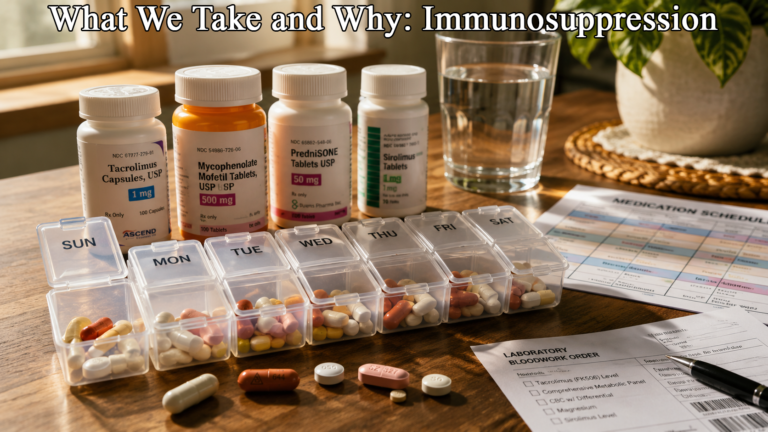
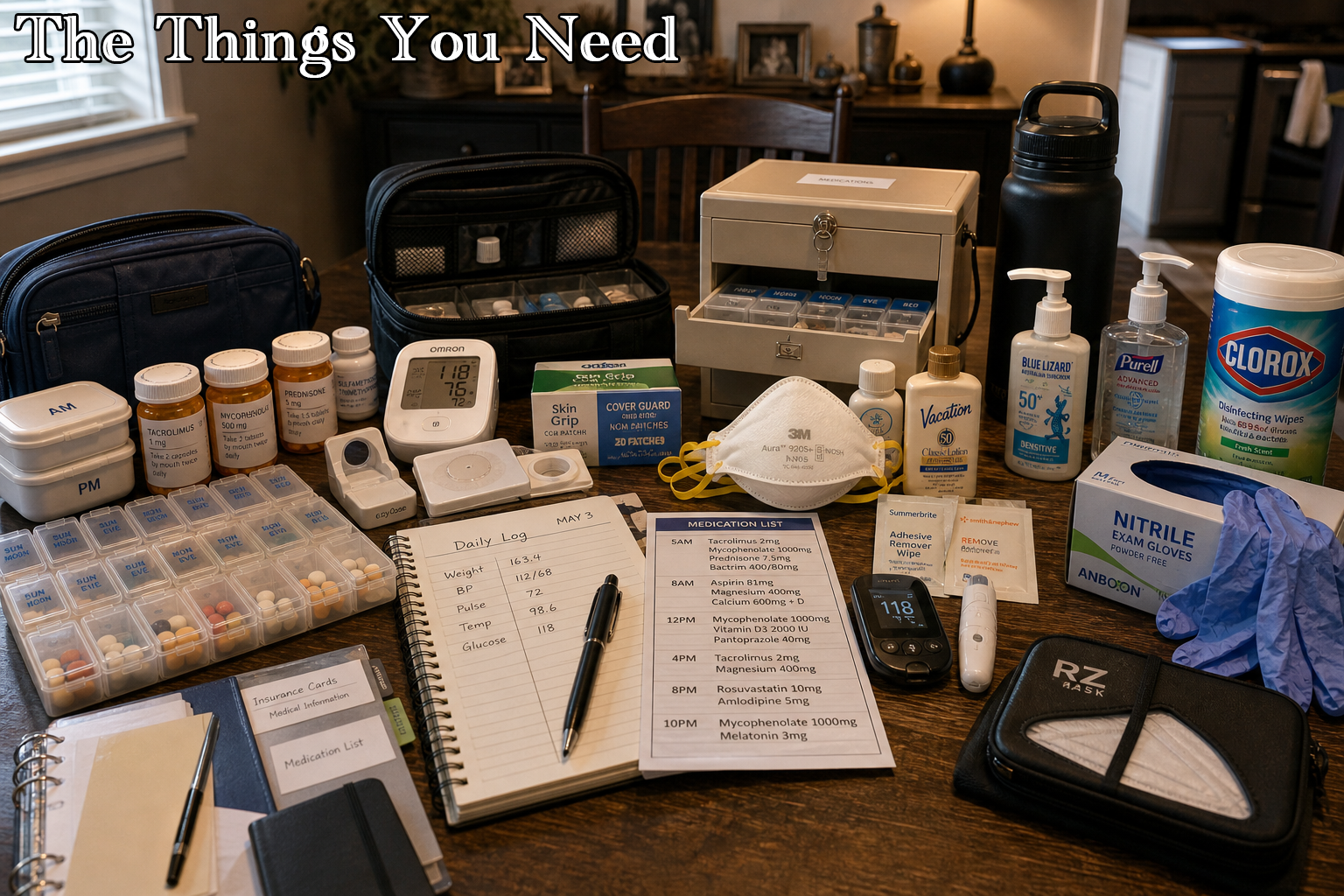
The daily medication reality requires infrastructure. Not a drawer full of bottles—a system. When you are managing sixteen or more medications across seven time slots, from 5am to 10pm, the margin for error is zero and the cognitive load of keeping it straight is real.
Pill Minders
Two minders rather than one. A twice-daily minder handles the early morning medications that have specific timing requirements separate from the rest of the day. A four-a-day minder handles the regular medication schedule. Keeping them separate eliminates confusion when the brain is not yet fully online at 5am, which in early recovery it often is not.
A pill cutter is essential when medications come in doses requiring splitting—which they often do when the team is stepping you down or managing a specific target level.
Medication Storage
For home storage: a medicine organizer chest with a keyed lock and built-in pill organizers. Everything in one place, secured. If there are children in the household—or anyone else who should not have access—the lock is not optional.
For travel and clinic visits: a travel medicine bag with multiple compartments for the full regimen. Soft-sided, organized, enough space to bring everything without hunting for it.
Handling Medications Safely
Nitrile gloves—powder-free, latex-free—for sorting medications, cleaning, and cooking. Some immunosuppressants carry teratogenic warnings, meaning accidental skin contact is a real concern for others in the household, particularly those of birthing age. Anboson and Schneider are both reliable options.
Blood Sugar Management
The blood sugar chaos of early recovery—tacrolimus suppressing insulin production, prednisone driving glucose upward, the dietary restrictions compounding both—requires active monitoring. A continuous glucose monitor is not a luxury in this context. It is how you stay ahead of the problem rather than finding out about it after the fact.
CGM Overpatches
CGM sensors are expensive, and they have a tendency to catch on clothing, doorframes, and anything else that gets close to the arm. An overpatch before the first sensor goes on is not optional. Skin Grip and Cover Guard are both effective. The Cover Guard patches without adhesive in the center are the preferred configuration—they hold the edges without interfering with the sensor window.
Injection Supplies
For insulin injections and general prep: BD alcohol swabs. Standard, reliable, the brand the clinical staff uses.
A sharps container for syringe/pen-needle disposal. Required, regulated, and not worth spending much on—the basic ones do the job.
Daily Vitals Monitoring
The transplant team requires daily tracking of weight, temperature, blood pressure, heart rate, and blood glucose. This is not optional. What is optional is how painful the process of recording and reporting that data is.
The case for Bluetooth-enabled devices is straightforward: every reading taken manually is a reading that has to be transcribed, with hands that may be shaking, into a log, for a clinic visit that may be weeks away. Bluetooth-enabled devices push directly to Apple Health or Google Health. The data is there, timestamped, accurate, and complete when you need it. This is not a convenience—it is the difference between a reliable record and a fragmentary one when the team is making medication decisions based on a month of trends.
Get devices that sync. It matters more than brand. (I’ll explain why in a moment.)
Thermometer
The Kinsa thermometer syncs readings directly to the app and, from there, to Apple Health. Use disposable covers to keep it sanitary without the hassle of cleaning after every use. I even bought a little hard case designed for a voice recorder and repurposed it as a case for both the thermometer and covers.
Blood Pressure Cuff
The Omron blood pressure cuff is Bluetooth-enabled and syncs to Apple Health. Clinically validated, the brand that most transplant teams recognize and trust.
Scale
The daily weigh-in is a rejection early-warning system—sudden weight gain means fluid retention, and fluid retention is a flag. Two solid Bluetooth-enabled options: Withings for the more feature-rich option, Etekcity for a more affordable one. Both sync to Apple Health.
Pulse Oximeter
From time to time, you’ll want to spot-check your pulse and blood oxygen. An inexpensive pulse oximeter is all you need. I bought this one ten years ago and it still works today.
Making Sense of the Data: Aevora Wellness
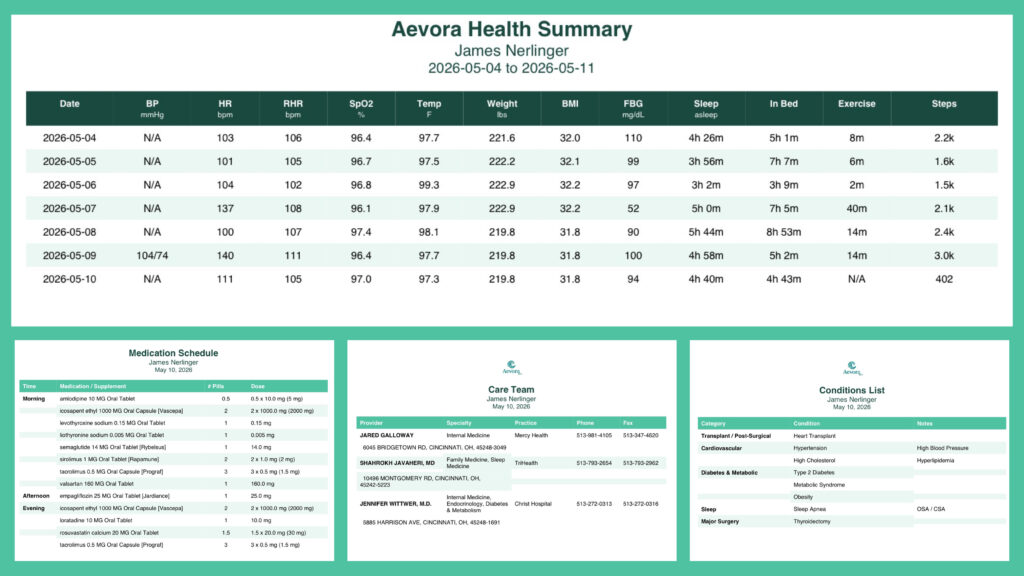
Apple Health and Google Health will collect all of this data. What they will not do is put it into a format you can hand to your doctor.
That is what Aevora Wellness is being built to do. The app pulls vitals data directly from Apple Health and Google Health and consolidates it into a clean, exportable summary—a table of your daily readings, date by date, ready to share with your transplant team. No manual transcription. No hunting through the Health app for individual readings. One export, one document.
It also includes a medication tracker that generates an exportable medication card—your full regimen, organized by time of day, with medication names, dosages, and pill counts. The kind of card that is useful for building the weekly pill minder, for sharing with a specialist who doesn’t have access to your transplant team’s records, or for handing to an ER physician when you don’t have the bandwidth to recite sixteen medications from memory.
The app is currently in development for both iOS and Android platforms. The functionality works; I used an early iteration to share my weekly/monthly data with my transplant center’s care team. Watch this space. If you’d like to be a tester, drop me a line.
Wearables and Fitness Tracking
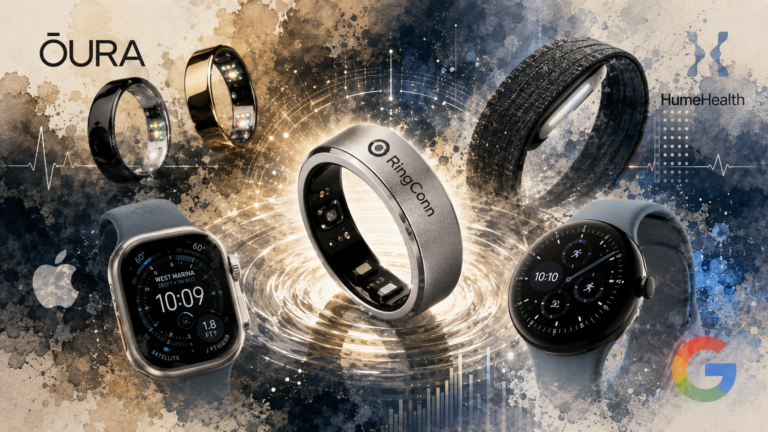
The smart ring and wearable category deserves its own dedicated piece—and it is coming. The short version: there are now enough options in this space that choosing one requires actual evaluation rather than brand name recognition. Rings, wrist bands, clip-on devices—each with different strengths for post-transplant monitoring specifically.
What matters for this population: heart rate variability, sleep staging, readiness scoring, and the ability to sync to Apple Health or Google Health. What matters less: step counting and workout tracking, which are secondary to the recovery metrics.
Full evaluation of the major options—including hands-on testing of a dozen or more devices—in the next piece.
Supplements
⚠️ ALWAYS CLEAR ANY SUPPLEMENT WITH YOUR CARE TEAM FIRST. Supplements are not FDA-regulated the way medications are, interactions with immunosuppressants are real, and what is benign for the general population may not be benign for a transplant recipient. The supplements listed here were used with team knowledge and appear on the medication card. Your regimen may differ.
With that said—supplements to manage side effects and support overall health are a legitimate part of post-transplant management. These are the ones that made a difference.
A quality multivitamin matters when the diet is restricted and the body is working overtime. Thorne Basic Nutrients 2/Day—taken one per day rather than two—is a clean formulation without the additives that more common brands include. Thorne is one of the few supplement manufacturers that does its own testing.
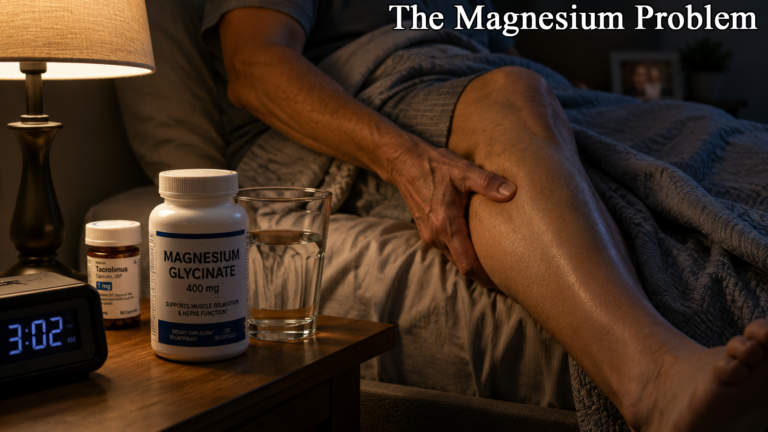
Magnesium requires two forms to cover the full daily need. Swanson Magnesium Glycinate is the daytime option—glycinate form absorbs well and is gentler on the GI system. SlowMag is the overnight option—a timed-release magnesium chloride that sustains levels through the night when tacrolimus depletion is otherwise unchallenged. Both are taken away from tacrolimus doses to avoid absorption interference.
Iron: Slow FE. Standard iron supplements are notoriously hard on the stomach. Slow FE is a slow-release ferrous sulfate that reduces GI irritation significantly—which matters when the GI system is already managing sirolimus and mycophenolate.
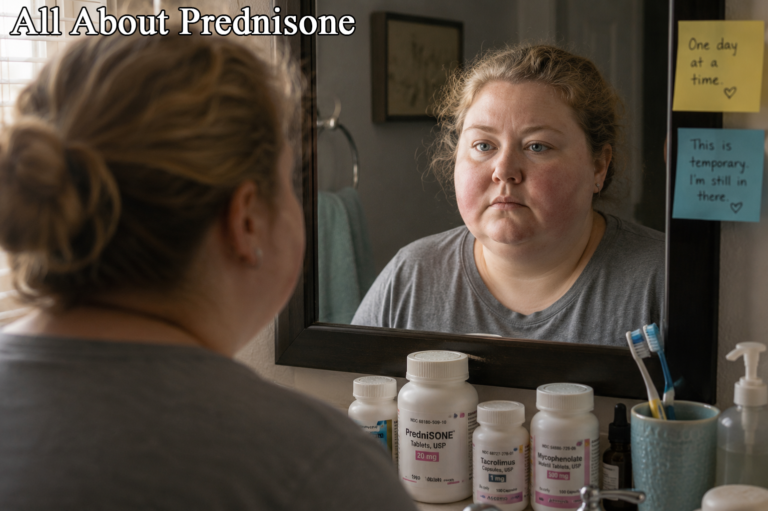
CoQ10: Qunol Ubiquinol. Statins—which most transplant recipients take for cholesterol management—deplete CoQ10. Ubiquinol is the reduced form of CoQ10, significantly more bioavailable than the standard ubiquinone form. If you are taking a statin and not supplementing CoQ10, this is worth discussing with the team.
Infection Control
The N95 requirement is specific and non-negotiable: NIOSH-certified, not KN95, not cloth, not reusable without proper sanitization. The economics of single-use N95s at retail pricing are brutal. The solution is bulk sourcing—medical supply sources that sell excess hospital stock. Verify the NIOSH certification number on the box before committing to a large purchase. The number is there if the masks are legitimate.
When a cold does arrive—and eventually one will—standard cold medications are off the table for most transplant recipients because of blood pressure and drug interaction concerns. Coricidin HBP is formulated specifically for people with high blood pressure and is safe for transplant recipients when the team approves it. Keep it on hand. Ask your team in advance so you are not figuring it out at 2am.
For hand sanitization away from home: PDI Sani-Hands wipes. Keep them in the car on subscribe-and-save. Every surface before contact.
Nitrile gloves serve double duty here—the same gloves used for medication handling work for cleaning, cooking, and any situation involving surfaces of uncertain cleanliness. Keep a box in the kitchen and a travel pack in the bag.
Procedure Recovery
Every biopsy, every blood draw, every IV line leaves something behind. The tegaderm, the EKG stickers, the tape holding the cotton ball—adhesives that bond to post-trauma hypersensitive skin and do not release without help.
Two products that actually work: Summerbrite Adhesive Remover Wipes and the remover products from Smith & Nephew. Have them on hand before the first procedure. The alternative is waiting it out in the shower for days.
The heart-shaped pillow—the one The Christ Hospital sends home with cardiac patients—is worth having for every car ride to and from a procedure. Every pothole announces itself through the sternum. The pillow absorbs what it can. If you did not come home with one, ask the transplant coordinator.
Sun Protection
Long-term immunosuppression significantly elevates skin cancer risk. This is permanent, and it changes the calculation about outdoor exposure for the rest of the recipient’s life. SPF is not optional, and the formulation matters—the goal is high protection with minimal chemical irritation on skin that is already more sensitive than it used to be.
SPF 50 or higher. Blue Lizard and Vacation Classic are both solid options. The spray format makes consistent full-coverage application easier than lotion, which matters when you are trying to do it every time you go outside rather than occasionally.
Hair
Tacrolimus causes hair loss. Not in every recipient, and not always severely, but often enough that this belongs on the list. The Freebird skull shaver is worth having before the loss arrives, if it arrives. In my case, the hair came back—thinner than before, but back—and the shaver was not needed. Having it ready costs less than the anxiety of not being prepared.
Sleep
The MZOO sleep mask has recessed eye cups, which means you can blink under the mask without it pressing against your eyelids. This sounds like a minor detail until you have worn a flat mask for eight hours and woken up with your eyes irritated. Used both in the hospital and at home.
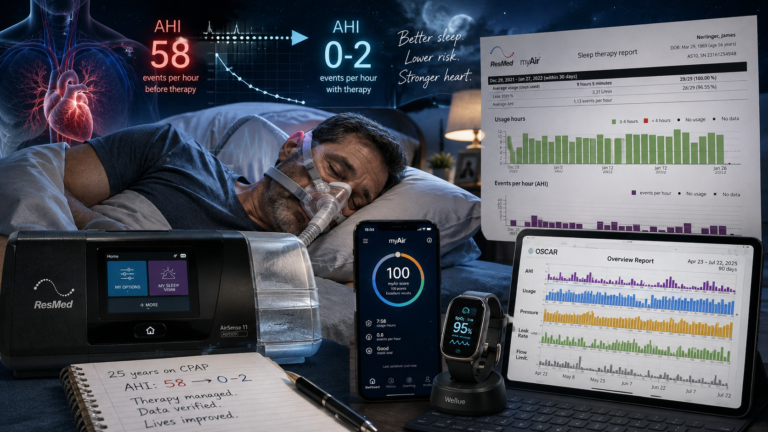
For sleep apnea patients using CPAP or BiPAP: the Snowy Egret Chinstrap keeps the mouth closed during therapy, preventing the mouth breathing that bypasses the device entirely. If the mask is doing its job but the mouth is open, the therapy is not. This solves that problem without the discomfort of a full-face mask.
Charging Infrastructure
Multiple smart devices, all requiring power, often simultaneously, often from a single outlet in a hospital room or a recovery chair with limited reach. The solution is a reliable charging hub with enough ports and enough cable length to reach.
The Anker ecosystem handles this well: a MagSafe desktop charger for the phone, USB-C cables for everything else, and a desktop multi-charger for the hub. For clinic visits, hospital stays, and travel, the Anker travel power strip solves the single-outlet problem in any room. Buy it once rather than replacing cheaper options repeatedly.
Hydration
Staying well hydrated is specifically important post-transplant—the kidneys are working hard, the medications are taxing the system, and daily fluid intake targets are real. A quality insulated bottle makes hitting those targets easier because cold water is more appealing than room-temperature water, and appealing matters when you are trying to drink enough of it all day. The Healthy Human water bottle keeps water cold for hours and is built to last. It goes everywhere.
Skin and Hand Care
Frequent handwashing is non-negotiable post-transplant, which means the soap matters more than it ever did before. Standard commercial hand soaps are effective but often harsh—detergents and fragrances that strip the skin over time. For someone washing hands constantly, and already dealing with medication-induced skin sensitivity, the formulation makes a real difference.
Making your own foaming hand soap is easier than it sounds and significantly gentler on the hands. The recipe is simple: Dr. Bronner’s Castile soap as the base, vegetable glycerin for skin conditioning, Liquid Germall Plus as a preservative (essential—homemade soap without a preservative grows bacteria, which is not acceptable for this audience), and Thieves essential oil for antimicrobial action. Distilled water to the fill line. Five steps, five minutes, a product that is cheaper and gentler than anything on a store shelf.
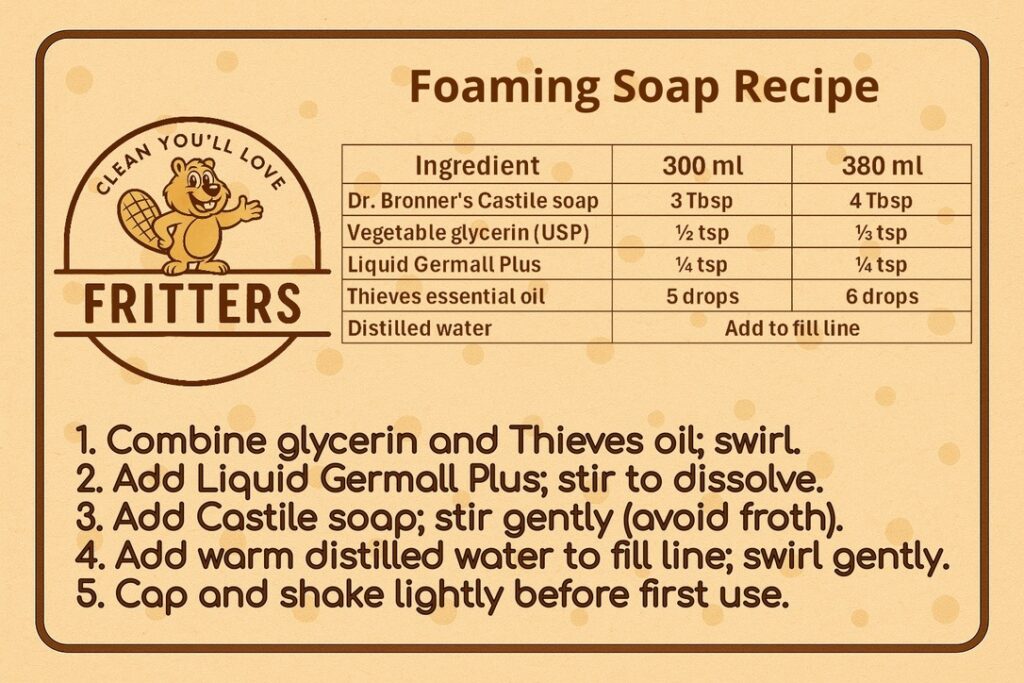
The ingredients: Dr. Bronner’s Castile Soap, Now Vegetable Glycerin, and Germall Plus Preservative. Thieves essential oil is available from Young Living or at most natural food stores. (And, of course, you can omit the essential oil or use another; I just liked the way it smelled!)
For the dispenser: a rechargeable foaming soap pump rather than a manual one means one less frequently-touched surface. Two good options: GentleJet and this unbranded rechargeable option. Both work with standard foaming soap formulations.
Frequent hand washing, nitrile gloves on and off throughout the day, the dry air of hospitals and clinics, and the skin hypersensitivity that comes with the medication regimen combine to do real damage to the hands over time. Bloody Knuckles Hand Repair Balm is not a luxury. It is maintenance. Use it consistently and the cracking and irritation that would otherwise build up stays manageable.
Preparation Is Key
This list will not be complete for everyone—every recipient’s regimen is different and every household’s needs differ. What it covers is the infrastructure that makes the daily reality of post-transplant life manageable rather than chaotic.
All of these items are ones I use. Most are priced well on Amazon, but it is worth checking local pharmacy and grocery sales periodically—some show up cheaper on a rotating basis, and given how tight the finances tend to run post-transplant, the savings add up.
Get what you need before you need it. The discharge happens faster than you expect, and the first week at home is not the time to be figuring out where to order a sharps container.
Discover more from One More Beat
Subscribe to get the latest posts sent to your email.