I Chose Life Three Times
Death came to my room more than once.
The first time, I was at home, alone in the dark. I woke to a presence and looked toward the corner near the ceiling — and there it was. A dark figure, crouched, looking down at me with the patience of something that had nowhere else to be. It said nothing. It didn’t need to. I knew exactly what it was and why it had come.
I had known for years I would die at fifty-five. My health had been declining for two decades — congestive heart failure, type 2 diabetes, an increasingly unreliable electrical system. I’d kicked the can as far down the road as I could. The moment had finally arrived, and here was the confirmation of it, crouched in my bedroom corner at three in the morning.
I was not afraid. That still strikes me as the strangest part.
I had spent years studying with a rabbi whose teaching I had taken deeply to heart. One message above all others: choose life. So I looked up at the figure and said, simply, “Not yet. I think there’s still something left for me to do.”
It tilted its head — regarding me, weighing the response. Then it dropped from the corner and left through the window.
I went back to sleep.
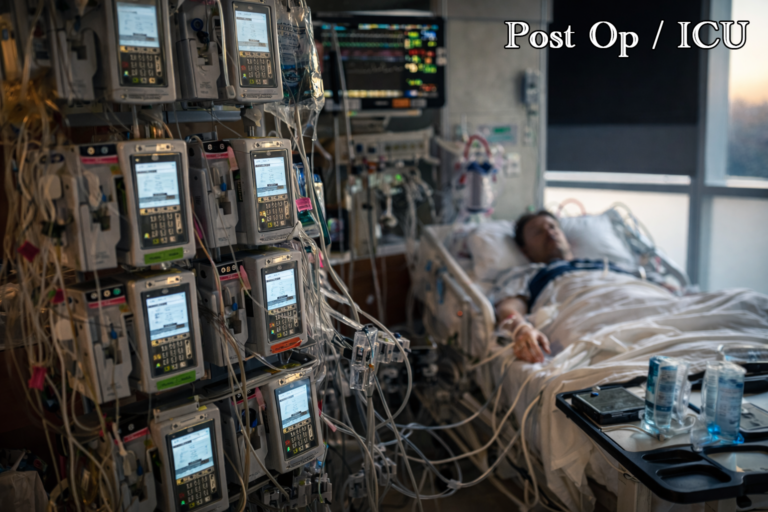
What followed was, as I had been plainly warned, exceedingly unpleasant. My condition worsened rapidly over the next several weeks. Atrial fibrillation, edema, weakness so severe I could barely walk ten feet on my own. I entered the hospital in September of 2024 believing I would not leave alive. One leg was swollen to more than twice its size. I could barely stand. I understood the data — the pressures, the numbers — and I knew exactly how short my runway had become.
The first hospital could not stabilize me. I lay in that bed looking at what I can only describe as a black wall — the end of the line, solid and final. Then, in the strange way these things sometimes go, the wall crumbled. It was replaced by a deep horizon of gold and orange and purple — a vision of potential I couldn’t explain but couldn’t dismiss. The next day I was airlifted to a second hospital that specialized in end-stage heart disease. The doctors there informed me, with a directness I appreciated enormously, that I was not going to die. They stabilized me with an Impella device and began evaluating me for a heart transplant.
I did not expect to be a candidate. I was obese, diabetic, middle-aged. But I remembered the vision, and I remembered the rabbi’s teaching, and I said yes.
The evaluation process was its own ordeal — fifty-plus vials of blood, a colonoscopy, an endoscopy, a cystoscopy, and daily informal assessments of whether I had the psychological constitution to survive what was coming. I came through it. I was listed as Status 2.
It was around this time that I encountered the second offer.
I was in the cath lab for a procedure, under ketamine, when I found myself outside my body — floating near the ceiling, listening to the clinical chatter of the staff below, aware of everything in the room with a preternatural clarity. Everything appeared in a kind of static-haze, black and white, like a television that had lost its signal. Except for one thing: off to one side of the room, a block of gold and silver light. Shimmering. Patient. Warm.
It was not the dark figure from my bedroom. Where that encounter had been spare and businesslike, this was something else — full of peace, full of empathy. It knew I was suffering. It offered me an end to that suffering. Come, not go. The distinction mattered; I noted it even then.
I was tempted. Things had been genuinely bad.
But something wasn’t finished. I knew it the same way I’d known it that night in my bedroom. I declined, and a moment later the procedure ended and I was pulled back into my body.
As I came out of sedation, I felt with some certainty that this had been the last such offer. Whatever was happening, I had made the same choice enough times that the course was now set.
On November 9th, 2024, after a thyroidectomy I hadn’t counted on, after weeks of waiting and matching and nearly running out of time, a surgeon removed my diseased heart and replaced it with one that belonged to a man I will never meet — male, forty-five years old or younger, a good heart by every measure his team could assess. The surgery took a few hours. I woke up intubated, briefly terrified, and alive — with a strength in my chest I hadn’t felt in more than a decade.
That was sixteen months ago.
This blog — One More Beat — is where I intend to account for all of it.
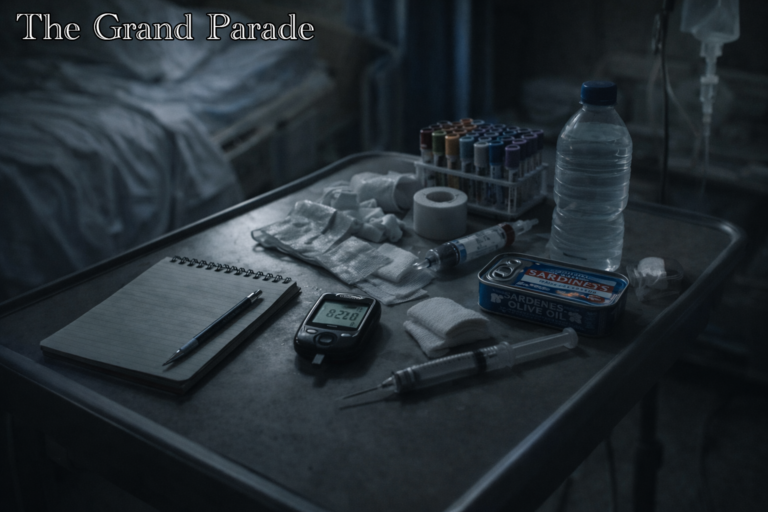
Not just the dramatic parts. The full picture: twenty-two years of managing heart failure before the floor finally gave way; the specific, unglamorous suffering of the hospital — the shocks, the procedures, the paralyzed vocal cord, the medieval procedures a good friend accurately called them; the medications and the management and the CAV diagnosis that showed up quietly at my one-year evaluation; what it actually means to carry someone else’s heart and to know that a stranger’s death is the reason you are still here.
I’ll also write about the things that don’t fit cleanly into any category. The apparitions. The out-of-body experiences. The ketamine. The black wall and the crumbling of it. The visions I received that I filed not under religious experience but under things I cannot explain — which, at this point in my life, is a category I’ve learned to hold with more respect than I used to.
I’m not a religious man, though I’ve studied seriously with rabbis and spent years inside Kabbalistic frameworks and interfaith theology. What I am is someone who can no longer maintain that the visible layer of things is the whole story. I’ve seen through the wall, more than once. I don’t know what’s on the other side in any comprehensive sense. I just know it’s there.
And I know that I chose this — the ongoing complexity and difficulty and grace of being alive — three separate times, with full awareness of what I was choosing.
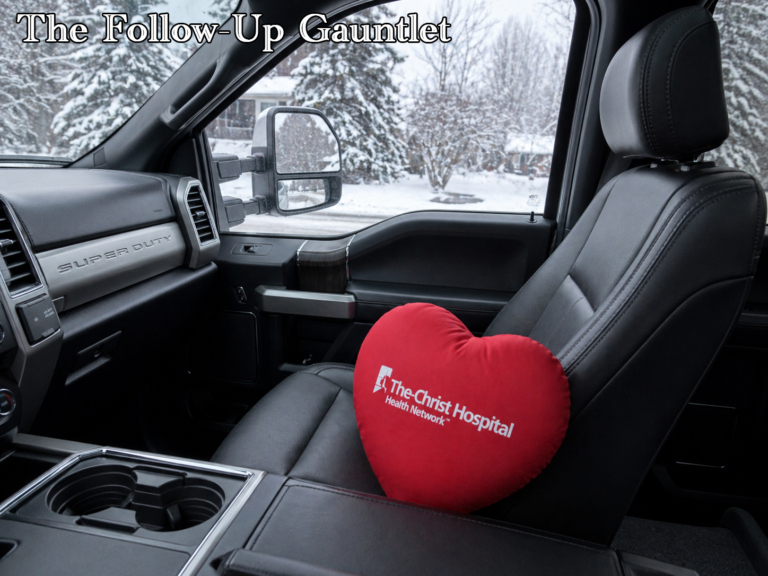
So there are things left to write about. Health management, diet, the daily logistics of being an immunosuppressed transplant patient navigating a medication schedule that would make your head spin. The spiritual and philosophical questions I’ve been turning over for years, which now feel considerably less abstract. The practical recovery. The first time I stood at the window watching snow fall and thought, simply: I’m still here.
There’s a lot of ground to cover.
One more beat. And then one more after that.
Discover more from One More Beat
Subscribe to get the latest posts sent to your email.


Oh, James, I’m so happy you are writing about your experience. And agree that it will make more sense in ‘descriptive parts’ of the story rather than a giant dump which can be messy. You have so much to share that will be helpful for others and each day, each new beat, brings further clarity. I commend you on this effort, not easy to reflect upon without all the emotional recollection, but a simple telling to ‘be here now’ in explanation. You are creating a pathway, a guideline that not only helps your personal process (which is ongoing) but a wonderful offering to those stepping into this road. Kudos!