
Who Am I Now?
The crisis is over. The patient is home, recovering, increasingly independent. Everyone around the caregiver is exhaling. The outcome everyone hoped for has arrived.
And the caregiver is standing in the middle of their own life feeling like a stranger in it.
Not dramatically. Not in collapse. Just quietly, persistently wrong—a vague wrongness that doesn’t respond to the fact that things are better now, that resists the gratitude everyone expects them to feel, that sits underneath the relief like something unfinished.
This is identity collapse after caregiving. It is not a sign that something has gone wrong. It is the predictable consequence of what the role required.
The Three Phases
The identity question didn’t begin when the crisis ended. It began long before that—and it shifted shape at least twice before the patient came home.
Phase one was before. Whoever the caregiver was before this began—a person with their own life, their own sense of direction, their own interests and relationships and daily texture. That person started making concessions. Small ones, accumulated over time. The trips that stopped. The plans that shortened. The friendships that thinned. The self that receded so gradually that the caregiver rarely noticed how much had been surrendered until the surrendering was already done.
Phase two was during. Whatever the road in, the caregiver eventually organized themselves entirely around the role. Scheduler, advocate, logistics coordinator, medical interpreter, emotional anchor. That role had clarity and weight and purpose. It structured the day. It answered the question of what they were for. For many caregivers, this is the most defined they have felt in years—not despite the crisis but precisely because of it. The emergency gave the identity a coherent shape, and many people function better under necessity than under freedom.
Phase three is now. The patient recovers. Independence returns. The need recedes. And the identity built around that need begins to dismantle itself—not because the caregiver chose it, but because the structure that was holding it up is no longer required.
Two identity losses, not one. The self that existed before the illness, and the self that was built to manage it. Both gone. The second one in the middle of what everyone is calling good news.
Three Caregiver Types, One Question
Not every caregiver arrives at this question from the same direction. The experience of identity collapse differs depending on who the caregiver was before the crisis began—and what the role meant to them while they were in it.
The caregiver whose life was put on hold had a self before. A career, interests, friendships, a sense of direction. Watched it contract gradually around the demands of the role. Looks up when the crisis ends and cannot locate that previous self. It is either gone, or unrecognizable, or present but so deeply buried under years of deferred living that excavating it feels like more work than starting over. And the cruelest part: the energy required to rebuild that lost life is simply not available. The years of sustained caregiving have depleted reserves that do not refill on a schedule. The world says the emergency is over, you can return to your life now—and the caregiver discovers there is very little of that life left to return to.
The natural caregiver is a different kind. This is the person for whom caregiving is not a role taken on but a fundamental orientation—the one who cannot stop themselves, who goes all in, who is most fully themselves when they are most fully needed. Every doctor must speak with them. Every need must be anticipated. Every system must be learned and managed. For this person, the crisis is not where they get lost. It is where they live most authentically. The emergency provides something ordinary life rarely does: clear purpose, high stakes, and the certainty that what they are doing matters. When the acute phase ends, there is a drop in ambient intensity that has no civilian equivalent. Going from negotiating with ICU physicians to deciding what to make for dinner is a disorienting descent. Ordinary life has no equivalent intensity to fill the space the emergency leaves—and the natural caregiver is left in withdrawal from the environment where they felt most alive.
The caregiver whose investment was refused. This one is harder to name and almost entirely absent from the literature. The person who gave everything—years, energy, identity, self—to someone who eventually pushed the care away. The sacrifices that felt like devotion are retrospectively stripped of meaning by the person they were spent on. The caregiver discovers that the role they built their life around was never truly welcomed, and the identity built around that role collapses under the weight of that realization. The role didn’t just end here. It was invalidated. The grief is compounded: not just the loss of the caregiving self, but the retroactive irrelevance of the years spent in service to someone who ultimately refused the service.
All three end at the same question. They arrive by different roads.
What Identity Collapse Actually Looks Like
Not a dramatic breakdown. Not a moment of crisis. Something quieter and more persistent.
Depression that doesn’t respond to the fact that things are better now. Restlessness without direction. A vague purposelessness that feels ungrateful—because the outcome everyone wanted has arrived and the caregiver cannot locate the relief they expected to feel. The role ended. The self that existed before the role is either gone, or was never fully formed, or is present but unrecognizable. And because the patient is alive and recovering, there is no sanctioned outlet for any of this. Grief requires a loss, and officially there has been no loss. Everyone is celebrating. The caregiver is supposed to be celebrating.
There is also something that doesn’t quite fit the category of grief—a subtler and stranger dislocation. The caregiver who finally has their time back may discover that free time has become uncomfortable. The nervous system adapted to constant necessity. It learned to organize itself around urgency, around the next thing that needed to be managed, around the ambient pressure of someone else’s ongoing need. When that pressure lifts, ordinary life doesn’t feel like relief. It feels empty. Directionless. Slightly artificial—as though the world everyone else inhabits is a different register entirely from the one the caregiver just spent years inside. Relief was supposed to feel like relief. Sometimes it feels like standing in an unfamiliar room with no instructions for what comes next.
This is identity collapse—not as catastrophe, but as disorientation. The structure is gone. The self that filled it is gone. And the world is asking the caregiver to simply resume.
The Recovery Trap
There is a specific and rarely discussed phenomenon that occurs as the patient becomes more independent. The caregiver who defined themselves entirely through the caregiving role may find that the patient’s improving health feels threatening rather than relieving. More independence for the patient means less need for the caregiver. The role that provided identity and purpose is being actively dismantled by the very thing everyone hoped for.
This is not a failure of love. It deserves to be said plainly, without equivocation: the caregiver who feels this way is not a bad person. They are a person whose identity was organized around being needed, watching the need diminish, with nothing available to replace what the need provided.
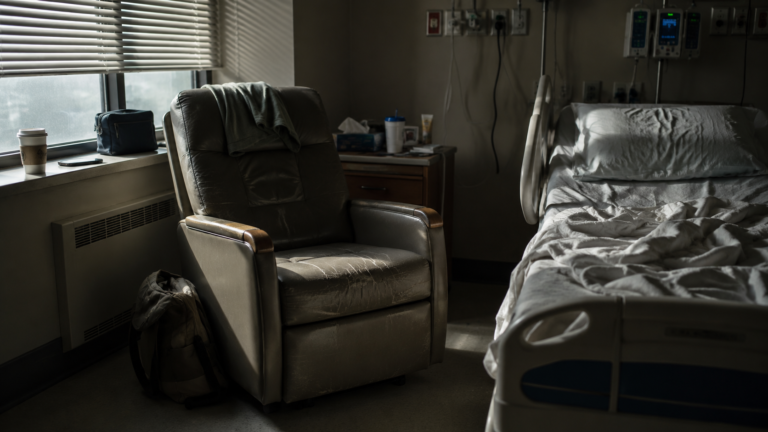
The natural caregiver experiences this most acutely. The one who could not stop themselves now has to learn to stop. The one who was most fully present in the emergency has to find a way to be present in the ordinary. The hospital that demanded everything from the caregiver during the emergency offers no roadmap for what remains when the emergency ends.
The Grief Nobody Names
There is grief here. Real grief. Not the grief of losing someone—the grief of losing the self that was organized around caring for someone. And the grief of what was spent along the way.
Career opportunities not taken. Friendships not maintained. Parts of themselves not developed. A version of their life not lived. None of that is restored when the patient recovers. The patient gets a new heart, a new chance, a timeline that resets forward. The caregiver’s timeline does not reset. Those years are spent. That version of the life is not recoverable. The patient gets their life back. The caregiver does not automatically get theirs back.
This grief has no ceremony. No condolence cards. No bereavement leave. No socially sanctioned period of mourning. It exists in the gap between what everyone sees—the good outcome, the patient recovering, the family exhaling—and what the caregiver actually lost along the way. And it is compounded by the performance of gratitude that the good outcome requires. The patient lived. The caregiver is supposed to feel only relief. Anything else feels disloyal. So the grief goes unspoken, and unspoken grief does not go away.
For the caregiver whose investment was refused, the grief is doubled. Not only the years spent, but the years spent on a role that turned out not to be wanted. The care that was pushed away. The identity that was built around someone who eventually refused to receive it. There is no adequate language for the particular loneliness of that discovery.
What Helps
Not a list. Not a prescription. An honest accounting.
Naming it. The single most useful intervention is having language for what is happening—knowing that this is a documented, recognizable psychological transition, not ingratitude or weakness or a sign that something is fundamentally wrong with the person experiencing it. The caregiver who can say this has a name and I am not broken for feeling it is already in a different position than the one who carries it in silence.
Peer connection with others who are past the acute phase. The community that understands without explanation—other caregivers who have sat in the same room with the same question and found their way through it. Support groups. The transplant networks. The spaces where this question has been asked before.
Professional support when the depression is real and persistent. Not as crisis intervention but as legitimate care for a legitimate loss. The identity collapse that follows caregiving is not a personality defect. It is an injury. It deserves care.
And the explicit permission to rebuild. Not to restore—the previous self may no longer exist in its original form, and attempting to resurrect it may be less useful than building something new from what the experience produced. The caregiver who went through this is not the same person who entered it. They know things now. They have capacities that were developed under extraordinary pressure. There is something to build from, even when it doesn’t feel that way.
Finding Footing
The question “who am I now?” does not have a quick answer.
It is not supposed to.
The self that existed before the role, the self that was built inside the role, and the self that emerges after—these are three different people, and the third one is still becoming. That is not failure. That is not ingratitude. That is not evidence that the caregiving was insufficient or that the love was insufficient or that anything went wrong.
It is what recovery looks like from the other side of the bed.
Discover more from One More Beat
Subscribe to get the latest posts sent to your email.