
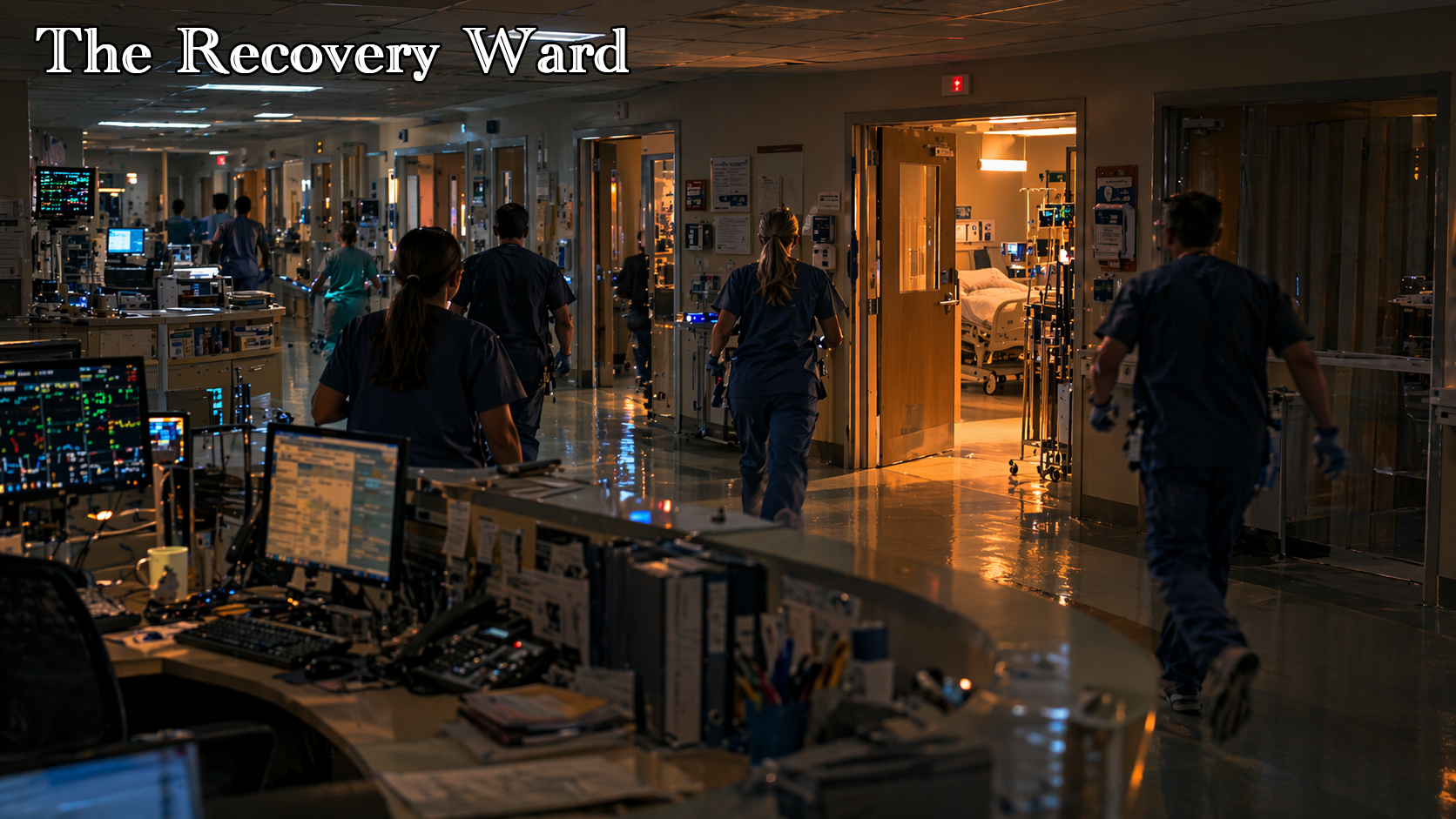
The Recovery Ward
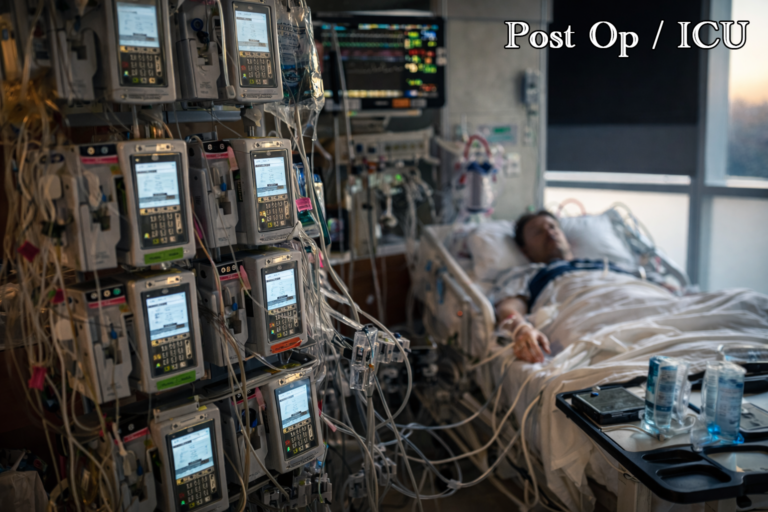
The move to the step-down unit came on November 14th—five days post-transplant, the A-line out, down to a PICC and a peripheral, and the recovery ICU finally behind me.
Get me the hell away from this nighttime ICU.
That had been the sentiment for days. The recovery ward was different in character—quieter in some ways, more ordinary, the final stage before the world outside. The people here were closer to leaving.
Not all of them would.
The Business of Getting Better
The rhythm of the ward was PT/OT, meals, vitals, rest, repeat.
The physical therapy was systematic and specific—the way post-cardiac-surgery rehab has to be. Up and walking twice daily. No raising hands above the head—the sternum has been opened and wired back together and it needs time. Sitting and standing in particular ways, weight distributed deliberately, nothing that torques the chest or risks tearing something open. Stairs: one at a time, hand on the rail, take your time. Car transfers: the specific choreography of getting in and out of a vehicle without using your arms the wrong way.
At one point during a walk, the PT staff indicated a bench adjacent to the ward—maybe a foot off the floor—and suggested I practice sitting down and getting back up. I declined. I told them I couldn’t do that with my back before the transplant.
A smile. A chuckle. We moved on.
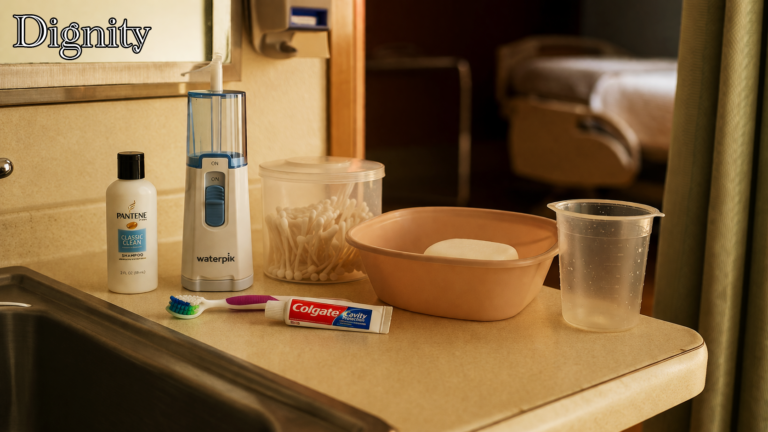
The shower instructions came separately: water can flow over the shoulders and across the chest, but don’t face the stream directly into the incision site. Not yet. Use the shower chair—stability is the priority. The last thing you want, days out from open heart surgery, is to fall.
Along the way, in both the ICU and the recovery ward, came the removals. Lines pulled. Staples taken out. The staples from a chest incision are not a small thing—you know this when the first one comes out, and you know it again with each subsequent one. The pacemaker I had been carrying for twenty years was removed during the surgery; the fourth pacemaker across the span of two decades, gone, the site sewn up and stapled closed, and now those staples coming out one by one. The body has a long history. The ward is where you start reckoning with it.
The first biopsy came back negative for rejection. The Oura ring came back online. Eight hours of sleep, an 86 efficiency score—numbers I hadn’t seen in years, arriving now like dispatches from a body that had decided to cooperate. On November 16th I texted Niles:
The mental clarity… I knew it would be like somebody flipping on the lights. I just didn’t realize…
Then: It is absolutely fucking insane.
The People in the Scrubs
At some point during the ward stay, I received the wrong medication. A nurse administered trazodone intended for another patient—a sleep aid, not dangerous in the circumstances, but a mistake.
Worth noting. Not to indict. To contextualize.
These are human beings operating under sustained pressure, managing dozens of patients across a shift, carrying their own lives into every room they enter. I had been making a point, throughout both hospitalizations, of asking after the nurses from time to time. Not as performance—because they were people. One was navigating a difficult situation with a child. Another was going through a divorce. Some were working toward certifications or finishing degrees, managing aging parents, carrying the ordinary weight of lives that did not pause because they had put on scrubs.
You are going through the worst experience of your life. That does not minimize what they are carrying.
I have written about Thomas, Sam, Melanie, Ashley—each of them in their moment, each of them specific. But there were many others, at TCH and at Mercy West before it, whose names I did not capture or whose stories I did not tell, who brought the same investment to every shift. The mistake with the medication, the frustrations with the night shift, the moments when the playbook didn’t account for me—none of that cancels what they gave. The staff at both hospitals provided genuinely outstanding care throughout an extraordinarily complicated hospitalization. I say it again here because it is still true, and because this is the piece where it becomes explicit: the people in those scrubs are participants, not backdrop. Recognizing that costs nothing and means something.
The Night
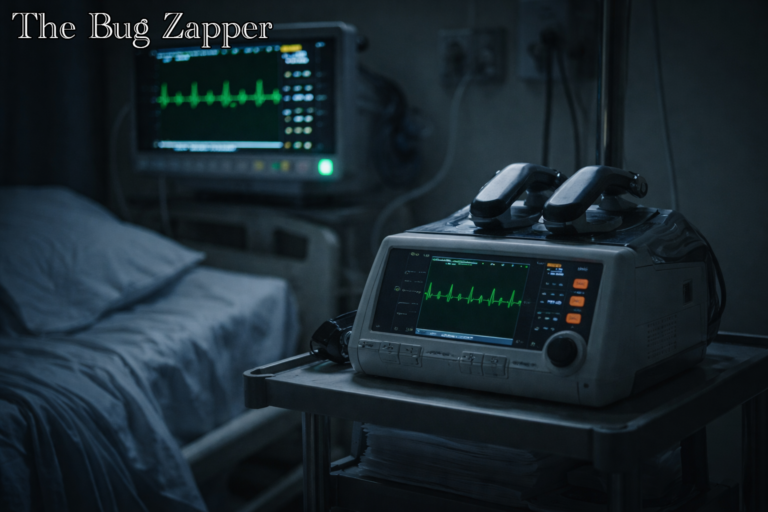
I was in my room, resting. Alarms went off on the ward.
Then the sound of running—many people, moving fast, the particular quality of a hallway in crisis. Urgent voices. The ward coming alive in the wrong direction.
I knew before anyone told me. I could feel it, sense it, the way you sense certain things when the air in a place changes.
It was a while before a nurse came through to check on me. When she did, I asked after her first. How was she doing? She said fine, nothing more, and began the process of busying herself checking vitals, head down. I asked about what I had heard. A patient had experienced issues, she said—someone on specialized equipment, the kind used in the final stages of lung recovery. The floor handled multiple types of cases; that was the nature of it.
She didn’t say anything more. I asked directly.
“He didn’t make it, did he?”
She looked at me for a moment. The depth of the evening in her eyes. She shook her head.
“He’s been having a hard time.”
What It Does to You
I was days from going home. The new heart was performing. The lights were back on.
And someone on the same floor hadn’t finished the night.
The ward where people go for the final few days before discharge is also the ward where some don’t make it to discharge. I had known this in the abstract. Now I knew it in the specific—in the sound of running feet and a nurse’s silence and a slight shake of the head in a dimly lit hallway.
I was doing well. Doing well is not the same as certain. The precariousness of recovery—even there, even then, even with a functional new heart and a clear biopsy and eight hours of sleep—does not fully lift. You carry it forward. It doesn’t stop you. But it stays.
Going Home
The countdown was real now. Monday discharge was the word.
With more oxygen reaching the brain and more time to think, what came into focus was everything that had been waiting.
Some people go home to warmth—a family overjoyed at the return of someone they’d feared losing, the house prepared, the welcome genuine and complete. Others go home to something less. The problems you had fully expected to leave unresolved on the table, to be sorted out by whoever came after you, are now waiting at the front of the line. They did not go anywhere while you were gone.
The practical fears arrived in sequence. Mobility—how do you get around a house, navigate stairs, manage a body that is healing from major surgery? Food—everything tastes wrong, the prednisone has stripped the palate of its sensitivity, and the blood sugar is a constant negotiation. Pain—the good stuff wore off days ago. The opioids that made the immediate post-operative period manageable have been stepped down steadily, and you are leaving with Tylenol. The transplant centers are not apologetic about this, and they should not be; opioid dependence in an immunosuppressed patient is its own category of problem. But it is still true that the pain is present and that what you are being sent home with is Tylenol, and you make your peace with that.
And then there is the financial reality, which arrives with the same quiet inevitability as everything else. The surgery itself. The medications—tacrolimus, mycophenolate, Cresemba, valganciclovir, and others, a stack of immunosuppressants and antivirals and antifungals essential to keeping the heart out of rejection and infectious agents at bay. These medications cost thousands of dollars every month. They are not optional. The required procedures continue: weekly blood draws, biopsies, right heart catheterizations, clinic visits without end. The income interrupted or eliminated during two months of hospitalization. The bills that accumulated while you were not in a position to manage them.
The transplant gave you your life back. It did not give you your finances back. Those are yours to rebuild, in a body that is still healing, on a timeline that does not wait.
And then the quieter anxiety, the one that doesn’t come with a bill attached: everyone has been living their lives without you for two months. They found their rhythms. The house adjusted to your absence. Now you are coming back—needing things, changing the dynamic, uncertain of your own place in spaces that were yours before you left. What will it be like, having you around again? You don’t know. Neither do they.
You sit on the ward, counting down, and you think about all of it.
Closing
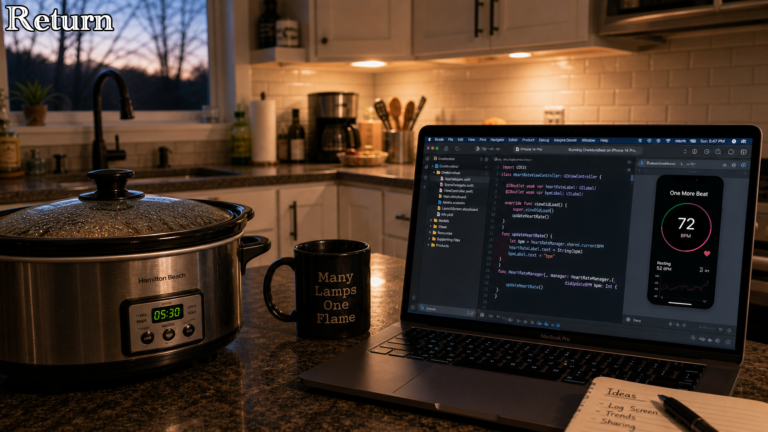
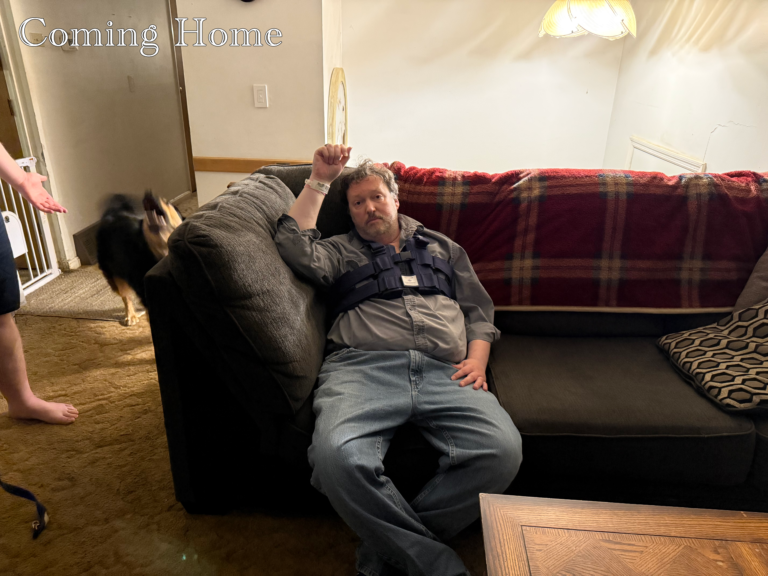
Monday came. The discharge papers were signed. The IV lines came out for the last time.
Niles: 50 days of hell, brother, but you are on the rise.
That was the truth of it. Fifty days of procedures and alarms and the sound of running feet in the night. And now the rise—real, measurable, confirmed by a biopsy and an Oura ring and a nurse who shook her head and told you what you already knew.
The ward left its mark. Not from the milestones, but from what happened between them. The man who didn’t make it. The nurse who carried the night home with her. The understanding that the gift is not guaranteed to hold—not even there, not even at the end.
You go home anyway. That’s the only move there is.
Discover more from One More Beat
Subscribe to get the latest posts sent to your email.

Fifty days — like a whole Omer journey.
Thank you for sharing these post; this is a hell of a thing to read about, to experience vicariously through your words.