What to Avoid and Why
There is a reasonable assumption that most people carry into a transplant: that things taken for years without incident are safe to continue, and that anything labeled “natural” or sold without a prescription occupies a different category from drugs. Both assumptions are wrong after a transplant, and the consequences of acting on them range from destabilized medication levels to rejection.
The immunosuppressant regimen is not simply a medication schedule. It is a pharmacological operating system functioning within narrow margins. Most heart transplant recipients leave the hospital on a triple-therapy regimen—tacrolimus, mycophenolate mofetil, and prednisone—as the baseline protocol. Sirolimus or everolimus may be introduced later, often as nephroprotective substitutions or as part of CAV management. Some recipients rely on cyclosporine rather than tacrolimus as their primary calcineurin inhibitor. The medications are different; the vulnerability they share is the same. They are all processed by the same enzymatic pathways, they all occupy narrow therapeutic windows, and they are all susceptible to disruption by ordinary substances that most people would never think to question.
This piece covers the major categories of interaction risk across the transplant medication stack—not just immunosuppressants but the antihypertensives, anticoagulants, corticosteroids, and metabolic medications that are standard components of post-transplant management. It is organized by what someone is typically trying to treat or consume when they make a choice that creates a problem. It is not exhaustive. The correct resource for any specific question is the transplant team pharmacist—a specialized resource that is available and underused. Nothing here substitutes for that conversation. But understanding why the rules exist makes them easier to follow, and easier to apply to the next thing not on any list.
How Things Go Wrong
Interactions enter the medication system through several distinct mechanisms. Understanding which door a substance uses explains why the effect occurs and why the risk is real even when the amounts seem small.
Enzyme interference is the most clinically significant mechanism across the transplant medication stack. The body uses a family of enzymes—primarily CYP3A4, but also CYP2C9, CYP2C19, and others, including the transporter protein P-glycoprotein—to metabolize and move drugs through the gut wall and liver. Tacrolimus, sirolimus, cyclosporine, everolimus, many antihypertensives, corticosteroids, and numerous other medications in the standard post-transplant regimen are all processed through these pathways. Anything that inhibits these enzymes slows drug breakdown and causes levels to rise. Anything that induces them accelerates breakdown and causes levels to fall. Both directions carry serious risk across multiple medications simultaneously.
Absorption interference operates differently. Some substances physically interfere with drug absorption in the gut—not through enzyme activity, but through binding or weak complex formation. The drug and the interfering substance pass through together and less reaches the bloodstream. High dietary fiber and fat both affect gastric emptying rate, which changes how quickly and completely a drug is absorbed. The result is drug levels that may not match the intended dose.
Direct pharmacological effect describes substances that do something on their own that either amplifies or conflicts with another drug in the regimen. Blood-thinning is the clearest example: a number of common foods and supplements have anticoagulant properties that add to whatever anticoagulant is already in the stack. The interaction has nothing to do with immunosuppressants—it runs through an different part of the operating system. The same logic applies to blood pressure and blood sugar: substances that affect glucose or vascular tone interact with the medications managing those systems, regardless of whether they touch the immunosuppressant tier at all.
Immune stimulation is a separate category operating on different logic entirely. The immunosuppressant regimen exists to prevent the immune system from identifying the donor heart as foreign tissue and attacking it. Anything specifically designed to enhance immune function works directly against that therapeutic goal. The mechanism is beside the point. The intention of the substance is the problem.
Foods: The Hard Avoids
Some foods are off the table regardless of amount, timing, or frequency. The reason is not that a small amount causes a large problem—it is that the studies cannot establish what amount causes what problem in whom, the effect varies substantially from person to person, and the potential consequence of getting it wrong is severe enough that no transplant program has been willing to define a safe threshold.
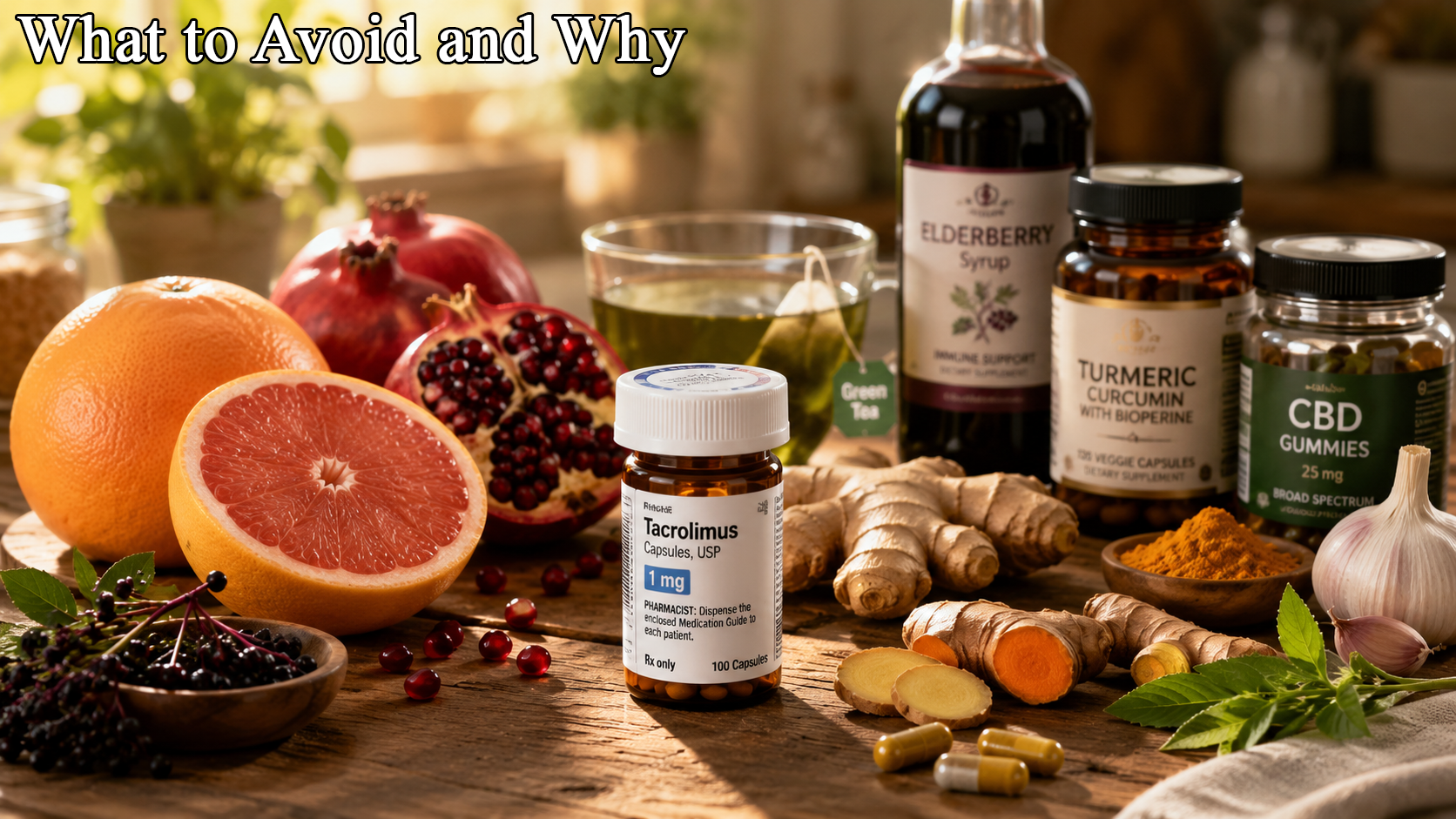
Grapefruit and grapefruit juice are the best-known prohibition. The active compounds—furanocoumarins—inhibit CYP3A4 specifically in the gut wall, and the effect is not proportional to the amount consumed. A single glass of grapefruit juice can inhibit the enzyme for up to 72 hours. The interaction affects not only tacrolimus and cyclosporine but calcium channel blockers, statins, and other medications commonly prescribed post-transplant. Grapefruit appears in commercial products in ways that are not always obvious—certain juices, energy drinks, and flavored beverages contain grapefruit as a component without leading with it on the label. The ingredient list is the relevant document. [3][4]
Pomegranate operates through a combination of CYP3A4 and P-glycoprotein inhibition. Where grapefruit’s furanocoumarins primarily act on CYP3A4 in the gut wall, pomegranate also inhibits P-glycoprotein—the efflux transporter that normally pumps drug molecules back into the intestinal lumen. When P-glycoprotein is inhibited, tacrolimus remains in the gut wall longer and has a greater opportunity to pass into the bloodstream, producing unpredictable spikes. The research has been inconsistent—some studies suggest the effect is primarily in the seeds, others in the juice, others find minimal effect under certain conditions—and that inconsistency is itself the problem. Until the studies can identify a reliable safe threshold, the prohibition stands. [5][6]
Starfruit carries a dual risk. It is a CYP3A4 inhibitor, and it contains a neurotoxin—caramboxin—that in healthy individuals is filtered by the kidneys without consequence. In anyone with compromised kidney function, which describes a significant portion of transplant recipients given tacrolimus’s nephrotoxic effects, caramboxin can accumulate and cause neurological symptoms including seizures. Both mechanisms make it an unambiguous avoid. [7]
Seville oranges are less commonly encountered but worth naming because of where they appear: marmalade. Standard marmalade is typically made from Seville oranges rather than sweet oranges, and Seville oranges share the furanocoumarins responsible for grapefruit’s CYP3A4 inhibition. Someone who has given up grapefruit juice and continues eating marmalade with breakfast has not fully addressed the problem.
Soursop—also sold as graviola—is a tropical fruit with CYP3A4 inhibitory activity that is increasingly available in juice and supplement form in the United States and more commonly consumed in Caribbean and Latin American communities. It belongs on the avoid list for the same reasons as grapefruit and pomegranate.
Foods: Timing and the Absorption Window
A second category of foods presents risk not through absolute prohibition but through timing and proximity to medication doses. The critical concept is the absorption window. For standard immediate-release tacrolimus (Prograf), absorption is largely complete within roughly two hours of ingestion under normal conditions. Extended-release formulations—Envarsus XR, Astagraf XL—stretch this window to four to six hours and can be affected by food over a considerably longer timeline; the requirement for consistency remains identical, but the window itself is significantly wider. Mycophenolate mofetil has its own absorption profile and is similarly affected by the timing and composition of meals. What is in the gut during the absorption window—and for a period before it—is what matters.
This means the question is never “Did I eat something high in fat today?” The question is “What was in my gut when I took my medications, and in the time immediately following?” A light breakfast with morning medications, followed by a high-fat lunch two or more hours later, presents no absorption problem for that morning dose. The same high-fat meal eaten before or alongside the medications is a completely different matter. The food has not changed. The timing has.
The same logic governs consistency. Transplant teams calibrate doses against a pattern. Someone who reliably takes their medications with a light breakfast has their dose calibrated around light-breakfast absorption. Switching to a heavier breakfast—even occasionally—introduces a variable the current dose was not calibrated for.
High-fat meals do not simply slow tacrolimus absorption—they actively reduce it. Studies have shown that taking tacrolimus with a high-fat meal can decrease total drug bioavailability by 35 to 40 percent while simultaneously delaying peak concentration. Less of the drug reaches the bloodstream, and what does arrive comes later. Depending on the size and fat content of the meal, the absorption window can stretch to three to six hours. A light meal or no meal at the time of the tacrolimus dose is the standard guidance for a reason. [1][2]
High-fiber foods reduce tacrolimus and mycophenolate absorption through physical binding in the gut. This is a specific practical problem for recipients managing post-transplant diabetes through a low-carbohydrate diet. High-fiber breads and tortillas are a natural tool for keeping net carbs down. They also affect medication absorption if consumed during the dose window. A high-fiber sandwich at lunch, taken hours after the morning dose, is not a problem. That same sandwich eaten alongside the morning dose is. The food is the same. The timing determines the effect.
Tea from Camellia sinensis—which means black, green, white, oolong, and pu-erh, all of which are the same plant processed differently—contains catechins and theaflavins that interfere with both CYP3A4 and P-glycoprotein. The problem is not the caffeine. It is specific to the polyphenols produced by that plant. Even a single cup daily can cause unpredictable swings in tacrolimus and cyclosporine levels depending on individual metabolism. Green tea extracts or concentrates elevate this from a variable to a definitive risk—the concentrated polyphenol load in supplement form is a different magnitude of exposure than a brewed cup.
Herbal teas—rooibos, chamomile, peppermint, hibiscus—are technically tisanes, not tea, and do not share the Camellia sinensis interaction profile. Their individual interaction profiles vary and should be cleared with the team.
Cruciferous vegetables at high intake—broccoli, cauliflower, Brussels sprouts, kale, cabbage—have a modest CYP3A4-inducing effect that can modestly reduce tacrolimus and cyclosporine levels. A serving of broccoli with dinner is not a clinical concern. Very large quantities consumed daily as part of a focused dietary change is a variable worth noting to the team.
Blood Sugar
Post-transplant diabetes is common and affects management across multiple medication tiers. Tacrolimus impairs insulin secretion; sirolimus and everolimus cause insulin resistance; prednisone raises blood glucose directly through gluconeogenesis and insulin resistance. The combined diabetogenic effect is substantial, and recipients on triple therapy face pressure from multiple directions simultaneously. The supplement industry has answers ready. Several of them are problematic.
Berberine has attracted serious clinical attention for glucose management—some studies have compared its effects favorably to metformin. That evidence has made it increasingly popular, including among people who want to reduce or avoid pharmaceutical intervention for diabetes. It is also a CYP3A4 inhibitor. The population most likely to reach for berberine is exactly the population whose tacrolimus levels are already being disrupted by the combined diabetogenic effects of their entire immunosuppressant regimen. The irony is not small.
Cinnamon at food amounts is not a concern. In capsule form—standardized cinnamon extract at the doses found in supplements—it has real effects on blood sugar and mild anticoagulant properties. The form changes the pharmacology.
Chromium is widely marketed for insulin sensitivity. Its interaction profile is less dramatic than berberine, but the glucose management picture post-transplant—multiple medications affecting blood sugar through multiple mechanisms—means adding any active agent without team review introduces an unquantified variable.
Sleep
Tacrolimus disrupts sleep directly. The medication schedule starts before most people are awake. Prednisone, particularly at higher doses in the early post-transplant period, causes insomnia and can produce a wired, unsettled quality at night even when the recipient is exhausted. Sleep deprivation is nearly universal in early recovery, and the reach for sleep aids is understandable. Several of the most common options carry significant interaction risk.
Valerian root is a CYP3A4 inhibitor. The more instructive point is how it arrives: not usually as a standalone supplement, but as an ingredient in blended sleep formulations. A melatonin product not cleared by your transplant team can contain valerian root and drive tacrolimus levels up for days before anyone identifies the source. This is not hypothetical. Reading the label is necessary, but reading it once is not sufficient—formulations change, and a product that was safe under one formula is not automatically safe when the manufacturer revises the blend. Re-vetting is required every time.
CBD and cannabinoids belong in the sleep section because that is frequently why people take them, but the interaction risk runs across every use case. Cannabidiol is a potent inhibitor of CYP3A4 and CYP2C19. Taking CBD oil, gummies, or tinctures can cause dramatic and dangerous spikes in tacrolimus levels. CYP2C19 inhibition also affects other medications processed through that pathway, including proton pump inhibitors and certain antidepressants that are common in this population. Because CBD is legal in many jurisdictions and marketed alongside supplements in the public consciousness, it is one of the more common sources of accidental tacrolimus toxicity. [9][10]
Kava is a CYP3A4 inhibitor with an independent liver toxicity risk. It is not appropriate for anyone on a hepatically metabolized drug regimen.
Passionflower, lemon balm, and similar preparations have less well-characterized interaction profiles. “Less well-characterized” means the risk is not quantified, not that the risk does not exist.
Melatonin itself is generally cleared by most transplant teams. The formulation is what matters. Pure melatonin is typically acceptable. Blended sleep formulations require ingredient-by-ingredient review.
Nutrient Deficiencies
This is the most complicated category, because the deficiencies are real. Tacrolimus depletes magnesium. Prednisone depletes calcium, potassium, and vitamin D over time, and accelerates bone loss by interfering with calcium absorption and vitamin D metabolism. Mycophenolate can reduce folate levels. The medication regimen as a whole creates genuine nutritional gaps. Supplementation is necessary—but supplementation that requires active management of timing, form, and dose across a medication stack that includes multiple absorption-sensitive drugs.
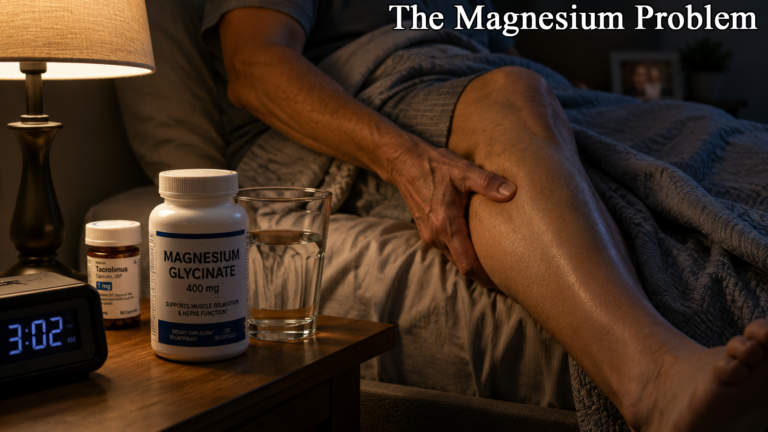
Magnesium is its own extended problem. It is necessary for most recipients and interacts with nearly everything. Magnesium forms weak complexes that reduce tacrolimus and mycophenolate absorption—sometimes by 30% or more. Calcium, iron, and aluminum operate similarly across multiple medications. The solution is spacing: a minimum of two hours on either side of immunosuppressant doses, before or after. Two hours is the floor, not the target.
Form matters significantly. Magnesium oxide is poorly bioavailable—a substantial portion passes through without being absorbed. Magnesium glycinate and malate are considerably more bioavailable and better tolerated. Magnesium citrate is effective but has pronounced motility effects at higher doses, which affects the absorption of everything nearby.
Dose per administration also matters. The gut has a saturation threshold. Large single doses of magnesium are not efficiently absorbed. Smaller doses spread across the day outperform large single doses on both absorption and tolerance.
Calcium and iron follow the same spacing logic. Calcium carbonate—the active ingredient in Tums and most antacids—binds tacrolimus and mycophenolate in the gut and reduces their absorption. Taking antacids around the time of immunosuppressant doses is the same problem as taking a calcium supplement at the wrong time. Iron competes with both magnesium and tacrolimus. For anyone post-thyroidectomy, levothyroxine adds another timing constraint—iron and calcium both interfere with thyroid hormone absorption as well. Prednisone’s long-term effect on calcium metabolism means most recipients need calcium supplementation—but that supplementation has to be timed carefully around everything else in the stack.
Potassium deficiency is common; supplementation requires care because tacrolimus can cause potassium retention in some patients, and cyclosporine has similar effects. The balance is actively managed through bloodwork. Electrolyte drinks warrant specific mention: high-potassium formulations marketed to athletes can be problematic for recipients whose potassium is already being monitored, and some formulations include herbal additions that do not appear prominently on the front label.
Vitamin D deficiency is common post-transplant—prednisone actively interferes with vitamin D metabolism and calcium absorption, and most recipients need supplementation. Levels should be monitored through bloodwork rather than self-managed by dose escalation.
Vitamin K requires a different kind of attention. It is not typically prohibited—the issue is consistency. For anyone on anticoagulation therapy, stable dietary vitamin K allows for stable anticoagulant dosing. Swings in intake move the INR without touching the medication. Someone who rarely eats leafy greens and then begins eating them daily has effectively changed their anticoagulation without adjusting the dose.
Vitamin C carries a ceiling that most transplant centers set around 1 gram daily, for two reasons that compound each other. The first is immune modulation: at doses above roughly 1 gram, vitamin C has effects on immune function beyond its role as a nutrient, running counter to the therapeutic goal of immunosuppression. The second is nephrotoxicity: high-dose vitamin C is metabolized into oxalate, which can crystallize in the kidneys and cause acute oxalate nephropathy. Given that tacrolimus and cyclosporine are both independently nephrotoxic, adding an oxalate burden from mega-dose vitamin C creates a dual threat to kidney function. The ceiling is not arbitrary. [8][7]
General Wellness and Anti-Inflammatory
This category catches the most people off guard, because the supplements in it are positioned as unambiguously health-positive—chosen specifically because they seem like a reasonable complement to a difficult medical situation.
Turmeric and curcumin are CYP3A4 inhibitors at supplement doses. They are typically sold in combination with piperine—black pepper extract—added specifically to enhance absorption. Piperine is itself a CYP3A4 and P-glycoprotein inhibitor. The combination stacks two inhibitors simultaneously. Food amounts of turmeric and black pepper are not the concern; the concentrated formulation is, and the “enhanced bioavailability” marketed as a feature is pharmacologically the problem.
Milk thistle is marketed for liver support, which makes it seem particularly appropriate for someone on a drug regimen heavily processed by the liver. It inhibits CYP3A4 and P-glycoprotein—the very pathways responsible for metabolizing those drugs. The logic is exactly backward.
Quercetin is an anti-inflammatory antioxidant and CYP3A4 inhibitor. It appears in standalone supplements and as an added ingredient in immune and longevity formulations, often without prominent labeling.
Fish oil at food amounts is generally fine and often recommended for cardiovascular benefit. At high therapeutic doses, anticoagulant effects become clinically relevant for anyone on aspirin, warfarin, or antiplatelet therapy. The dose is the variable.
Saw palmetto is common among older male recipients managing benign prostatic hyperplasia. Its primary interaction concern is anticoagulation—it potentiates aspirin and warfarin through blood-thinning properties that have nothing to do with the transplant medications directly. That is precisely why it gets missed. The question to ask about any supplement is never whether it is related to the transplant. The question is whether it affects anything in the stack.
Garlic, ginger, and cinnamon in supplement form: food amounts are generally not a concern; concentrated extracts amplify pharmacological effects—anticoagulation for garlic and ginger, glucose and anticoagulation for cinnamon—to the point where the clinical significance changes. The substance is not the variable. The dose is.
Immune Support
“Immune support” has been positioned by the wellness industry as an unambiguously good thing. For transplant recipients, that framing has to be set aside entirely. The suppressed immune system is not a side effect to be managed. It is the intended therapeutic state. The immune system is being kept from doing what it would otherwise do: recognize the donor heart as foreign tissue and work to eliminate it. Anything that boosts immune function works against the medication regimen, regardless of mechanism, regardless of how gently it is marketed.
Elderberry is the one people ask about most, because it has genuine clinical evidence for reducing cold duration in immunocompetent populations. That evidence is irrelevant post-transplant. The immune stimulation is the problem. Elderberry also has some CYP3A4 activity. Both mechanisms run the wrong direction.
Echinacea is an immune stimulant and, at higher doses, a CYP3A4 inhibitor. It appears in cold remedies, which is exactly when a post-transplant recipient is most tempted to reach for it.
Ashwagandha has become one of the most widely used adaptogens in the American supplement market, primarily for stress and cortisol management. It is a known immune stimulant with documented effects on T-cell counts, running directly counter to the goal of keeping the immune system quiet. The stress and recovery use case that makes it appealing to post-transplant recipients is exactly the context in which it should not be used.
Astragalus is an immune stimulant with a long history in Traditional Chinese Medicine and increasing mainstream presence.
Cat’s claw is an immune stimulant and CYP3A4 inhibitor—another double mechanism.
Medicinal mushrooms—reishi, turkey tail, lion’s mane, chaga—are marketed heavily in wellness culture for immune modulation. Turkey tail in particular has clinical research behind it as an immune adjunct in oncology, where the therapeutic goal is the opposite of immunosuppression. The research is real; the application is wrong for this population.[5][18]
Beta-glucan supplements are immune stimulants. Same category, same problem.
High-dose vitamin C belongs here as well as in the nutrient section. At doses above roughly 1 gram daily, vitamin C has immune-modulating effects beyond its role as a nutrient—one of two reasons the ceiling exists.
Mood and Mental Health
St. John’s Wort is a potent CYP3A4 inducer—the only major supplement in common use that works in the opposite direction from everything else discussed here. Where enzyme inhibitors drive drug levels upward, St. John’s Wort accelerates metabolism and drops them. The risk is sub-therapeutic immunosuppression, which means rejection. It also induces CYP2C9, which affects warfarin, and CYP2C19, which affects several other medications in the standard post-transplant stack. The contraindication is essentially universal among transplant programs. [11][12] St. John’s Wort is still taken by recipients because it is not thought of as a drug interaction risk. It is an herb. It is for low mood. Neither of those framings changes what it does to tacrolimus, cyclosporine, and warfarin levels.
CBD and cannabinoids are discussed in the section on sleep but belong here as well. As mentioned earlier, products such as CBD oil, gummies, and tinctures should be avoided.
Over-the-Counter Medications
The piece has focused primarily on supplements and foods, but one category of over-the-counter medication deserves explicit mention because it is reached for so reflexively that it rarely registers as a drug interaction risk at all.
NSAIDs—ibuprofen, naproxen, and their branded equivalents (Advil, Motrin, Aleve)—are among the most commonly used over-the-counter medications. For transplant recipients on calcineurin inhibitors, they carry a specific and serious risk: NSAIDs constrict the afferent renal arterioles, reducing blood flow to the kidneys. Tacrolimus and cyclosporine both independently cause renal vasoconstriction through different mechanisms. The combination produces a synergistic reduction in renal perfusion that can cause acute kidney injury or accelerate the progression of chronic kidney disease.[13][14] NSAIDs also reduce the antihypertensive effectiveness of several blood pressure medications commonly used post-transplant, including ACE inhibitors and ARBs. And in combination with prednisone, they significantly increase the risk of gastrointestinal bleeding. Three separate interaction pathways running through three separate tiers of the medication stack, from one drug that most people don’t think of as a drug.
Acetaminophen is the standard alternative for pain and fever management in this population, within the dose limits the team specifies. Ask before the need arises, not during it.
Alcohol and Cannabis
These belong together not because they are pharmacologically similar but because they share a cultural framing problem: both are widely used, broadly legal in various forms, and not thought of as substances that require medical clearance.
Alcohol interacts with tacrolimus and cyclosporine through CYP3A4, affecting drug levels. It is independently hepatotoxic, adding to the liver burden of a regimen already heavily processed by the liver. It is nephrotoxic, compounding the kidney burden that calcineurin inhibitors already create. It affects blood pressure, complicating antihypertensive management. It raises blood sugar, complicating an already complex glucose picture in a population with high rates of post-transplant diabetes. Chronic or heavy use has immunological effects that run counter to the carefully managed immune state the regimen is trying to maintain. Most transplant programs permit modest consumption after the initial recovery period, at the team’s discretion and within limits the team defines. That conversation needs to happen. The limit needs to be respected.
Cannabis presents a more complex picture because the relevant variables—compound, dose, and delivery method—each carry different implications.
CBD (cannabidiol) is a potent inhibitor of CYP3A4 and CYP2C19, which means it can cause dangerous spikes in tacrolimus, cyclosporine, and other medications processed through those pathways. It is one of the more common sources of accidental tacrolimus toxicity in the current supplement landscape, precisely because it is perceived as benign.
THC (tetrahydrocannabinol) is itself a CYP3A4 substrate, competing for the same metabolic pathway as tacrolimus and cyclosporine. It has cardiovascular effects—acute increases in heart rate and blood pressure, and effects on vascular tone—that are relevant in a population managing a transplanted heart and coronary allograft vasculopathy. It also affects blood pressure regulation in ways that interact with the antihypertensive tier of the medication stack.
Delivery method adds another layer. Smoked cannabis introduces combustion products and the potential for fungal spores—including Aspergillus—directly into the lungs of an immunosuppressed recipient. Pulmonary aspergillosis is a serious and life-threatening opportunistic infection in this population. [15] Inhaled cannabis, whether smoked or vaped, carries respiratory infection risk that edibles and tinctures do not. Edibles and tinctures bring the pharmacological concerns without the pulmonary ones.
Legal status varies by jurisdiction and is not the relevant variable here. The pharmacological risks exist regardless of where a recipient lives. The conversation with the transplant team is required before any form of cannabis is used.
The Regulatory Gap—and What Europe Got Right
In the United States, the 1994 Dietary Supplement Health and Education Act largely removed supplements from pre-market approval requirements. A manufacturer is not required to prove that a supplement is safe or effective before selling it, that what is on the label is what is in the capsule, or that the stated concentration is accurate. The FDA can act after problems emerge; it cannot require proof before they do. [16]
The result is an industry occupying the regulatory space between food and pharmaceutical without being fully governed by the rules of either. The term “nutraceutical” describes this position accurately: positioned to suggest clinical efficacy, not required to demonstrate it.
The contrast with European practice is instructive. In Germany, herbal remedies have long occupied a regulated middle ground. The German Commission E—operating under the Federal Institute for Drugs and Medical Devices—formally evaluated hundreds of plant-based preparations and issued monographs assessing their safety, efficacy, and known interactions, in much the same way a pharmaceutical regulatory body would review a drug. Someone who has stood in a German Apotheke has seen what this produces: standardized preparations with package inserts that read like pharmaceutical product information, listing indications, contraindications, dosing, and interaction warnings, dispensed by pharmacists trained to counsel on them. [17] The cultural assumption built into that system is that a plant-derived remedy is still a remedy—which means it has pharmacological effects, which means it has the potential for adverse effects and interactions.
That assumption is correct. It is also largely absent from the American supplement aisle.
The European regulatory tradition produced much of the interaction data that exists for these substances—the research on milk thistle and CYP3A4, valerian and the central nervous system, echinacea and immune modulation. A well-characterized interaction is still an interaction. The European framework does not make these substances safe for transplant recipients. It makes them better understood, and the understanding is the argument for caution.
The valerian/melatonin incident illustrates the American version of the problem. A product cleared by the transplant team. A formula that had changed. Valerian root in the blend, not prominently labeled. Several days of disrupted tacrolimus levels before the source was identified. The failure was not medical. It was regulatory.
Clearing a supplement with the transplant team means clearing the specific product and formulation. Generic substitutions require the same scrutiny as the original. Re-vetting is required when a product changes. The label on the back is the document that matters.
The Principle
The list in this piece is not exhaustive. New supplements reach the market continuously; formulations change; research on interactions is incomplete and occasionally contradictory. What does not change is the framework.
The question to ask about anything going into the body: Does this affect an enzyme that metabolizes my medications? Does it compete for or interfere with absorption? Does it have pharmacological effects that add to or subtract from something already in the stack? Does it affect immune function in any direction?
If the answer to any of those is yes, or unknown, the conversation happens with the transplant team before the supplement is taken. The team pharmacist is the right resource—specialized, familiar with the specific regimen, and available for exactly this kind of question.
Ask specifically, not generally. “Is it okay to take supplements?” is not the same question as “Is it okay to take this specific product, in this formulation, at this dose, at this time relative to my tacrolimus?”
The specifics are where the answers live.
Discover more from One More Beat
Subscribe to get the latest posts sent to your email.