A Tea By Any Other Name
A quick note before any of this: nothing here replaces a conversation with your transplant pharmacist. This is meant to make that conversation more informed, not to substitute for it.
A version of this conversation plays out constantly in transplant support groups, usually starting with someone asking a version of “what about tea?”
And there’s a response that shows up almost every time, from someone else in the thread, before the question’s even been properly answered:
“I drink Earl Grey every day, five times a week. Green tea too. And I’m just fine.”
The impulse behind that is understandable. But that sentence only establishes that one person experienced no obvious adverse consequence. It doesn’t tell you whether their drug exposure actually changed, whether any change was clinically meaningful, or whether someone else on the identical regimen would respond the same way.
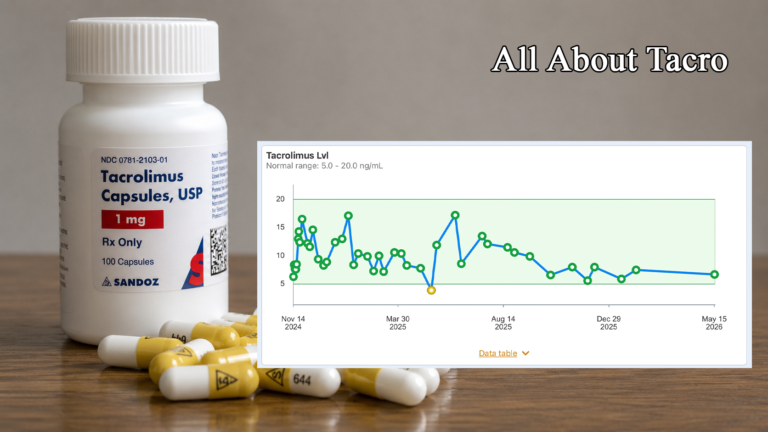
Tacrolimus has a narrow therapeutic window and famously wide variability from one patient to the next in how it’s actually metabolized. Genotype (particularly CYP3A5 status), hematocrit, organ function, interacting drugs, time since transplant, and adherence all play a role. Two people on the identical dose can land at meaningfully different blood levels for reasons that go well beyond anything either of them is doing differently.
Someone else’s five years of daily Earl Grey with no apparent problem tells you nothing about your own CYP3A activity, your own trough levels, or what a slow accumulation looks like on your labs before it becomes something your team actually flags. “I’ve done it and I’m fine” is an anecdote of one, standing in for pharmacology it can’t actually speak to.
It’s exactly the reasoning that gets people into trouble, and it’s worth naming plainly before getting into the specifics, because otherwise it just sits there arguing with everything that follows.
What follows isn’t a definitive allow/avoid list. It’s a map of what to actually look for on a label and what to bring to your pharmacist, because the honest answer to “what about tea” is almost always “it depends on what’s actually in it” — and that’s a harder, more useful answer than a green light or a red one.
What “Tea” Actually Means
Here’s the distinction that makes a single blanket verdict for “tea” impossible: true tea and herbal tea aren’t the same category of thing, even though English uses one word for both.
True tea — black, green, white, oolong, pu-erh, matcha — all comes from one plant, Camellia sinensis, processed differently to produce different colors and flavors. Every one of those shares the same botanical source and overlapping compounds — catechins and theaflavins, plant compounds that have been studied for effects on CYP3A4, P-glycoprotein, and other drug-handling pathways — the same machinery your body uses to process tacrolimus.
That’s not the same thing as saying all six carry one identical, established interaction risk. Composition varies significantly by type and preparation, and the clinical evidence isn’t uniform enough to treat black, white, green, oolong, pu-erh, and matcha as pharmacologically interchangeable. What they share is a family resemblance worth flagging, not a single number your pharmacist can apply across the board.
Herbal “tea” — chamomile, peppermint, rooibos, ginger, hibiscus, and the rest — isn’t tea at all in the botanical sense. The correct term is tisane: a hot water infusion of some other plant material entirely, none of which have anything to do with Camellia sinensis or share its interaction profile.
Every herbal tisane is its own separate question, with its own separate chemistry. Treating them as one undifferentiated category of “herbal tea, probably fine” is exactly how people miss the ones that aren’t.
One more layer worth knowing before getting into specifics: a tea brewed from a plant’s leaf, root, or flower can carry a meaningfully different chemical profile than the fruit or food form of that same plant — though as soursop further down illustrates, that distinction isn’t always as clean as it sounds. Ginger root and licorice root are teas made from the root specifically, not the more familiar culinary form. The part of the plant matters, even when it doesn’t fully separate the exposures the way you might expect.
True Tea, One at a Time
Black tea is fully oxidized during processing, which substantially changes its polyphenol profile compared with green and white tea. It still contains biologically active compounds — theaflavins and thearubigins — that have been studied for effects on drug-metabolizing enzymes and transporters, but the clinical significance of ordinary brewed black tea remains uncertain and is best interpreted by your own transplant team rather than treated as a settled risk category.
This is still a conversation for your pharmacist, not an assumption to make on your own — “uncertain” isn’t the same as “cleared.”
Green and white tea deserve more nuance than they usually get. The NIH’s LiverTox database notes that the much clearer and better-documented liver risk is concentrated green tea extract; liver injury from brewed tea and infusions appears rare but is not zero — a small number of idiosyncratic cases have been reported from infusions as well, not only extracts.
The interaction with tacrolimus specifically isn’t purely theoretical, either — there’s a published case report describing increased plasma tacrolimus levels after green tea ingestion in a kidney transplant recipient, who turned out on genetic testing to be a CYP3A4 “poor metabolizer” — exactly the kind of individual variability discussed earlier, and a reminder that the same cup can land very differently depending on who’s drinking it. It’s a single case report, not a population-level finding, and a broader review found strong signals in laboratory studies but a much less convincing clinical picture. Both things are true at once: worth flagging, not settled.
Transplant centers genuinely differ on how they handle this: some clear brewed green tea in moderation, others don’t. If your own team has told you to avoid it, that’s your center’s guidance and it should be followed — but it’s fair to understand that guidance as a considered clinical position, not universal, undisputed fact.
Oolong and pu-erh come from the same plant but undergo different processing, and there’s considerably less interaction research specific to either one. Shared origin is reason to ask the question, not enough evidence on its own to assign them the same clinical risk as black or green tea.
Matcha is worth understanding on its own terms, and it’s also the source of one of the more persistently misquoted numbers in tea marketing. You’ll see it claimed that matcha delivers 137 times the EGCG of ordinary green tea; that figure comes from a single 2003 comparison against one specific commercial product, not a general finding.
A peer-reviewed 2023 laboratory comparison of commercially available bagged, gunpowder, and matcha green teas found ceremonial and culinary matcha in the same general range as quality bagged and gunpowder green tea per gram of dry leaf — in that study, EGCG in bagged and gunpowder teas actually ranged higher (up to about 70 mg/g) than either matcha grade (roughly 50–57 mg/g). Matcha’s real distinction isn’t a dramatically higher concentration. It’s that you consume the whole ground leaf rather than steeping and discarding it, so more of that leaf’s catechin content actually ends up in the cup, and product-to-product variation is large enough that this isn’t something to reduce to a simple multiplier.
If your team is comfortable with occasional brewed green tea, that’s a reasonable starting point for a conversation about matcha too — not an automatic escalation to extract-level concern, but not nothing either.
The Citrus-Adjacent Trap
This is the category people miss most often, because it doesn’t read as “tea” in the way green tea obviously does — it reads as flavor.
Earl Grey and bergamot are chemically plausible cousins of the grapefruit problem, not a proven clinical equivalent — and that distinction matters. Earl Grey is black tea scented with bergamot oil, and bergamot oil can contain substantial bergamottin, the same class of furanocoumarin compound responsible for grapefruit’s CYP3A4 inhibition. That’s a real mechanism. What’s missing is a human clinical study showing that ordinary Earl Grey consumption actually produces a grapefruit-scale interaction with tacrolimus in practice.
This is a good example of the piece’s own argument in miniature: an ingredient worth flagging to your pharmacist, with a plausible mechanism behind it, but not something to treat as clinically identical to a documented grapefruit interaction just because the chemistry rhymes.
Related furanocoumarins also turn up in other citrus products, including Seville-orange peel and marmalades made from it; bergamot oil itself shows up separately in flavorings and cosmetics. The chemistry is related across these products, not identical, and not all of it traces back to the same source.
Grapefruit- and pomelo-containing teas raise a more direct concern, because the underlying fruits contain furanocoumarins capable of inhibiting CYP3A4, the pathway central to tacrolimus metabolism. That’s well-established for the fruit and juice — there’s a published case of a renal transplant patient whose tacrolimus level rose sharply after eating well under 100 grams of pomelo — but it doesn’t automatically mean every commercial “grapefruit tea” on a shelf carries a clinically significant dose of the same compounds. The amount of actual fruit or peel in a given product varies, which is one more reason the ingredient list matters more than the product name.
Seville orange, or bitter orange, tea contains its own furanocoumarin compounds, related to but not identical with the ones in bergamot oil, and its CYP3A4 interaction has more direct human evidence behind it than Earl Grey’s does — though even Seville orange doesn’t fully reproduce every aspect of grapefruit’s interaction profile. Worth naming specifically to your pharmacist rather than assuming it behaves identically to either grapefruit or Earl Grey.
The throughline across this whole section: a citrus-derived ingredient in a tea may be more than flavoring. It can be pharmacologically relevant, and it deserves to be read that way on a label.
Herbal Tisanes, Individually
Peppermint sits toward the lower-concern end of the herbal category — caffeine-free, with no established tacrolimus interaction profile.
Rooibos needs a real correction here, not just a caveat. There’s a published case of an allogeneic hematopoietic stem-cell transplant recipient whose heavy rooibos consumption reduced her tacrolimus concentration and resulted in graft-versus-host disease. That’s not a solid-organ transplant case, and it doesn’t make rooibos dangerous in ordinary use — but it rules out calling this “no established interaction.” Limited evidence, with one clinically significant case at very high intake, is the more honest description.
That case is worth sitting with for a second, because the detail that matters most is the dose: the patient was drinking more than two liters of rooibos a day. That’s roughly eight cups, of one specific tea, every single day.
That’s not how most people drink tea. It’s an extreme case, and extreme cases are exactly where a lot of herbal interaction literature comes from, because that’s when an effect becomes large enough to actually get measured and published.
It doesn’t mean rooibos is something to avoid. It means dose makes a real difference, and “a cup with breakfast” and “eight cups a day of one thing” are not the same exposure, even when the tea itself is identical. That principle applies well beyond rooibos — it’s worth keeping in mind for several of the teas discussed below, too.
Ginger tea splits along a dose line, though it’s more a matter of degree than a clean allow/avoid line. The interaction literature becomes more relevant as exposure becomes concentrated; ordinary culinary and brewed-tea exposure hasn’t generated the same level of clinical concern as extracts and high-dose preparations. That’s not the same as a clearance — concentrated extracts deserve extra review specifically for anyone on an anticoagulant like Eliquis (apixaban), and the picture there is genuinely mixed rather than clear-cut. Human platelet studies are roughly split, with about half showing reduced platelet aggregation from ginger and half showing no effect. The published clinical bleeding reports involving ginger are principally documented with older anticoagulants like warfarin, not apixaban specifically. Apixaban is metabolized through CYP3A4 and cleared through P-glycoprotein, both pathways ginger can plausibly affect — but that’s mechanistic, in-vitro plausibility, not an established human apixaban interaction. “Worth a closer look with your pharmacist” is the right level of concern here, not an established interaction on the level of St. John’s wort.
Chamomile has been implicated in a published warfarin-associated bleeding case, though controlled evidence for a clinically meaningful anticoagulant effect from chamomile alone remains limited. There’s a published case of a woman on warfarin hospitalized with multiple internal hemorrhages after using chamomile tea and a chamomile-based lotion together, and a 2021 systematic review in the British Journal of Clinical Pharmacology lists chamomile tea among the herbs with documented bleeding-event reports in patients on warfarin specifically.
The evidence base is built around warfarin rather than apixaban or other newer anticoagulants, so the caution with Eliquis is a reasonable extension of that risk rather than an identically documented one.
But “occasional weak tea” and “regular use of a concentrated chamomile product” are genuinely different exposures, and the distinction is worth keeping in mind rather than collapsing into one blanket answer.
Licorice root tea has a well-established mechanism entirely separate from the CYP3A4 story running through most of this piece: glycyrrhizin, the compound responsible for licorice’s characteristic flavor, can cause pseudohyperaldosteronism — a real, documented effect on blood pressure and potassium levels through an entirely different pathway.
For a transplant recipient already managing blood pressure and electrolytes as part of routine care, this is not a small thing to introduce quietly through tea.
Soursop tea — also sold as graviola or guánabana — deserves a different kind of caution than everything else in this section, because the risk here isn’t primarily a CYP3A4 story. The leaves contain annonacin, a documented neurotoxin, and epidemiological research out of the French West Indies — where soursop consumption is culturally common — has linked chronic, high-dose intake to atypical Parkinsonism.
The plant-part point from earlier still matters here, but it’s not as clean a leaf-versus-fruit split as it might seem. The original Guadeloupe case-control research that identified the pattern investigated consumption of both herbal tea made from the leaves and fruit or juice from the same plant family together, and annonacin itself has been found in both the fruit and the leaves, not the leaves exclusively. The honest version isn’t “the fruit is fine, the leaf tea is the risk” — it’s that heavy, sustained consumption of soursop in any of its common forms is the pattern tied to the neurologic signal, and tea is simply one of those forms.
That’s not a theoretical concern the way some of the interactions in this piece are. It’s an observed epidemiological pattern in populations with sustained heavy use.
The medication-interaction picture is softer than it’s sometimes presented, and worth stating accurately rather than overstating: there’s real human evidence that soursop can lower blood pressure on its own, and preclinical evidence for a glucose-lowering effect, but that’s a different claim than proven, clinically significant potentiation of blood pressure or diabetes medications. The honest version is that it’s plausible and worth a pharmacist conversation if you’re on either drug class, not that it’s already documented as dangerous in combination.
The available data don’t establish a clinically meaningful safe-use threshold — there’s no research pinpointing where occasional use ends and risky use begins. What the data do establish is that how much, and how often, matters a great deal here, more than for most of the other teas in this piece, and it’s a good one to bring up by name with your pharmacist rather than assuming it belongs in the same low-concern bucket as peppermint.
Hibiscus tea has become genuinely popular lately, and it deserves its own mention rather than getting folded into the generic herbal-tea bucket. It has clinically demonstrated blood-pressure-lowering effects in human randomized trials, with some studies finding reductions comparable to those seen with ACE-inhibitor medications like captopril. That’s a comparison of blood-pressure response in individual trials, not evidence that hibiscus is an equivalent substitute for antihypertensive therapy — but it’s genuinely useful information, and it’s a double-edged one for anyone already on blood pressure medication.
There’s specific, if preliminary, evidence that hibiscus can increase blood levels of hydrochlorothiazide and slow its clearance, a common diuretic and blood pressure medication — the evidence behind this is described as preliminary and animal-based rather than settled human data, but the direction it points is consistent: hibiscus stacking with an existing antihypertensive can push blood pressure lower than intended, or affect fluid and electrolyte balance. For a transplant recipient already managing blood pressure as part of routine care, that’s clinically active enough to deserve a product-specific conversation rather than an assumption that it’s as uncomplicated as it tastes.
Echinacea and other immune-modulating botanicals — elderberry, astragalus, and similar “immune support” herbs often travel in the same company — carry a genuinely different kind of caution than the CYP3A4 conversation. The concern here isn’t a metabolism interaction; it’s the basic contradiction of taking something marketed to stimulate immune activity while your entire medication regimen exists to suppress it.
It’s worth being precise about the evidence status here: NIH’s National Center for Complementary and Integrative Health describes the echinacea/immunosuppressant interaction specifically as theoretical, not a documented case of triggering rejection in humans.
That’s an honest, calibrated position — not proof of harm, but also not nothing, and exactly the kind of thing your team should weigh in on before you decide it’s fine.
St. John’s wort belongs in a different evidentiary category than everything else in this section. Its interaction with calcineurin inhibitors is clinically documented, not merely plausible — including markedly reduced tacrolimus exposure in transplant recipients requiring dose increases, and reported organ rejection in patients taking cyclosporine specifically. This is a well-documented, strong CYP3A4 inducer, the opposite mechanism from most of what’s discussed here: it lowers calcineurin-inhibitor levels rather than raising them.
For recipients on tacrolimus or cyclosporine, transplant programs generally advise avoiding it outright rather than attempting to manage around it with monitoring. If it’s in a blend, that blend deserves a hard pass.
What’s Hiding in the Blend
Here’s the thing that makes this whole topic harder than a simple list can capture: the actual risk usually isn’t any single named herb sitting by itself in a labeled box. It’s what’s quietly included in a blend you didn’t read closely, under a name that sounds like nothing in particular.
“Detox” teas, “immune support” blends, “wellness” teas marketed around a vague seasonal benefit — these are exactly the products most likely to include echinacea, elderberry, or another flagged botanical folded into a longer ingredient list, positioned as a selling point rather than something that needs a second look.
Nobody buying an “immune boost” tea is necessarily thinking about it as an immunosuppression question, but that’s precisely what it is.
And there’s a structural reason this category deserves extra caution beyond any individual ingredient: approved pharmaceutical drugs go through premarket review and are held to pharmaceutical manufacturing and potency standards. Products marketed specifically as dietary supplements — concentrated extracts, capsules, most “detox” and “immune support” products — are regulated under a different, lighter-touch framework, and generally reach the market without FDA preapproval for safety or effectiveness. An ordinary boxed herbal tea sold as a beverage, by contrast, is generally regulated as a conventional food rather than a supplement — the distinction that matters most is what’s actually being marketed and how, not just the word “tea” on the label.
There are documented cases of products marketed as dietary supplements containing undisclosed ingredients, or concentrations that don’t match what’s printed on the label. That’s not a minor labeling quirk — it’s a genuinely different regulatory category than the medications you’re taking every day, and it’s worth treating it that way.
A Word on Mushroom Coffee
This isn’t tea, but it belongs in this conversation anyway, because it’s the same problem wearing a different disguise.
Mushroom coffee — usually a blend of regular coffee with extracts of lion’s mane, reishi, chaga, cordyceps, or turkey tail — has become a popular coffee alternative, marketed around focus, energy, and immune support. That last word is the one worth stopping on.
Several of these mushrooms, particularly reishi and chaga, contain polysaccharides and other compounds studied for immunomodulatory activity — the same reason they’re often marketed as immune-support products, and enough to make them a poor candidate for casual self-clearance in someone taking immunosuppressants.
Transplant-specific clinical data on mushroom coffee itself are sparse — this is more a matter of the same underlying pharmacology showing up in a new package than a body of dedicated research. Chaga and reishi have been studied for antiplatelet or anticoagulant effects, relevant for anyone on blood thinners, though the human evidence there is mixed rather than settled; several of these mushrooms have also been studied for effects on glucose regulation, with mixed human evidence, worth knowing given how common post-transplant diabetes is.
Nobody reaching for a “focus and clarity” coffee alternative is thinking of it as an herbal immune supplement. That’s exactly the disguise that makes it worth a second look — the product doesn’t announce itself as anything other than coffee, and the ingredient doing the actual pharmacological work is sitting in small print on the side of the bag.
Read the Label
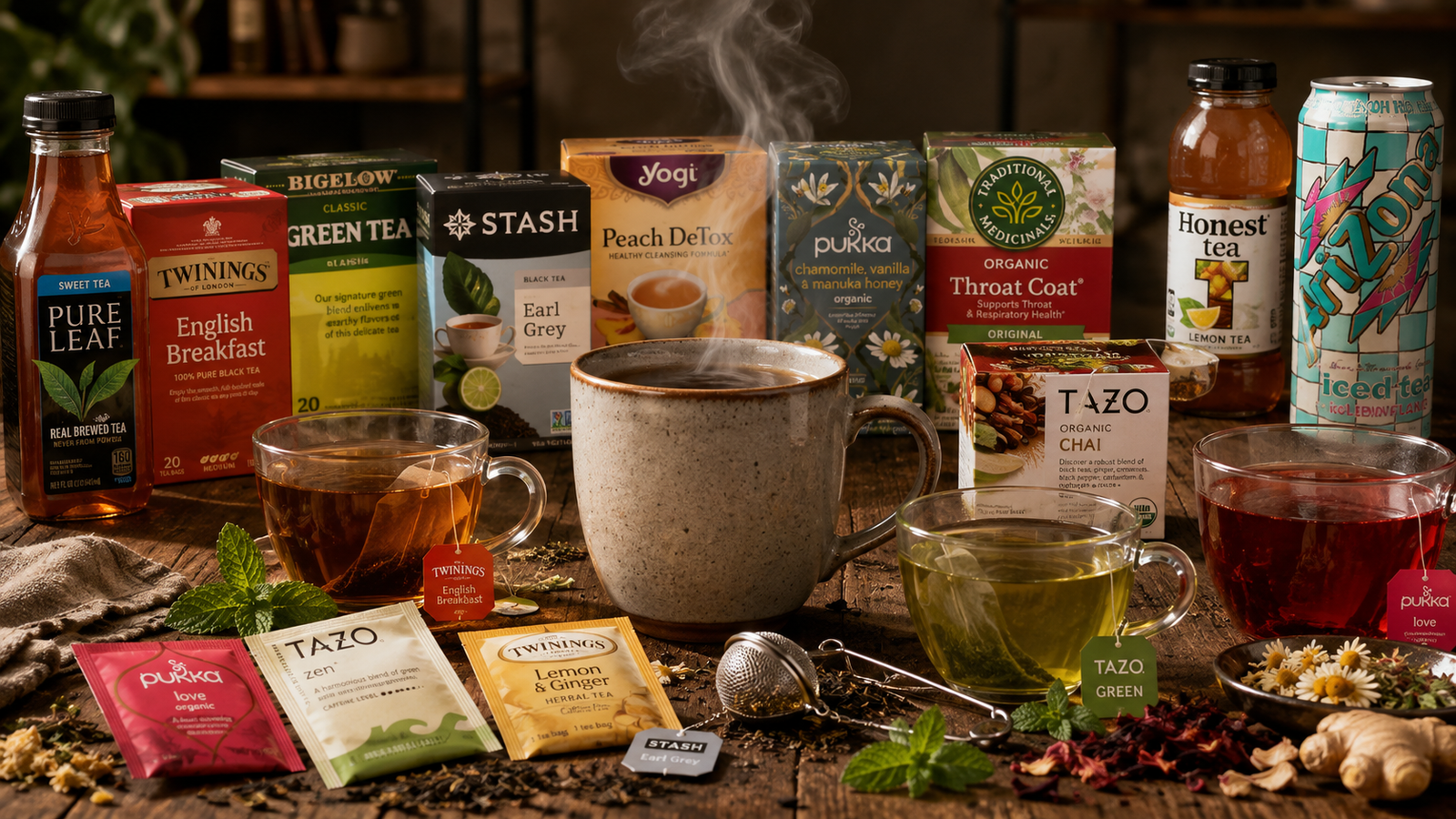
None of this needs to be memorized. What actually protects you isn’t knowing every mechanism in this piece by heart — it’s the habit underneath all of it: read the ingredient list before you drink it, and run the actual product past your transplant pharmacist, not just the category it belongs to.
“Is tea okay” isn’t a question with one answer. “Is this specific product, with this specific ingredient list, okay” is a question your pharmacist can actually help you with — and it’s the version of the question most likely to produce a useful answer.
This sits inside the same broader territory covered in It Looks Like Food — the wider world of foods, supplements, and everyday products that quietly interact with the immunosuppressant regimen. Tea just happens to be the one that comes up in the groups more than almost anything else.
Discover more from One More Beat
Subscribe to get the latest posts sent to your email.