What Your Ring Actually Knows
Wearables can tell you a remarkable amount about your body. The trick is knowing what they measured, what they inferred, and what they simply guessed.
A quick note before any of this: nothing here replaces your transplant team, your CGM, your validated blood pressure cuff, or your own judgment about when something needs a phone call rather than a glance at an app. What follows is meant to make you a more informed reader of your own data, not a more confident diagnostician of it.
Measured, Derived, Interpreted
Every number a wearable shows you belongs to one of three categories, and the distance between the category and the actual sensor matters more than almost anything else about the device.
Measured is the closest thing to ground truth these devices offer. A ring or watch uses photoplethysmography — light shone into the skin, with a sensor reading how much bounces back as blood moves through the capillaries beneath — to detect a pulse. That pulse count is about as close to a direct measurement as these devices get. Movement, via an accelerometer, is similarly close to raw. Skin temperature is measured directly too, though skin temperature and core temperature are not the same thing and track loosely at best.
Derived values are built by combining measured values over time. Resting heart rate is derived from repeated pulse measurements filtered for periods of stillness. Heart rate variability is derived from the pattern of time between individual beats. Even oxygen saturation, SpO2, is technically a derived value — the device isn’t counting oxygen molecules, it’s comparing how two different wavelengths of light absorb differently depending on how saturated the blood is, and estimating a percentage from that ratio.
Interpreted is where the device stops reporting and starts guessing. A recovery score, a readiness score, a stress score — these take several derived values, run them through a proprietary weighting algorithm nobody outside the company has seen, and hand back a single number and a color. The device is confident. The confidence is not the same thing as accuracy.
The test worth applying to any number on a screen: how many steps of inference sit between this and something a sensor actually touched? The closer to measured, the more you can trust it. The closer to interpreted, the more it deserves a raised eyebrow — and, for reasons that get more specific in the next section, the more that eyebrow needs to stay raised if you’re reading these numbers with a transplanted heart.
Reading Your Own Data
Heart Rate Variability and the Denervated Heart
Heart rate variability is one of the most heavily weighted inputs in every recovery, readiness, and stress score on the market. It is also a metric built almost entirely around a nervous system connection that a heart transplant recipient does not have in the ordinary sense.
During transplant surgery, the donor heart is necessarily separated from the recipient’s autonomic nerves — the vagal and sympathetic fibers that, in an intact heart, constantly adjust heart rate moment to moment. This is called denervation, and its effects are well documented. A foundational 1988 study in the American Journal of Cardiology found 24-hour heart rate variability in denervated transplanted hearts averaged 60 milliseconds, compared with 151 milliseconds in normal hearts — roughly a fourfold reduction. A more recent comprehensive review in the Journal of the American Heart Association confirms the pattern holds across the literature: denervation reliably produces lower heart rate variability, along with a cluster of other altered cardiovascular responses. The Journal of Heart and Lung Transplantation — the specialty journal your own transplant team would recognize — states it plainly: without parasympathetic regulation, the transplanted heart exhibits a higher resting heart rate, reduced heart rate variability, and blunted responses to some medications.
None of that is a malfunction. It’s the expected physiology of a heart that no longer has a vagus nerve wired to it.
But your ring doesn’t know that. It was trained — its algorithm, its baseline, its sense of what “low” and “normal” mean — on a population overwhelmingly made up of people with intact innervation. When it tells you your HRV is low and your recovery score is poor, it isn’t lying about the number. It’s correctly measuring a genuinely low value and then applying a model of what that value means that was never built with your physiology in mind. The sensor isn’t wrong. The model was trained around a body that isn’t yours.
The same logic extends to resting heart rate. A resting heart rate of 90 to 110 beats per minute is unusual and worth investigating in someone with an intact heart. In a heart transplant recipient, it is common enough to be considered within the acceptable range — multiple sources put the normal post-transplant resting rate in exactly that 90 to 110 window, with one review citing a range as high as 90 to 115. This isn’t a coincidence or a fluke of a few outlier patients. It’s a direct consequence of the same denervation: without vagal input holding the resting rate down, the heart’s own intrinsic pacing runs faster.
That said, “normal for a transplant recipient” is not the same as “never worth a second look.” The same JAHA review notes that a resting heart rate at or above 90 to 100 beats per minute at the one-year mark has been identified, in multivariate analyses, as an independent predictor of worse long-term outcomes. So the number that would alarm a wearable’s algorithm and the number your transplant team actually tracks with concern are in roughly the same neighborhood — but for different reasons, on different timelines, and with different thresholds for action. This is exactly the kind of thing to bring up with your team rather than an app: not because the number is meaningless, but because interpreting it correctly requires context no algorithm has access to.
Blood Pressure: An Estimate of an Estimate
Most current wearables that offer any form of blood pressure feature aren’t measuring pressure directly — there’s no cuff, no inflation, nothing that physically resists the vessel wall the way a real blood pressure cuff does. Instead, most approaches estimate blood pressure from pulse transit time or pulse arrival time: the delay between a heartbeat (usually detected via ECG or a proxy for it) and the moment the resulting pulse wave arrives somewhere else in the body, detected optically via PPG. Faster transit generally correlates with higher pressure. It’s a real physiological relationship — but it’s an indirect one, built on assumptions about arterial stiffness and calibration that can drift over time, differ by skin tone and body composition, and degrade during motion.
The American Heart Association addressed this directly with a 2025 scientific statement stating that cuffless blood pressure devices should not currently be used to diagnose, track, or treat high blood pressure, because many personal wearable devices haven’t been proven accurate or reliable for real-world use during exercise, sleep, or daily activity. That statement directly informed the 2025 AHA/ACC High Blood Pressure Guideline, which recommends against using cuffless BP devices for diagnosis or treatment until they demonstrate greater precision and reliability.
If your device shows you a blood pressure number, treat it as a trend indicator at best. For anything that matters — medication adjustments, a number you’re reporting to your team, a reading that’s making you anxious — use the validated cuff.
Sleep Stages Without an EEG
Sleep staging — light, deep, REM — is determined clinically by polysomnography, which includes electroencephalography: electrodes reading actual brainwave activity, along with eye movement and muscle tone. No ring or wristband contains an EEG. What they have instead is an accelerometer for movement and a PPG sensor for heart rate and heart rate variability, and from those two inputs, an algorithm infers which sleep stage is most statistically likely.
The gap between that inference and reality is well documented and not small. A recent meta-analysis found that consumer wrist-worn wearables systematically underestimate REM sleep by 50 to 70 percent compared with polysomnography, with error margins exceeding two hours a night in some cases. More broadly, a review of the accuracy literature found that consumer devices detect sleep versus wake accurately 85 to 95 percent of the time, but are only 60 to 85 percent accurate at staging light, deep, and REM sleep against the polysomnography gold standard. A head-to-head study comparing the Oura Ring, Fitbit, and Apple Watch against polysomnography found sleep-versus-wake detection above 95 percent for all three, but stage-by-stage sensitivity ranging from 50 to 86 percent depending on device and stage.
That doesn’t make the sleep score useless. Trends over weeks and months are more informative than any single night, and knowing your sleep was generally disrupted is genuinely useful information. Knowing you spent exactly 73 minutes in REM last night is not something the device can actually tell you, no matter how precise the number on the screen looks.
Sleep Apnea: Screening, Not Diagnosis
A handful of current devices — Apple Watch Series 9 and later, certain Samsung Galaxy Watch models, and the Withings Sleep Analyzer among them — have earned actual FDA clearance for a specific, narrow feature: a sleep apnea notification. These devices track overnight patterns in blood oxygen and breathing disturbance and can flag that something looks worth investigating. That clearance is real and worth taking seriously.
What it is not is a diagnosis. Even for the FDA-cleared devices, the guidance is consistent: no consumer wearable can diagnose sleep apnea. Confirming the diagnosis, determining severity, and guiding treatment still requires a formal sleep study — either in a lab or a proper home sleep apnea test ordered by a physician. Devices without that specific clearance, including most rings, can still track SpO2, respiratory rate, and heart rate variability overnight and surface patterns worth asking a doctor about, but that’s a screening signal, not a result.
Single-Lead ECG: An Early Warning, Not a Verdict
Several current wearables include a single-lead ECG feature capable of flagging possible atrial fibrillation. This is a genuinely different category of measurement than PPG-based heart rate — an ECG reads actual electrical activity rather than inferring it from blood volume changes — and it has real clinical value as an early detection tool, particularly for catching intermittent, otherwise-silent arrhythmias.
It is not, however, equivalent to a full diagnostic EKG. A standard clinical EKG uses twelve leads to build a complete picture of the heart’s electrical activity from multiple angles; a wearable’s single lead sees one narrow slice of that picture. Accuracy studies bear this out unevenly. One independent study of post–cardiac surgery patients — a population directly relevant here — found the Apple Watch’s single-lead ECG had a sensitivity of just 41 percent against hospital telemetry, with a 31 percent inconclusive rate, notably worse than the manufacturer’s own validation figures. A case report on ventricular tachycardia noted that certain serious arrhythmias can appear disorganized on a smartwatch tracing in ways that risk misinterpretation, and concluded that smartwatch ECGs should serve as an early detection tool, not a replacement for formal twelve-lead diagnostics.
If your watch flags something, that’s worth taking to your team. It is not, by itself, an answer.
FDA Cleared
This term gets thrown around by marketing copy more than it gets explained, and it’s worth taking a moment to actually explain it.
FDA clearance is a real regulatory status, and a small number of specific wearable features — the sleep apnea notification on certain devices, some single-lead ECG functions — genuinely carry it. But clearance applies to a specific feature performing a specific, narrow function, not to the device as a whole, and not to every number the device subsequently shows you. A watch cleared for AFib notification is not thereby a cleared blood pressure monitor, a cleared sleep-stage tracker, or a cleared glucose meter, even if it’s showing you numbers in all of those categories.
“Medical grade” is a different thing entirely, and the honest answer is that it isn’t a defined regulatory term in this context at all. A January 2026 FDA guidance update drew the actual line clearly: general wellness devices that simply display values, trends, and ranges — including for blood pressure, oxygen saturation, and heart rate variability — can do so without FDA review, as long as they stay in wellness framing and don’t claim to diagnose, characterize a reading as abnormal, or suggest treatment. The moment a device claims to be “medical grade” or offers something equivalent to a clinically valid diagnostic reading, it crosses into regulated territory and needs to prove it. There’s a concrete recent example of what happens when a company crosses that line without the paperwork: the FDA sent Whoop a warning letter over its blood pressure feature, stating that blood pressure measurements are inherently associated with diagnosing hypo- and hypertension, and classified the unapproved feature as a misbranded device.
The practical upshot: “medical grade” on a product page is a marketing choice, not a certification. It should carry roughly the same weight as any other unverified claim on the box.
That skepticism should extend to the rest of the spec sheet too. Battery life figures are measured under ideal, low-usage lab conditions that rarely survive actual daily use intact. “Clinically validated” can mean anything from a single small internal study to genuine independent peer review, and the box rarely specifies which. Accuracy percentages are frequently measured against the manufacturer’s own reference standard rather than an external clinical gold standard like polysomnography or a twelve-lead EKG. None of this means the numbers are fabricated. It means they deserve the same reading you’d give a nutrition label printed by a company that also owns the lab that tested it.
Which brings us to blood glucose, the cleanest example available of exactly this gap between claim and reality.
As of this writing, no smartwatch or smart ring — from any manufacturer, at any price point — has FDA authorization to measure or estimate blood glucose on its own, without a probe through the skin. The FDA has said so directly and unambiguously: it has not authorized, cleared, or approved any smartwatch or smart ring intended to measure or estimate blood glucose values independently, and the agency has gone further, explicitly urging anyone currently using such a device for that purpose to stop, and anyone considering buying one not to. Notably, none of the major manufacturers — Apple, Oura, RingConn, Samsung — make this claim. Their only legitimate connection to blood glucose is integration with an actual FDA-cleared CGM, like a Dexcom or a Libre, syncing that device’s real data into their app. If you ever see an $89 ring on a marketplace claiming continuous, noninvasive blood glucose tracking, you are looking at either a Nobel Prize in physiology or a very confident guess with a UI. The odds are not evenly distributed.
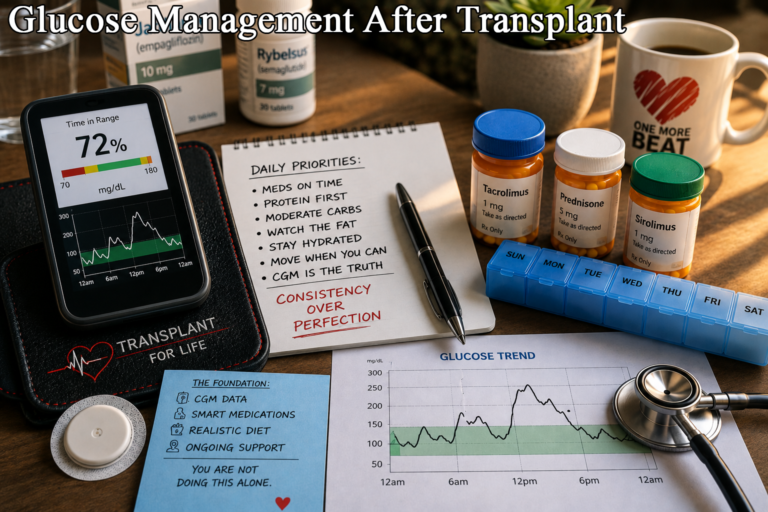
Even the legitimate glucose tools have limits worth remembering. I wear a Dexcom G7; a friend wears a Freestyle Libre 3. Comparing either against a finger stick taken within minutes is a regular reminder that “FDA-cleared” does not mean “identical.” CGMs measure glucose in interstitial fluid rather than directly in blood, finger-stick meters have their own allowable error, and two properly functioning devices can disagree substantially without either one being broken. When the number matters clinically — or simply doesn’t match how you feel — the more appropriate reference measurement wins.
Blood pressure has a cuff. Sleep stages have polysomnography. Heart rhythm has a real EKG. Sleep apnea has a formal sleep study. Blood glucose has a lab draw. Every one of those is the actual gold standard, and even they carry an acknowledged margin of error. The wearable on your finger or wrist isn’t held to any of those standards, because nobody has asked it to be. All of these tools — the cuff, the CGM, the ring — are built to provide guidance, not deliver a diagnosis. The gap between the two matters more than any single number on a screen.
The Devices
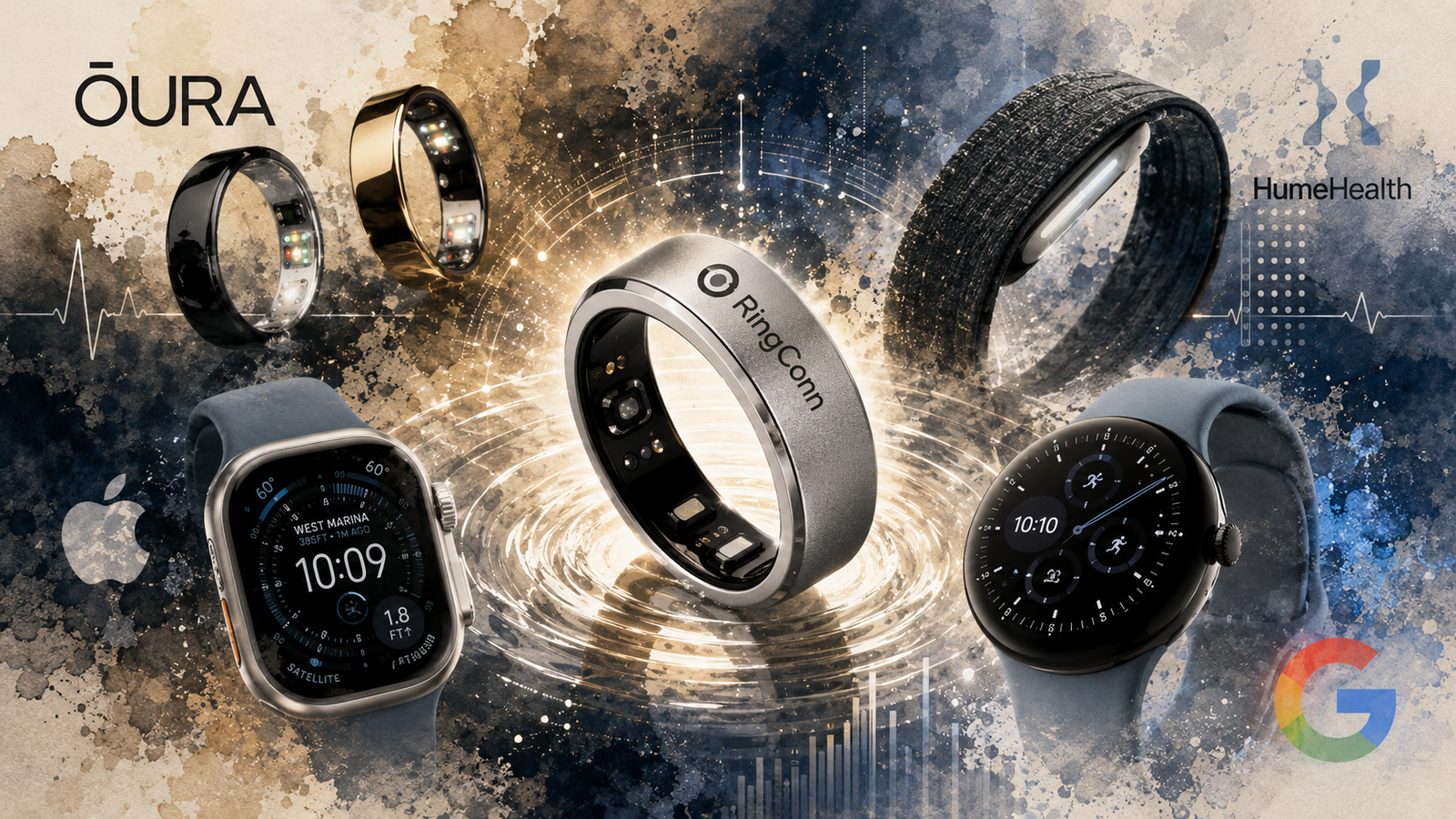
There are dozens of wearables on the market that could plausibly claim a spot here. I eliminated devices that duplicated a better option, leaned too heavily on opaque proprietary scoring, made health claims that didn’t hold up, offered poor value for what they actually deliver, or simply didn’t add anything a transplant recipient specifically would find useful. What’s left are the five currently in my own rotation, evaluated against what they measure well, what they estimate, what they add specifically for someone managing post-transplant physiology, and what to mentally discount.
RingConn Gen 3 — Measures pulse, movement, and skin temperature reliably, with a titanium build that’s held up well to daily wear. Battery life is genuinely excellent — RingConn rates it at 10 to 14 days per charge depending on how much you use the vibration alerts, and the charging case extends total untethered runtime past 150 days. I’ve been impressed with how consistently it holds up to that claim in practice; this isn’t marketing exaggeration. No subscription fee sits behind any of its features, which matters more than it sounds like it should once you’ve paid for a few other devices’ apps. For a transplant recipient, its consistency day to day makes it useful for spotting your own personal trends rather than chasing an absolute number — which is really the right way to use any of these devices in the first place. Discount its readiness and recovery scoring the same way you’d discount any other device’s; the sensors underneath are solid, the interpretation layer isn’t built around denervated physiology.
Oura Ring Gen 5 — Strong hardware, genuinely useful trend data, and an app that presents information more clearly than most competitors. This generation is also meaningfully less bulky than its predecessors — earlier Oura rings had a real presence on the finger, closer to wearing a small tire than a ring; Gen 5 is about 40 percent smaller by volume than Gen 4, with a noticeably slimmer profile that actually feels like jewelry. RingConn has always been the thinner option of the two, but the gap has narrowed. Battery life sits at 6 to 9 days, an improvement over prior generations, though still shorter than RingConn’s. The catch, worth knowing before you buy rather than after: Oura runs on a subscription model, and a meaningful portion of the ring’s functionality sits behind that ongoing fee rather than the upfront purchase price. If you’re comparing it against RingConn on price, compare the total cost over a year or two, not just the sticker.
Hume Band v2 — The v2 is a substantial correction of a first generation I cannot recommend. Battery life roughly doubled, up to 14 days versus 5 to 7 for the original, and I’ve found that claim holds up in real use. If a wrist band suits your daily habits better than a ring — easier to remember to charge, easier to see at a glance — the v2 is genuinely worth a look. Measures the same core inputs as the others; nothing here changes the underlying interpretation caveats.
Apple Watch Series 11 — The most complete package for anyone already inside the Apple ecosystem. Beyond the standard PPG-based tracking, it’s one of the devices carrying actual FDA clearance for both AFib notification via single-lead ECG and sleep apnea notification — genuinely useful early-warning features, with the caveats already covered above firmly in place. Battery life is the tradeoff for the added functionality; daily charging is the norm rather than the exception.
Google Pixel Watch 4 — The strongest Android-side equivalent, with solid core tracking and clean Google Health integration for anyone outside Apple’s ecosystem. Battery life has improved meaningfully over prior generations — Google claims up to 40 hours, and in practice it lands close to a day and a half between charges, a real improvement over the roughly one-day ceiling of earlier models. Functionally comparable to the Apple Watch on the fundamentals, with a smaller ecosystem of clinical-adjacent features layered on top.
What Didn’t Make the Cut
The list of devices I wouldn’t recommend is considerably longer. These are the ones you’re most likely to encounter.
Whoop — The hardware itself is genuinely capable, and I don’t want to undersell that. The real problem is what happens without the subscription: Whoop hardware is functionally inert without an active software subscription, and if that subscription lapses, you’re left with an expensive paperweight — no data access, no functionality, nothing. You can technically own the device. You can’t actually use it without paying indefinitely, and that ongoing cost is steep. Expensive to buy, and expensive forever after.
Hume Band v1 — I can’t emphasize this strongly enough: poor battery life, frequently inaccurate measurements, and algorithms that simply weren’t trustworthy. Skip it entirely. Everything wrong with it was fixed in the v2, which I genuinely like a great deal — see above.
UltraHuman — Worth saying plainly: the company itself is solid, their support staff were genuinely good to deal with, and I loved the app. The hardware is what holds it back — battery life lags noticeably behind the competition, and it isn’t ready for daily reliance yet.
Renpho Lynx — Weak battery life paired with inconsistent tracking and an app that’s stingy with raw data access. Worse, dealing with their support staff was consistently difficult, and I came away from the whole experience with a genuinely sour taste. Hardware issues are one thing; a company that’s hard to deal with when something goes wrong is another.
Circul Sense — The measured readings were actually quite good, and the app was well built. What I couldn’t get past was the design itself — gimmicky, uncomfortable over long periods, and difficult to keep clean. A rare case where the software and sensors earned real credit and the hardware form factor undermined all of it.
Amazfit / Zepp Helio — Poor battery life, weak platform integration, and an app that feels more interested in advertising to you than reporting your own data back.
Polar Loop — Spent more time re-pairing this thing in the app than actually wearing it usefully. Every disconnect meant lost data, and the frequency of it made daily use more irritating than informative. Not ready for prime time.
The Rest of the Toolkit
None of the above replaces the daily vitals monitoring your transplant team actually requires — weight, temperature, blood pressure, and blood glucose, tracked with validated, purpose-built devices rather than wellness estimates. That equipment gets its own full treatment, with citations, in What We Take and Why: Supporting Cast. The short version: a Bluetooth-enabled thermometer, a validated upper-arm blood pressure cuff, a Bluetooth scale, CGM overpatches to protect an expensive sensor, and a basic pulse oximeter. Boring equipment, deliberately. After several thousand words about algorithms and titanium, boring is exactly the point — the wearable supplements this equipment. It doesn’t replace it.
Making Sense of the Pile
One wearable reading, on one day, rarely tells you very much. A trend across weeks tells you more. Multiple data streams read together — heart rate alongside sleep alongside activity alongside how you actually feel — tell you more still.
That’s the gap I’m building Aevora Wellness to close: not another sensor measuring you, but a way to make sense of the pile of measurements you’re already generating across whichever combination of devices you’ve settled on. Aevora Reporter, the first piece of that suite, is still in development.
The goal was never to know everything your body is doing every hour of every day. It’s to notice when something has genuinely changed enough to deserve attention — and to know the difference between that and an algorithm having an opinion about a number it was never built to understand in the first place.
Discover more from One More Beat
Subscribe to get the latest posts sent to your email.