Holistic Living
This piece is intended to support informed participation in your own care, not replace the judgment of your transplant team. Before making changes to your diet, supplements, or health practices, discuss them with your transplant pharmacist.
There is a particular kind of grief that doesn’t get named often enough in transplant circles. It isn’t the grief of nearly dying, or the grief of the long wait, or even the grief of the recovery. It’s quieter than those.
It is the grief of losing the system by which you understood health itself.
Many of us arrived at transplant having spent years—sometimes decades—building a deliberate approach to health. Whole foods. Minimal pharmaceutical intervention where alternatives existed. Attention to what entered the body and why. A philosophy built around the belief that the body, properly supported, has considerable capacity to manage itself. That framework wasn’t incidental. For many people it was central to their identity and their sense of agency over their own lives.
Transplant doesn’t ask permission to dismantle it.
What Holistic Living Actually Is
Before going further, it’s worth being precise about what we mean—because the term carries baggage it doesn’t always deserve.
Holistic living, in its honest form, is not anti-medicine. It is not anti-vaccine. It is not the exclusive territory of people who refuse pharmaceutical intervention on principle or distrust modern science categorically. Those people exist, but they represent an extreme that doesn’t define the framework.
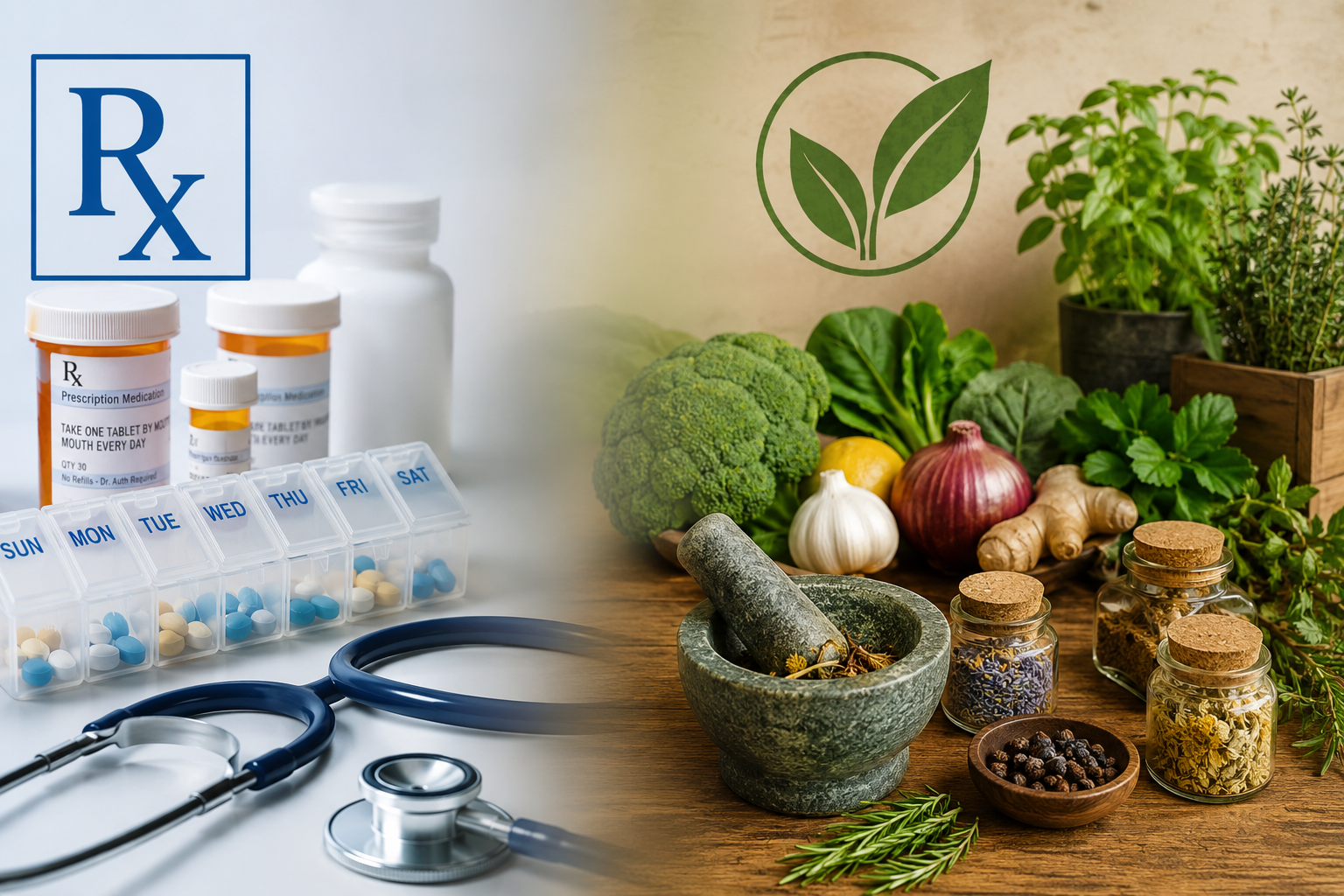
At its core, holistic living is a philosophy of balance. It holds that the body functions as an integrated system, that lifestyle and nutrition are primary tools where they’re sufficient, and that pharmaceutical and chemical intervention should be minimized where viable alternatives exist—not eliminated, minimized. It is an approach to health that emphasizes agency, intentionality, and the least invasive effective option.
Someone who built their health around that framework and still arrived at transplant has already demonstrated something important: they understand when medicine is necessary. They didn’t refuse the transplant. They’re not refusing the tacrolimus. The question they’re actually asking is more specific and more reasonable than it’s sometimes given credit for: within the constraints of what I must do medically, how much of what I built can I preserve?
That’s a legitimate question. It deserves a serious answer.
The Loss of Autonomy
To understand why this question matters so much, it helps to understand what transplant actually takes from someone operating within a holistic framework—beyond the obvious practical restrictions.
The deeper attraction of holistic health, for many people, is not any specific supplement or dietary protocol. It’s agency. The conviction that they are active participants in their own health rather than passive recipients of institutional decisions. Before transplant, the operating principles were something like: I control what enters my body. I minimize dependency. I trust my body’s systems. I manage my health from the inside out.
Transplant medicine reverses almost every one of those principles by necessity.
You will take tacrolimus every day, indefinitely. You will submit to regular lab monitoring. You will accept a level of pharmaceutical dependency that has no endpoint. And your immune system—the body’s primary self-defense mechanism, the system that holistic traditions have long emphasized strengthening—is now being deliberately suppressed, because left to its own devices it will destroy the organ keeping you alive.
That is not a minor adjustment. It is a profound rupture with a framework that may have defined how you related to your own body for decades. The psychological weight of that shift is often underestimated in clinical settings, and it goes a long way toward explaining why the question of holistic living comes up so persistently in transplant communities. People are not asking because they intend to do something dangerous. They are asking because they are trying to recover some portion of who they were before the transplant changed the terms.
What changed is not simply what you can take. What changed is who now has authority over systems you once managed independently.
What Remains—And It’s More Than You Think
Here is the honest accounting, and it is more encouraging than the minefield perception suggests.
Most of the holistic framework survives transplant intact.
Movement—resistance training, cardiovascular conditioning, mobility work, walking—not only remains available but becomes more important post-transplant, not less. The immunosuppressant regimen carries real metabolic consequences: weight gain, muscle loss, bone density reduction, elevated cardiovascular risk. Deliberate physical activity addresses all of them. The holistic emphasis on deliberate physical activity as a foundational component of health is, if anything, more warranted after transplant than before.
Stress reduction, sleep hygiene, mindfulness practice, intentional living—none of this is in conflict with transplant medicine. A transplant cardiologist will not argue with you about meditation. The evidence base for stress reduction and cardiovascular outcomes is substantial and uncontroversial.
Whole foods nutrition remains not just viable but actively beneficial. Anti-inflammatory dietary patterns, attention to glycemic load, quality proteins, healthy fats, fiber, hydration—these are consistent with what your transplant team wants for you and consistent with what a holistic framework would recommend. There is no conflict here.
The minefield is real. It is also bounded. Most of what you built remains available.
Nutrition: Three Levels, and They Are Not Equivalent
Where nutrition becomes complicated is when it moves from nourishment toward intervention—and the distinction matters more than most people realize.
The first level is nutrition as nourishment. Vegetables, quality proteins, healthy fats, fiber, adequate hydration. This is foundational, fully compatible with transplant life, and uncontroversial. Eat well. This has not changed.
The second level is nutrition as optimization. Mediterranean-style eating, anti-inflammatory dietary patterns, glycemic management, attention to omega balance, weight management. This level is largely compatible and actively valuable.
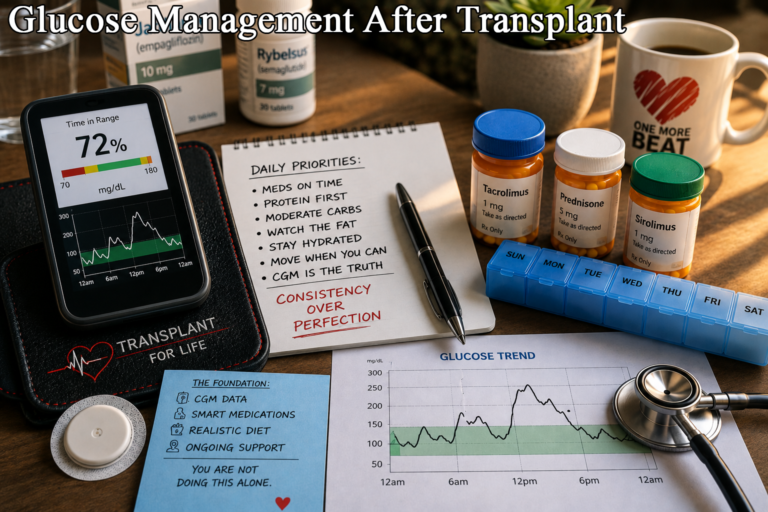
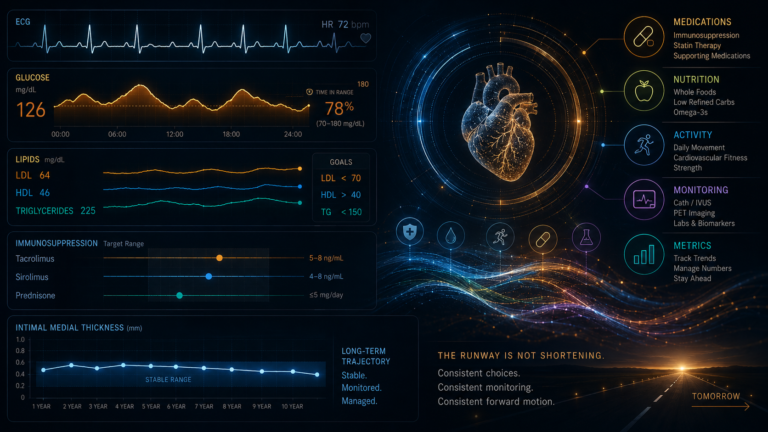
The immunosuppressant regimen—tacrolimus and sirolimus in particular—carries real diabetogenic risk. Glucose dysregulation is not theoretical here. These medications directly alter metabolic function in ways that make insulin resistance and impaired glucose control a documented consequence of the therapy itself. Carbohydrate modification, avoiding high-sugar foods and drinks, and attention to glycemic impact have measurable effect on glucose management. These approaches work in concert with pharmaceutical support—an SGLT2 inhibitor (Jardiance) or a GLP-1 receptor agonist (Rybelsus), for example—rather than replacing it. The dietary component does real work. The pharmaceutical component does real work. They are not in competition.
It is worth acknowledging that even at this level, clinical reality can complicate matters. A post-surgical complication—a nicked lymph node, for instance, requiring a strict ultra low-fat diet—can temporarily eliminate the dietary tools that ordinarily support glycemic control, forcing a nutritional composition that works against the very problem you are trying to manage. The system is dynamic. The response has to shift with it. Holistic dietary management post-transplant is not a fixed protocol. It is an ongoing calibration against changing circumstances.
The third level is nutrition as intervention—using food or food-derived compounds deliberately as pharmacological agents. This is where the holistic framework runs directly into transplant pharmacology, and where the rules change.
The Dose Problem
Before addressing specific categories of concern, one distinction needs to be stated clearly—because the internet will reliably produce the wrong conclusion without it.
The relevant variable is not whether something arrives in a capsule or in a meal. It is how much of a pharmacologically active compound enters your system, by whatever means.
Turmeric in a meal, at typical culinary quantities, is generally not a clinical concern. Turmeric consumed in therapeutic quantities—whether through capsule or through deliberate high-volume dietary use—is a different proposition. The capsule is a convenient delivery mechanism for a concentrated dose, but the same pharmacological load can be achieved through food if you are consuming enough of it. Ginger and cinnamon follow the same logic. Both are common, normalized, and present in ordinary cooking without significant concern at culinary levels. Both can be consumed at levels, through whatever means, that produce clinically relevant effects.
The question is not: is this a supplement or a food? The question is: how much of this pharmacologically active compound am I taking in, and through what cumulative pathway?
This matters because some people will read “dietary use is generally fine” and conclude that adding therapeutic quantities of turmeric to everything they eat is categorically different from taking a capsule. The body does not distinguish by delivery mechanism.
When Boosting Immunity Becomes the Problem
Much of holistic wellness tradition operates on an assumption so foundational that it rarely gets examined: that a stronger immune response is inherently beneficial. Immune support, immune resilience, immune activation—these are selling points across a wide range of natural health products precisely because the assumption seems self-evidently correct.
Transplant medicine inverts it entirely.
After a transplant, the immune system is no longer simply a protector. It is also the mechanism actively working to destroy the organ keeping you alive. The immune system is not malfunctioning. It is doing exactly what it was designed to do. The problem is that what protects you biologically now threatens the organ keeping you alive. The entire pharmacological objective of the immunosuppressant regimen is to modulate that activity downward—specifically to prevent the immune system from recognizing the transplanted heart as foreign tissue and mounting a rejection response against it.
Interventions designed to stimulate or enhance immune activity—elderberry, echinacea, astragalus, many functional mushrooms including reishi and turkey tail, and numerous other preparations marketed specifically for immune support—may directly conflict with that objective. This is not a minor caveat or an abundance of caution. It is a fundamental reorientation of the relationship between wellness and immune function that anyone managing a transplanted organ needs to internalize.
The immune system is not the enemy. But it is no longer an unconditional ally, and treating it as one carries real risk.
The Pharmaceutical-Grade Problem
Functional mushrooms, concentrated botanical extracts, herbal preparations, and the broader category of natural supplements occupy the space where holistic practice and pharmaceutical activity genuinely overlap—and where the regulatory framework that governs pharmaceutical drugs does not apply.
The supplement industry in the United States operates under minimal regulatory oversight compared to pharmaceuticals. A supplement label stating 500mg of turmeric extract tells you relatively little about actual curcumin concentration, potential contaminants, batch-to-batch consistency, or whether CYP3A4 interaction effects were studied at that formulation. Transplant medicine requires precision. The supplement industry frequently provides approximation.
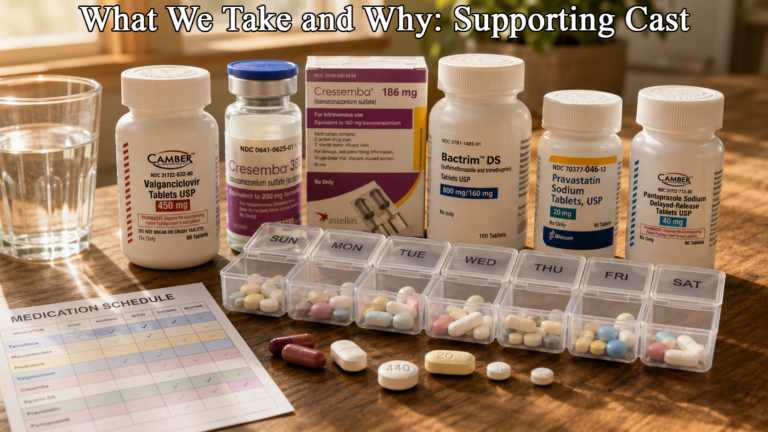
This is compounded by the interaction mechanisms themselves. Tacrolimus, sirolimus, cyclosporine, and much of the standard post-transplant medication stack are processed through CYP3A4 and related enzymatic pathways—covered in detail in What to Avoid and Why. Substances that inhibit these enzymes cause drug levels to rise; substances that induce them cause levels to fall. Both directions carry serious risk. St. John’s Wort is the well-known example—it significantly reduces tacrolimus levels through enzyme induction, creating real rejection risk. But the list extends well beyond the familiar: berberine, high-dose EGCG, quercetin, concentrated pomegranate, nattokinase, red yeast rice, ashwagandha, and CBD products all carry interaction profiles that warrant careful evaluation against a specific medication regimen.
The point here is not to reproduce a complete list but to name the category: natural does not mean pharmacologically inert, and pharmacologically active means the same enzymatic pathways are in play regardless of whether the compound came from a plant or a laboratory.
The Expertise Gap
Navigating the intersection of functional nutrition and transplant pharmacokinetics requires specialized knowledge. The gap between what most people reach for and what can actually provide safe guidance here is significant, and it operates at several levels.
The holistic practitioner limit.
A knowledgeable naturopath or functional medicine practitioner may have genuine expertise within their domain. That domain does not typically include the pharmacokinetics of calcineurin inhibitors, the specific interaction profiles of the post-transplant medication stack, or the clinical implications of trough level variability in an individual patient. This is not a criticism of the tradition. It is a recognition that this specific question—is this safe for someone on tacrolimus with my current renal function and my current trough levels—sits outside the training most holistic practitioners have received. “My naturopath said it was fine” is not a safe clearance in this context.
The AI limit.
Artificial intelligence tools have become increasingly capable research assistants, and they have genuine utility for transplant recipients trying to understand their situation. They can surface published literature on known interactions, explain pharmacological mechanisms, and help frame questions for clinical conversations. What they cannot do is integrate that information against a specific patient’s complete medication list, current lab values, renal function trajectory, and clinical history in the way a trained pharmacist can. They also cannot flag what they don’t know—and in a domain where individual variation is significant, the literature on specific interactions is often incomplete, and the consequences of error are serious, that gap matters. AI can produce confident, fluent, plausible-sounding answers that are wrong in ways a non-specialist cannot detect. It is a research assistant. It is not a clinician.
The background requirement.
Using AI effectively for medical research requires enough foundational knowledge to evaluate what it returns. Recognizing an incomplete answer, identifying pattern-matching that doesn’t hold for a specific clinical situation, and detecting unwarranted confidence are skills that require background—in pharmacology, in transplant medicine, in how to read and interpret clinical literature. That background is not common, and its absence is not a failure of intelligence. It is simply a specialized domain. Even with substantial background, the correct process still runs through professionals with focused clinical training, validated across multiple sources. The interpretation, the judgment, and the final validation remain human responsibilities—and they require a human with the right equipment to carry them out.
The right resource.
The transplant pharmacist is the bridge between the holistic instinct and the pharmacological reality. Specialized in exactly this intersection, available through your transplant program, and consistently underused. A general practitioner may have limited familiarity with the specific interaction profiles of the transplant medication stack. A wellness practitioner operates largely outside this domain. When the question is whether a specific compound is safe given your specific regimen, the transplant pharmacist is where that question belongs.
A Final Observation
Beneath all of these practical questions sits a deeper philosophical tension that is worth acknowledging directly.
Transplant medicine is, in some respects, a profound intervention in the natural order. The body had reached a point where it could no longer sustain itself—where nature’s verdict, often rendered over years of progressive failure, was already being carried out. Modern medicine overruled that verdict. It provided an organ, a surgical team, a pharmacological regimen, and a monitoring infrastructure that nature alone could not have offered.
Once that has happened, “natural” can no longer function as the highest governing principle in the way it once did. Not because nature no longer matters, but because the situation has moved beyond what nature alone could address. The line was already crossed—by necessity, by choice, by the fortunate availability of a donor—before the question of holistic living ever came up.
This is not an argument against holistic thinking. It is an acknowledgment that this philosophy is now operating in territory it was never originally designed to navigate, and that the adjustments required are not superficial.
The principles that guided you before—balance, intentionality, minimal unnecessary intervention, treating the body as an integrated system—remain sound. They remain worth practicing. If anything, those principles matter more now than ever before. Much of what you built is still available to you, and the parts that remain are not trivial.
You did not lose holistic living. The rules of engagement simply changed.
Discover more from One More Beat
Subscribe to get the latest posts sent to your email.