

What’s Next?
Three weeks from now, on November 9th, it will be two years since my heart transplant. I’ll mark the day at my two-year evaluation, which landed on the anniversary itself, two years to the day. I have decided not to read anything into that.
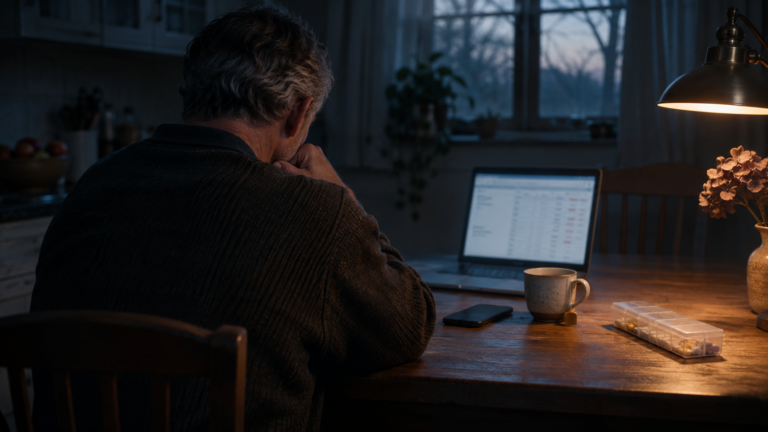
I’m fifty-seven, reasonably healthy and reasonably active. I have also been thinking about my mortality lately, steadily, and I keep coming back to one question: how much time did all of this really buy? Two years out, I still can’t answer it.
Under the Shadow
In 2024, I felt death’s shadow fall across me. I knew things were not going well, and I knew there was nothing to be done about it. Twenty-two years of congestive heart failure had a direction, and I could read it. Eventually things worsened to the point where the hospital was no longer a choice I could defer.
The experience was brutal. A good friend called it medieval, and I have never found a better word. Every time I turned around, someone was sticking or cutting on me in one way or another: IVs, blood draws, a cardiac catheterization, a Swan-Ganz catheter threaded into the right side of the heart, and more after those. Each one had a reason, and the reasons were good. From the bed, it simply seemed there was no end to the probing.
I expected to die. I had made a kind of peace with that, which I have written about at length. Then a doctor told me they were going to do a heart transplant.
Ten Gallons
The probing didn’t stop. It changed purpose. An Impella pump went in to carry the work my ventricle could no longer do. More caths followed, then a colonoscopy, an endoscopy, a cystoscopy and a transnasal flexible laryngoscopy, with blood draws running underneath all of it. I’m fairly sure they took ten gallons. A thyroidectomy came along just to round things out. Then the listing, the waiting, and finally the transplant itself.
By then I had long since given up on the idea of living a holistic life. They pushed more chemicals through me than even I could keep track of. I’m convinced I single-handedly carried the pharmaceutical industry through the fourth quarter of 2024.
The road back was long, though not as long as one might expect. It had its own procedures: many more caths through the jugular, one of which eventually left that access point permanently occluded and unusable. At one year came a double catheterization, left side and right side together, one going in through the neck and the other through the wrist.
The Shape of Dying
Dying had a shape. I had watched it approach for years, and by the end of 2024 I knew it was coming and knew nothing could stop it. I had made my peace with that. Strange as it sounds, expecting to die was a settled condition. It wasn’t comfortable, but it made sense.
Then it became clear I was going to live, and I still don’t know what that means.
I don’t mean that I’ve failed to appreciate it, or that I’ve been too busy to think it through. I mean that “I am going to live” never came with the definition the other sentence had. Live for how long, in what condition, toward what? Expecting death had edges, and what replaced it has none. Two years in, I still find that disorienting. How much time all this bought is only part of the question. The rest is what, exactly, it bought.
Two Years to the Day
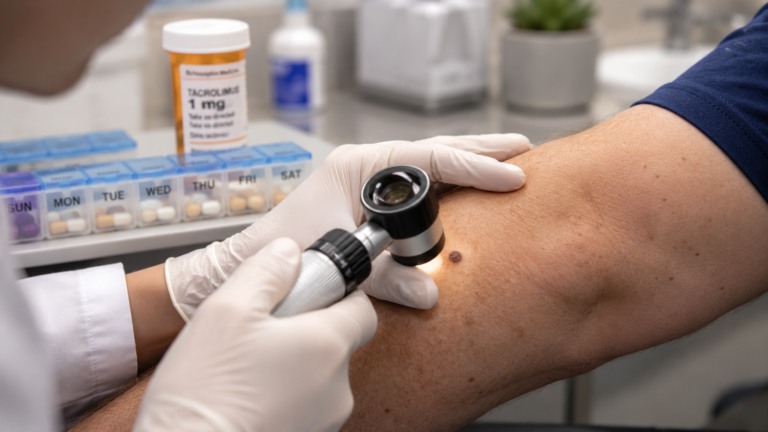
Part of what keeps the question open is concrete. At my one-year evaluation, my numbers looked the way you hope numbers look, and then the team found cardiac allograft vasculopathy. CAV is a narrowing of the arteries in the transplanted heart and one of the leading long-term threats to it. Sirolimus came in and mycophenolate went out, and the management is ongoing.
I don’t know what the two-year evaluation will show. It may show stability, or it may show progression. For all I know, I’ll walk out of that appointment back on the transplant list. Until the results are in, there’s really no telling, and I’m not going to pretend otherwise. Being active, productive and fit tells me nothing about what the imaging will find inside a coronary artery.
The Cleared Board
The other part of what keeps the question open is that there is nothing to go back to.
Before 2024, “I’m going to live” would have meant returning to a life. Career, home, money, marriage, health: the losses started before the hospital and finished after it, and when it was over, the board had been cleared. Recovery implies a baseline, and I no longer had one. So the sentence lands on nothing. No prior arrangement is waiting for me to pick it back up.
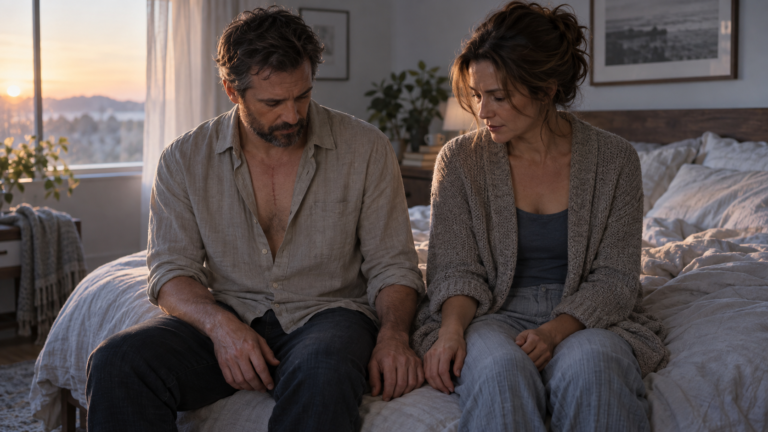
That doesn’t rattle me, exactly, but it’s a lot to sink your teeth into. I’m fifty-seven years old. I’m too damned old to be starting over on an empty board, and I’m doing it anyway.
Building on Empty Ground
I want to be plain about the gratitude, because none of the uncertainty cancels it. I’m grateful to still exist. A man I never met decided, long before the night it mattered, that what remained of him could go to someone who needed it. I have written about how complicated that gratitude gets, and it is complicated. It is also simple. I’m here, and I would rather be here.
I have used the time. I spent the first year convalescing, more or less as instructed, and then opened the throttle again. Everything I’m doing now was built in the twelve months since. Many Lamps, One Flame, One More Beat, Rogue Wayfarer, At Ground Level and the apps at Deep Dark Abyss Productions all went up in that span, and Infobin has the full picture. I put in entirely too many hours programming. I go camping and occasionally hike a bit. I’m spending time with friends and family, something I hadn’t done in years.
None of that answers the question. I have a path forward. I’m still asking.
No Telling
Underneath all of it is a constant sense that the end is close. I won’t lie about that: I feel like it could be the end any day. It isn’t a mood that comes and goes. It’s more like a background setting I haven’t been able to change.
I know the standard replies: lessons learned, live each day to its fullest, this too shall pass, nobody knows when their ticket is going to get punched. I don’t do platitudes, and I have no patience for these. As far as I can tell, they exist mostly to make the person saying them feel better, or to get everyone off the subject as quickly as possible.
“Everybody dies” is true and beside the point. Most people carry that fact the way they carry the terms of service on their phone. I spent months expecting to die on a particular timeline, in a particular bed, and then the timeline was taken away and nothing replaced it. That’s a different situation, and no slogan settles it.
This could be the beginning of another thirty-year run, or the tail end of a fifty-eight-year run. Who knows?
The Mark
When one comes that close to death and returns, it changes you in ways that just cannot be described.
It leaves a mark.
Discover more from One More Beat
Subscribe to get the latest posts sent to your email.
A great read. I have better insight in what feeling are not really talked about.