
The Journey — Twenty-two years of heart failure, and what followed.
The Follow-Up Gauntlet
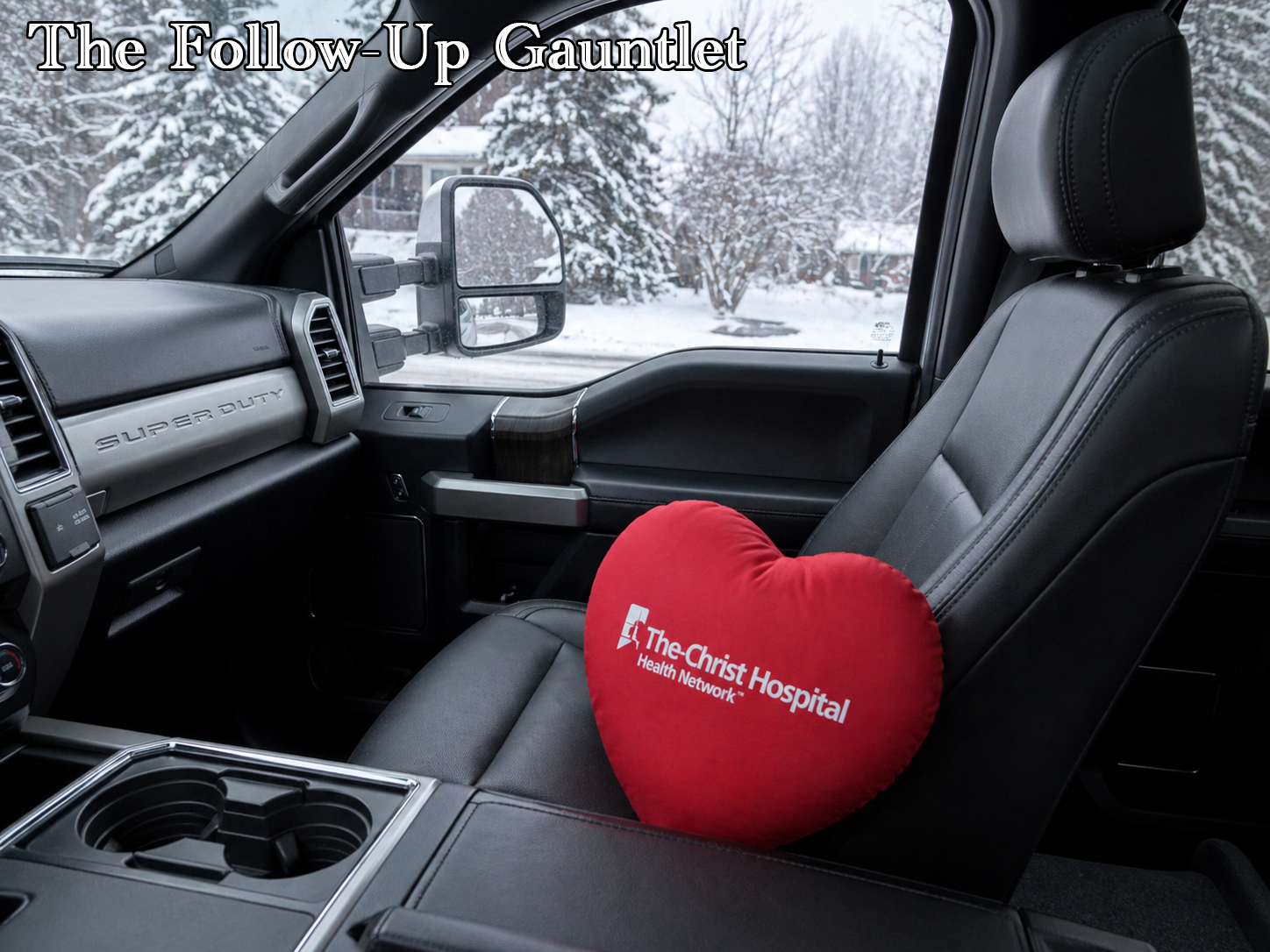
First post-discharge biopsy, and I needed a ride. Mom was sick and knew better than to come near me. Teresa was at Children’s, where my youngest had woken up with what turned out to be appendicitis. Two procedures, two hospitals, one morning, opposite ends of the city.
Coming Home
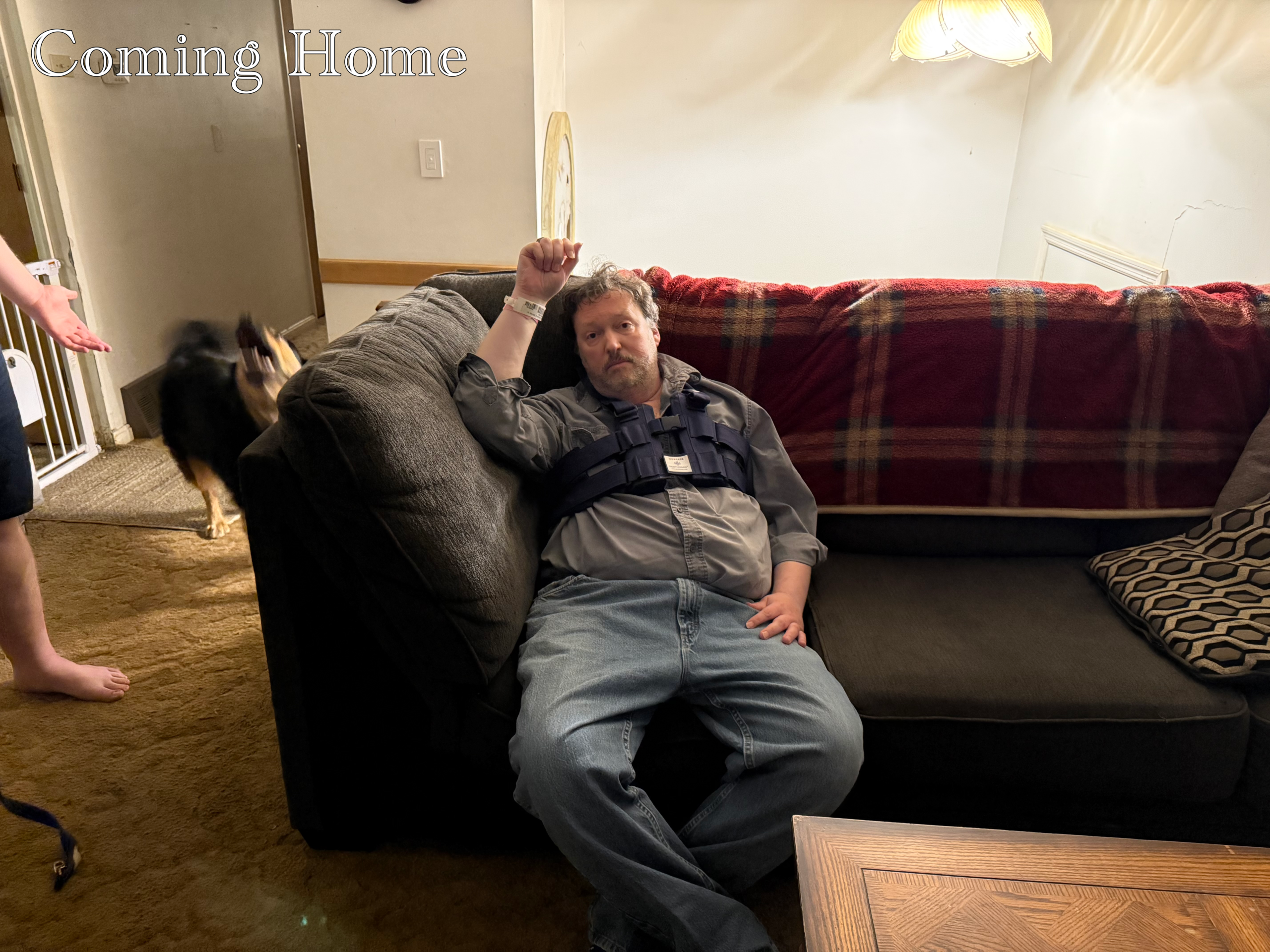
Nine days post-transplant. Sixty days in the hospital. Then discharge papers, the last lines pulled, and a car pulling away from the building with me inside. The house is a bilevel—steps up from the driveway. Under normal circumstances, unremarkable.
The Recovery Ward
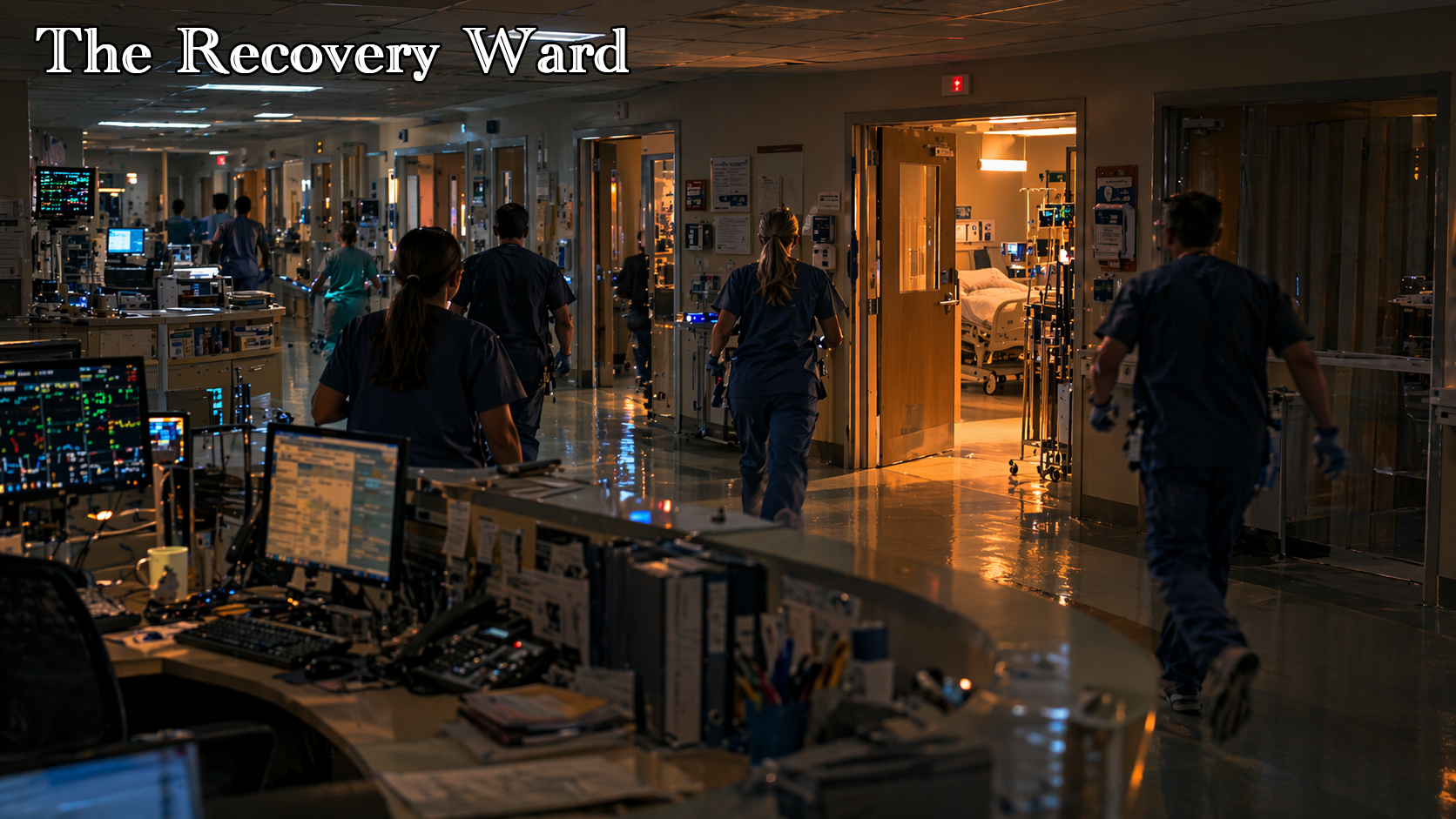
Five days post-transplant, the A-line out, the recovery ICU finally behind me. Up and walking twice daily. No raising your hands above your head—the sternum has been opened and wired back together and it needs time. The people on this ward were closer to leaving. Not all of them would.
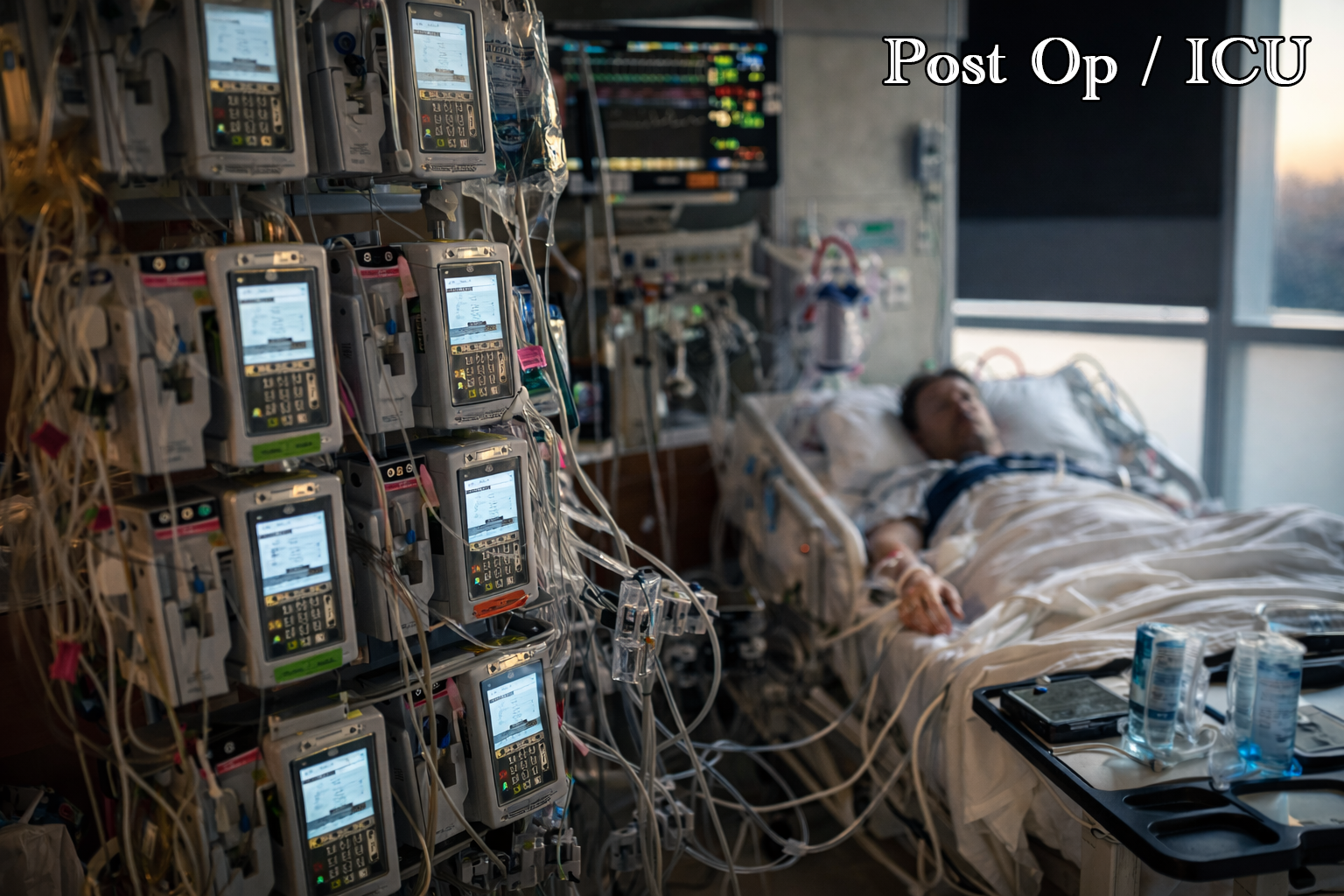
Post Op / ICU
The morning after surgery I woke up in terror. Not the disoriented kind—I knew exactly where I was, knew the heart was in, knew everything had gone by the book. My intellect was fully online. And I was terrified anyway.

November 9th
The nurse came through the door differently. Ten-fifteen on a Thursday evening, the ward settled into its overnight quiet. Sam came in holding a phone, and the way she was moving told you something before she handed it over.

The Waiting
Tom Petty had it right, though not for the reasons most people assume. It isn’t patience—patience is something you can summon. The runway is short, the lift-off isn’t yours to control, and somewhere out there is a stranger whose story you will never fully know.
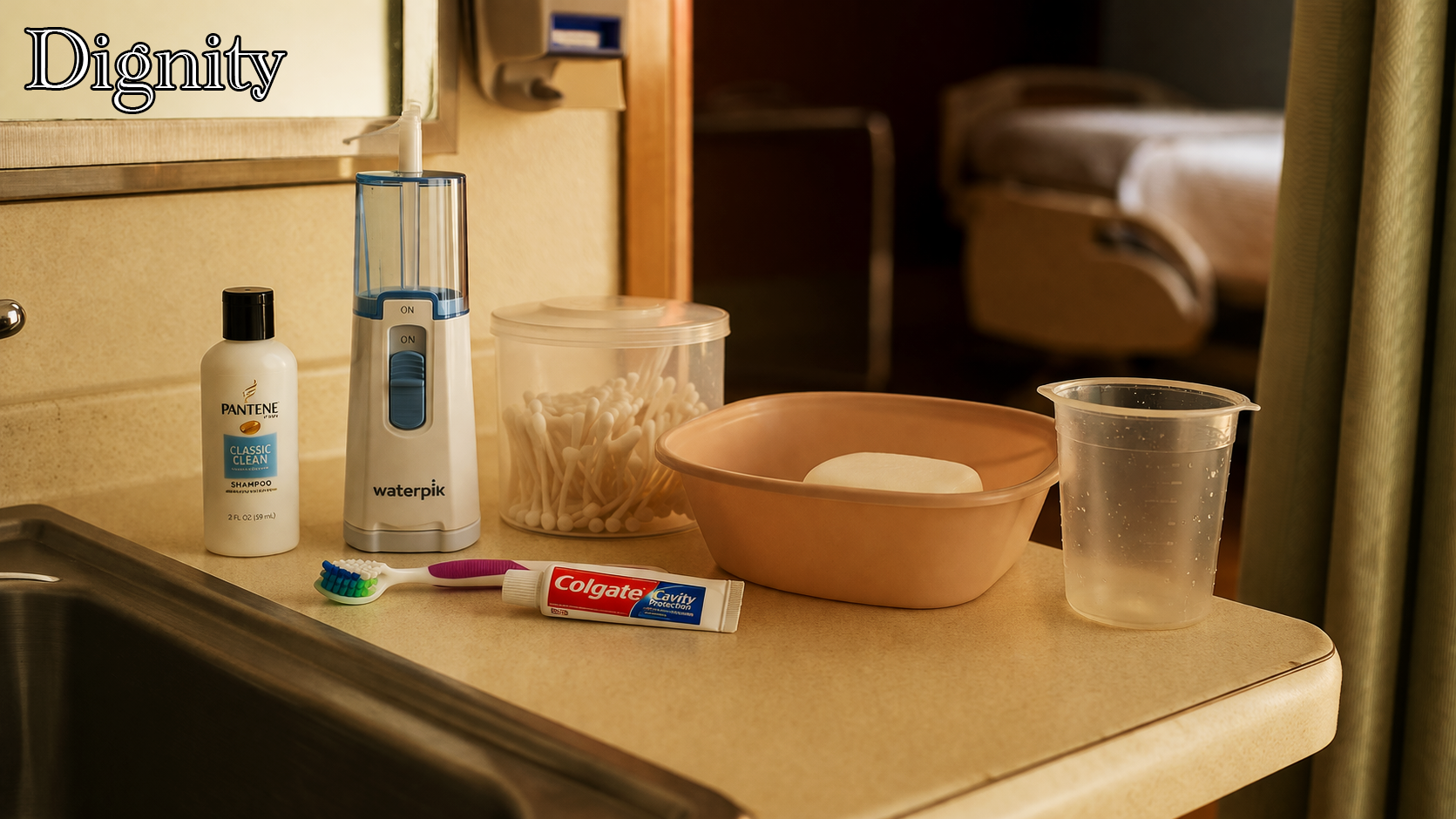

Standing On Your Own…With Assistance
Lines in, lines out. The Impella running its quiet rhythm. The monitor glowing green behind my head. That’s what a support system looks like from the inside—not dramatic, not cinematic. It looks like logistics. It looks like someone already moving before you’ve asked them to.
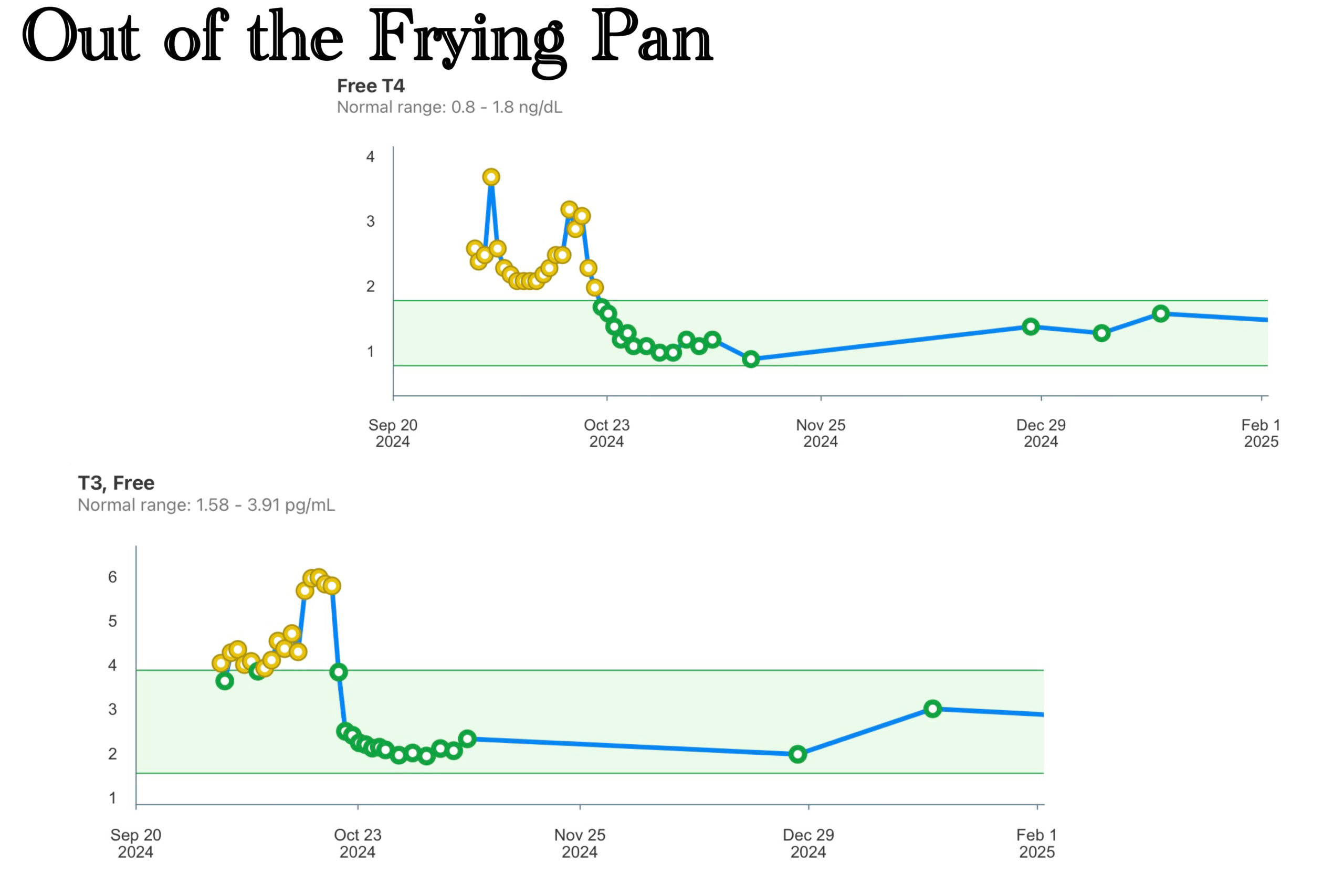
Out of the Frying Pan
Listed on a Friday afternoon. Status 2, on an Impella, waiting. Three days of relative stability. Monday nearly killed me. By Thursday I’d walked four laps around the ward and eaten a real lunch and started to feel like a man who might survive long enough to get a heart. Then endocrine walked in.
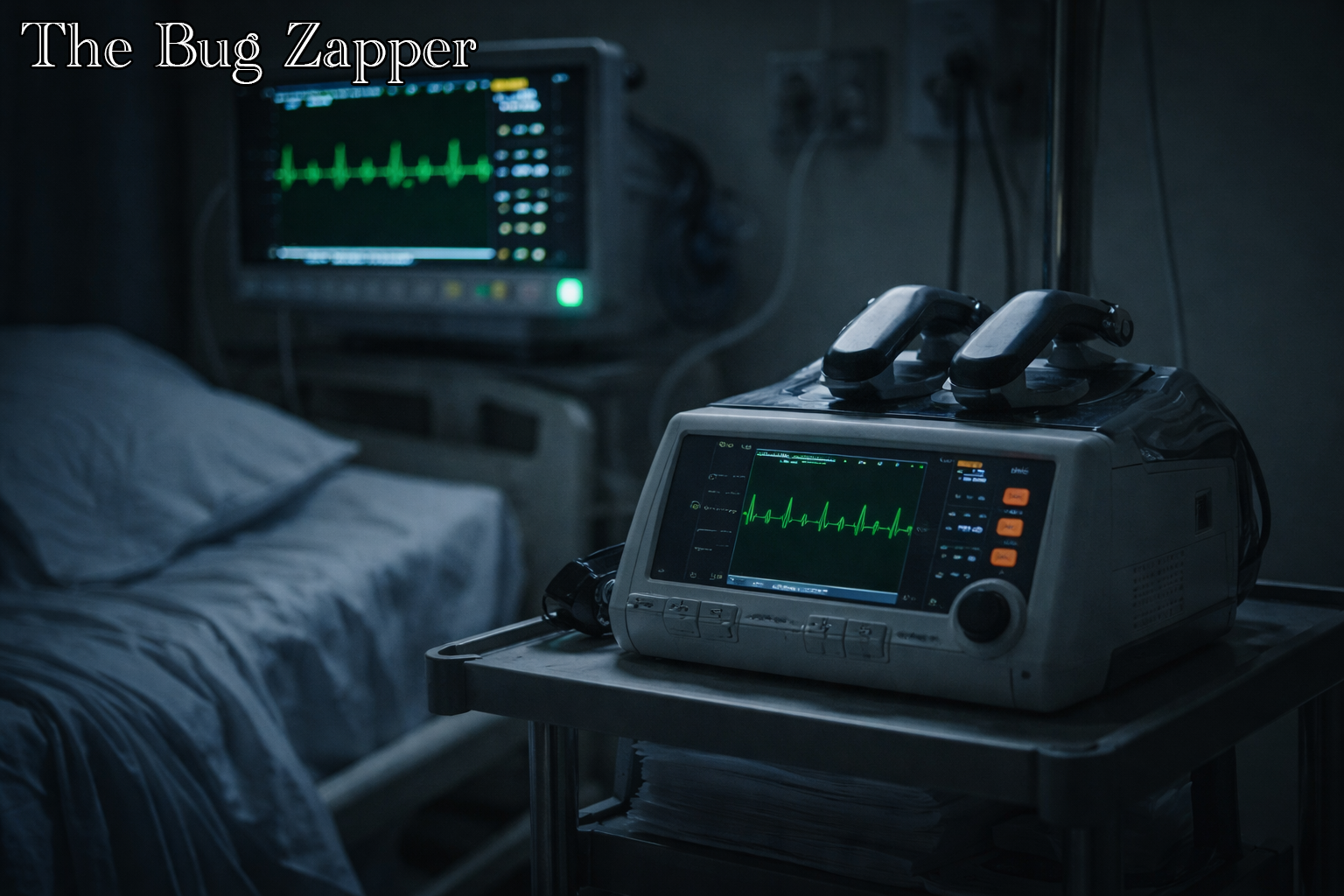
The Bug Zapper
The nightmare woke me at 1:44 in the morning. I felt the kick first, electrical charge running through my chest and arm and head, and came up out of sleep certain the ICD had fired. The nurses pulled the EKG records to prove it hadn’t.
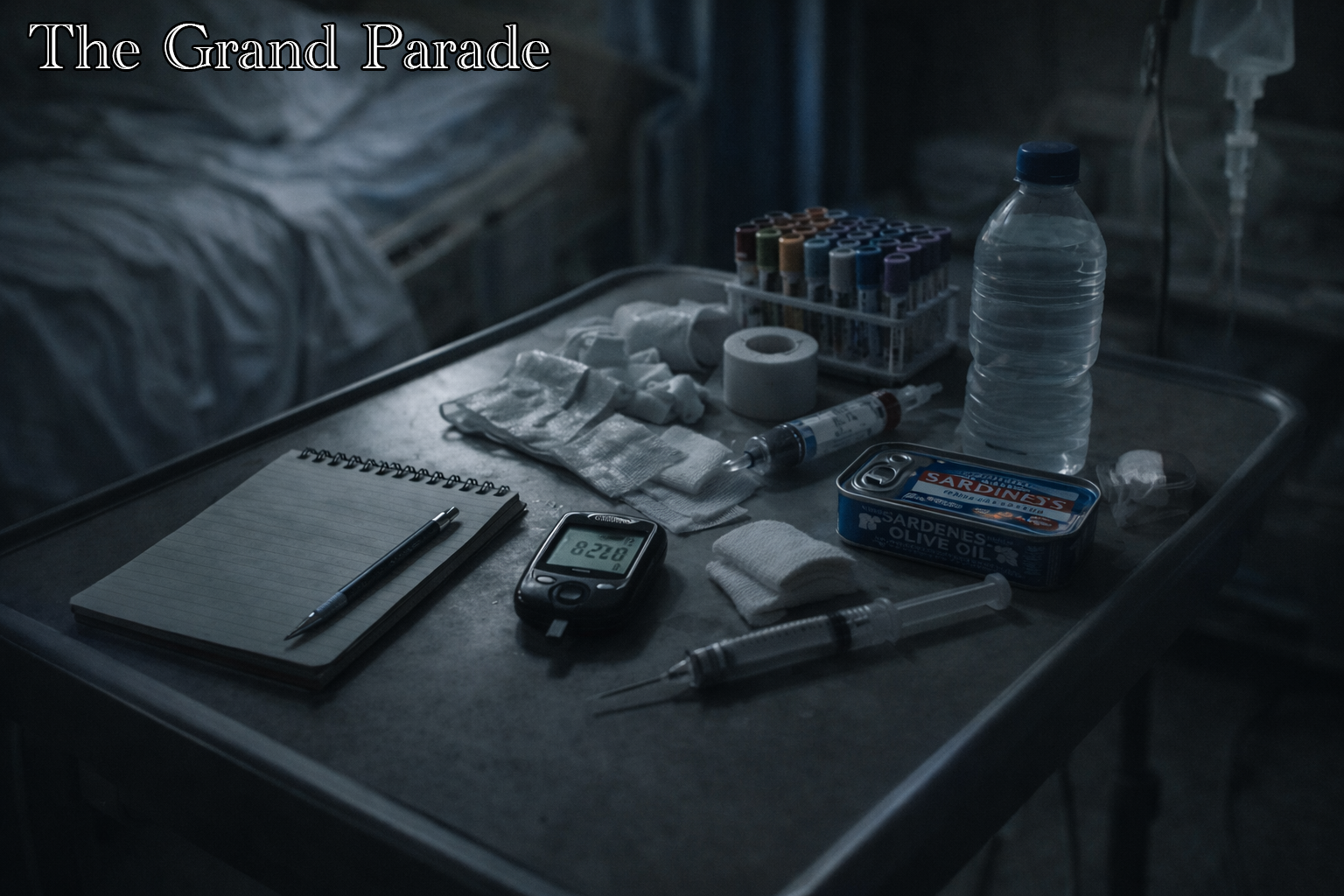
The Grand Parade
The Impella went in on October 3rd—a catheter-mounted pump threaded into the left ventricle to do the work the heart no longer could. Five percent ejection fraction going in. What happened in the hours afterward was not, primarily, a clinical experience.
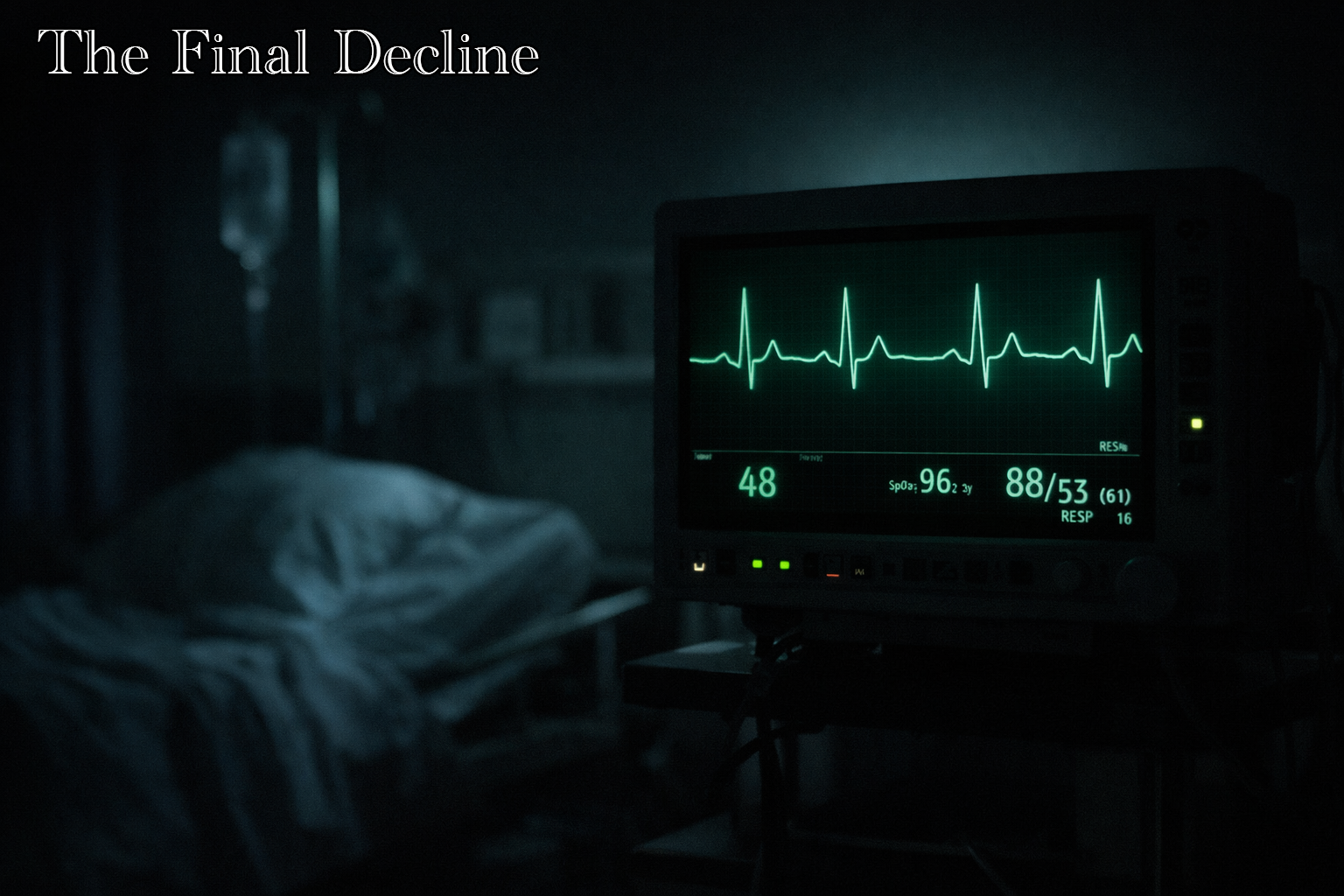
The Last Decline
My wife wanted me to go to the hospital sooner. She always did. Twenty-five years of the same standing argument: her instinct to call in the armada, mine to assess and manage. We were both right, and that’s the part that took longest to understand.
Twenty-Two Years….
Early thirties, recently married, a second child on the way. Slightly short of breath—unusual enough to mention, not unusual enough to worry about. My cardiologist ordered the standard workup to rule things out, then came back into the room, sat down, and said my case had just become a lot more interesting.

I Chose Life Three Times
Death came to my room more than once. The first time I was at home, alone in the dark, and woke to a figure crouched near the ceiling with the patience of something that had nowhere else to be. I had known for years I would die at fifty-five.
Life After Transplant — The ongoing reality of living with someone else's heart.
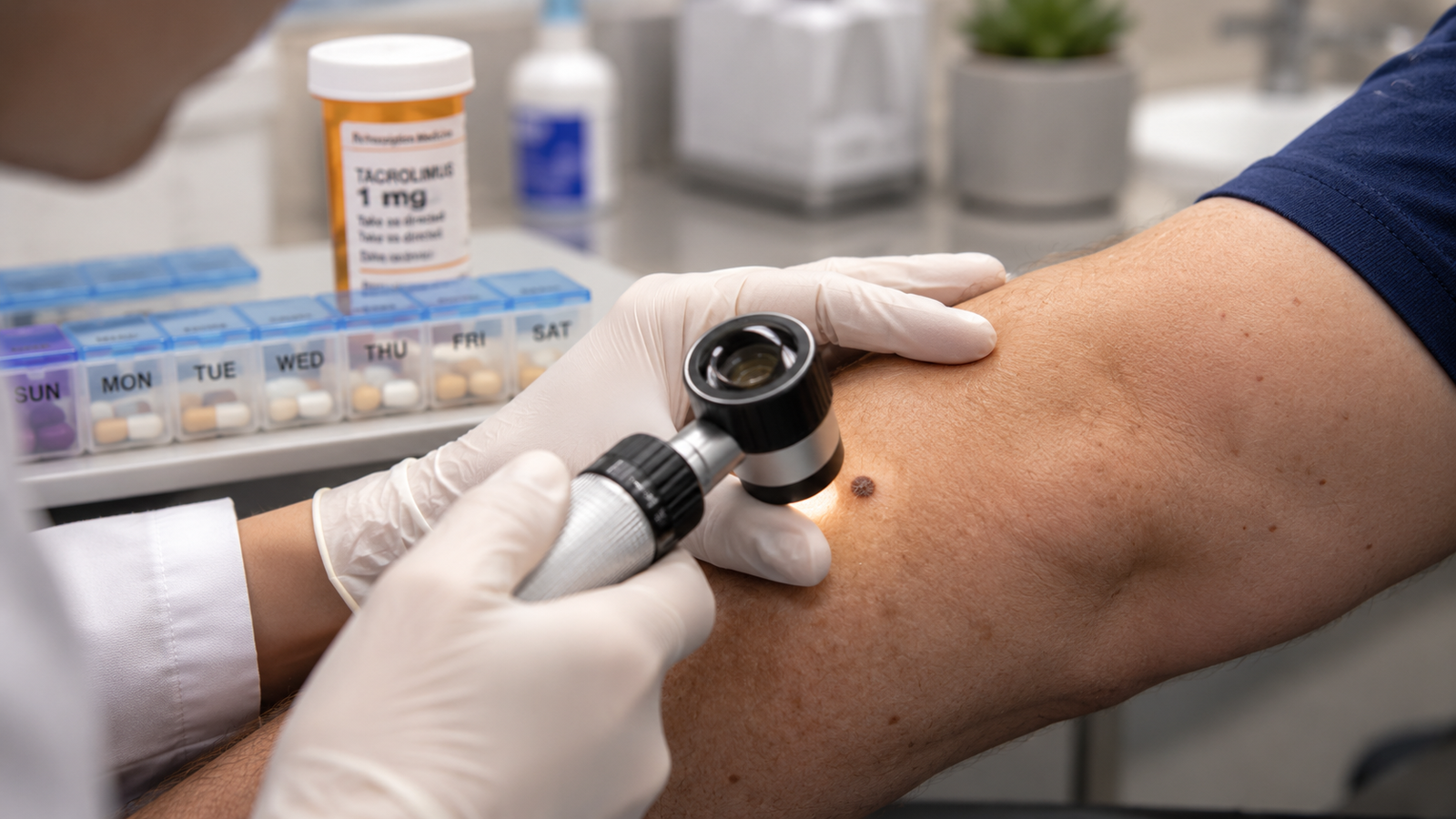
The Skin You’re In
Head to toe, literally. The dermatologist worked scalp to legs with the kind of systematic attention that makes you realize how rarely anyone looks at you that carefully. A skin tag off the back, a biopsy off the arm, and a short list of things to watch for.

The Year of Living Carefully
Home nine days after the transplant, four days before Thanksgiving, cold and flu season already underway and COVID still the bigger worry of the three. My immune system had just been deliberately suppressed to its lowest point. The timing was not ideal.
Health & Management — The medications, the labs, the day-to-day mechanics.

Intimacy and the Transplant Recipient’s Psyche
The central problem after transplant is not dysfunction but silence — two people protecting each other from the same unspoken fears. What lives in that silence, what it costs, and what becomes possible when it ends.
While You Were Sleeping
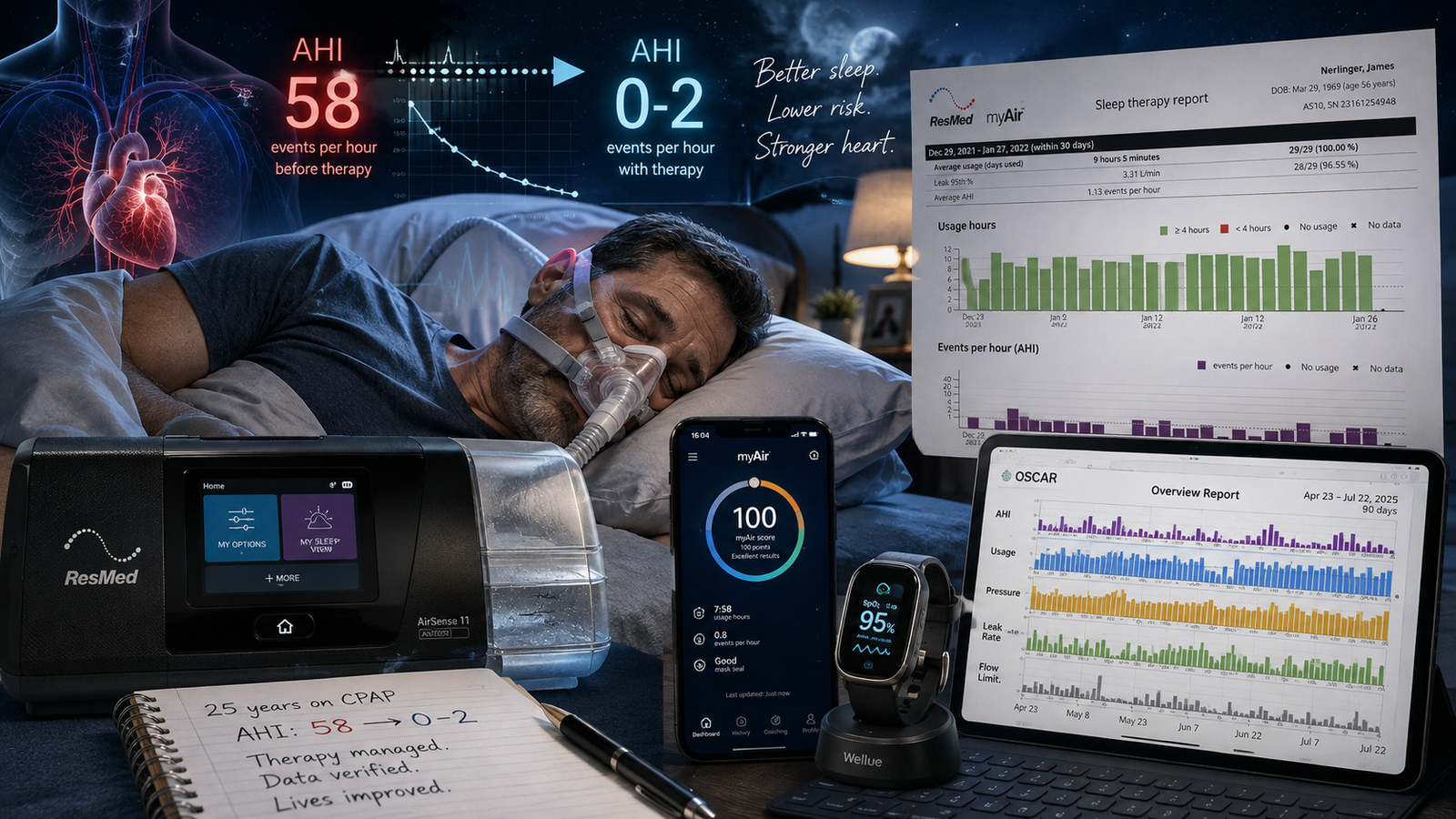
My number was 58. For twenty-five years, on a bad night, I stopped breathing or nearly did it almost once a minute. Tonight, with the machine running beside the bed the way it has for a quarter century, that number sits between zero and two.

What Your Ring Actually Knows
Wearables can tell you a remarkable amount about your body. The trick is knowing what they measured, what they inferred, and what they simply guessed. The distance between the sensor and the number on your screen matters more than almost anything else about the device.

A Tea By Any Other Name
Someone asks the group about tea, and before the question is properly answered the same reply turns up: I drink Earl Grey five days a week and I’m fine. That sentence establishes exactly one thing, and it isn’t the thing people think it is.

It Looks Like Food
The dangerous things announce themselves: the amber vial, the childproof cap, the pharmacist’s short speech at the counter. The harder part is the coffee. The comfort tea. The gummy on the nightstand. The sparkling water in the checkout cooler.

Not Everyone Lives Down the Road
There’s an assumption quietly embedded in transplant medicine: the hospital is here, and therefore so are you. Nobody says it out loud. I live fifteen minutes from the building, so distance was never my problem. For a lot of recipients it’s the hardest variable in the entire process.

Holistic Living
There’s a grief in transplant circles that doesn’t get named often enough. Not the grief of nearly dying, or the long wait, or the recovery. Quieter than those—the grief of losing the entire system by which you understood health itself.
Glucose Management After Transplant
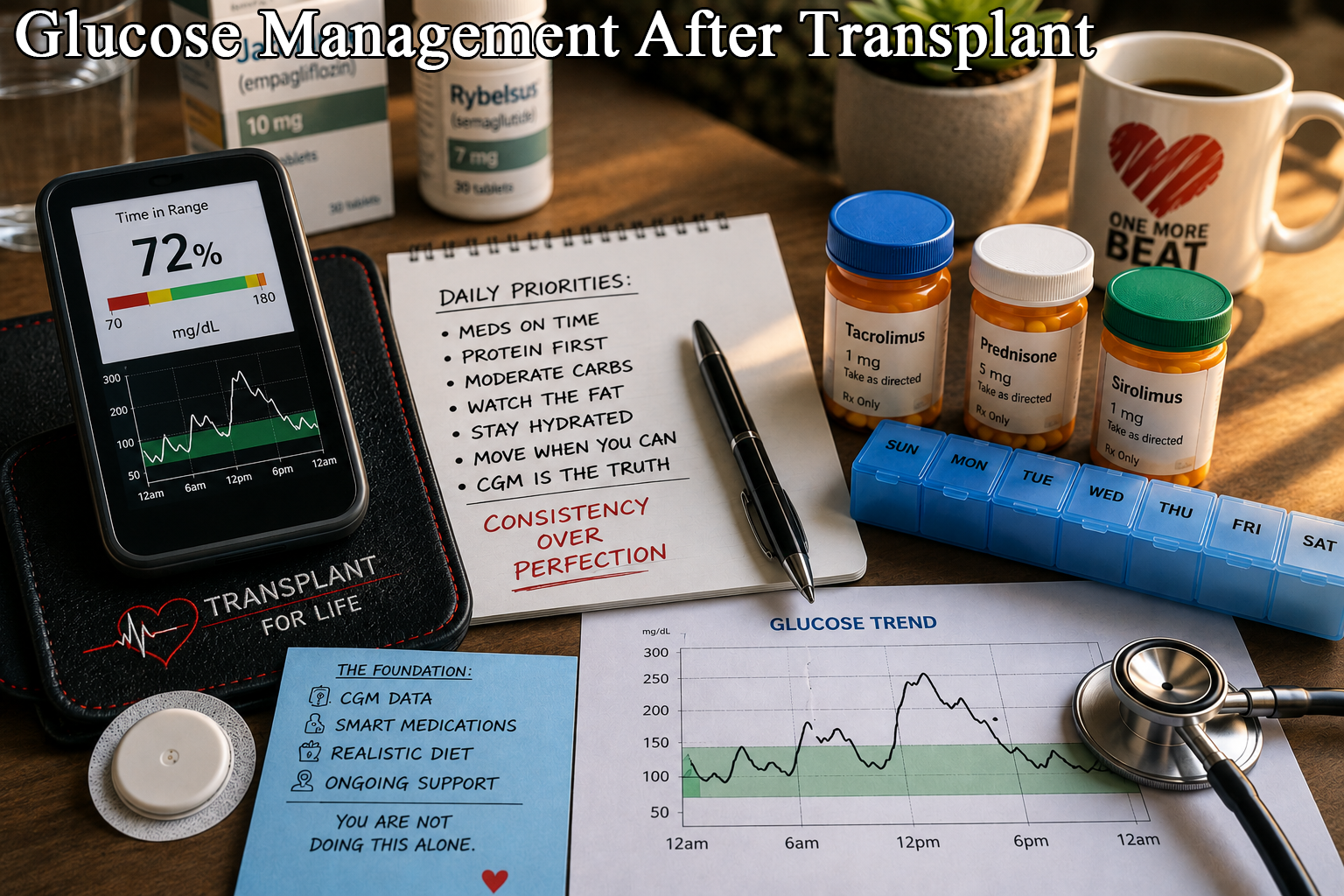
Nearly every heart transplant recipient meets insulin in the first weeks. The only question is whether you come home on it. That isn’t a prediction about outcomes—it’s pharmacology. The immunosuppression produces a glucose load no oral agent can adequately manage.
All About Prednisone
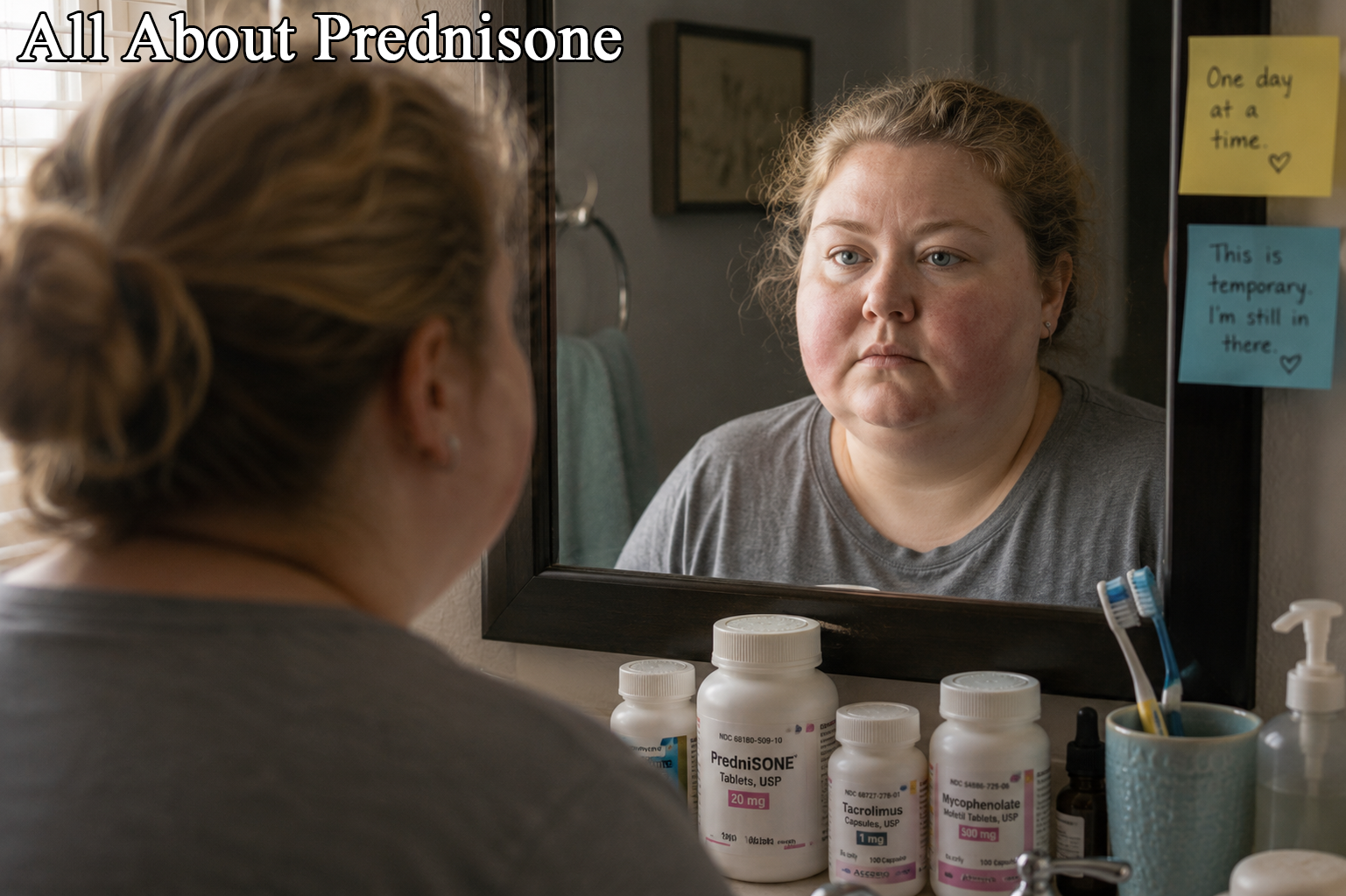
Most people have taken prednisone at some point—a five-day dose pack, a short course after a procedure. It works fast, the side effects are manageable, and then it’s done. That experience creates a frame of reference that does not apply after a transplant.
All About Tacrolimus
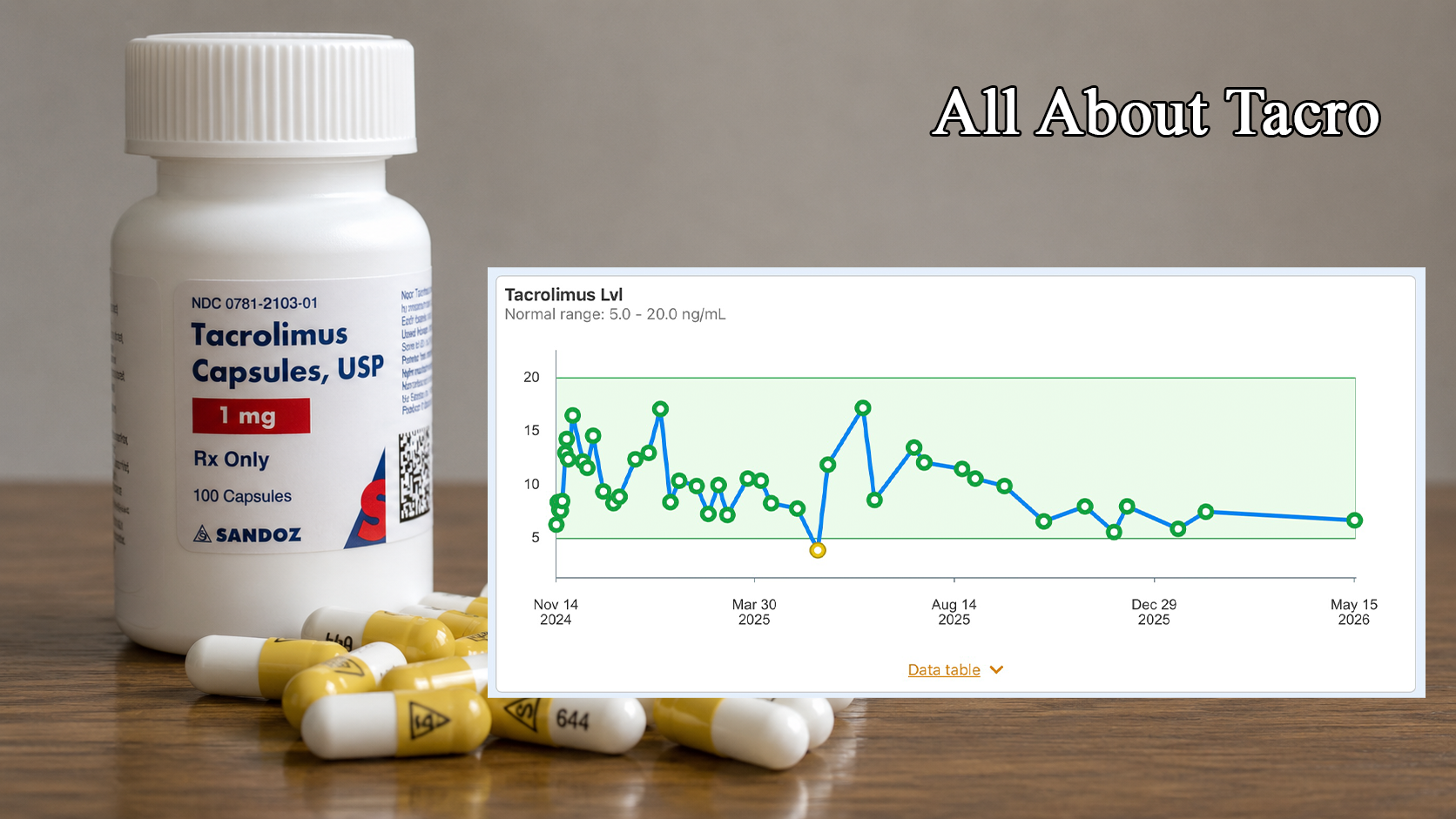
You came home from the hospital with a pill bottle. Twice daily, same times every day, and the instructions are presented as non-negotiable. Where the drug came from, what the trough number actually means, what moves it, and what the real side-effect landscape looks like.
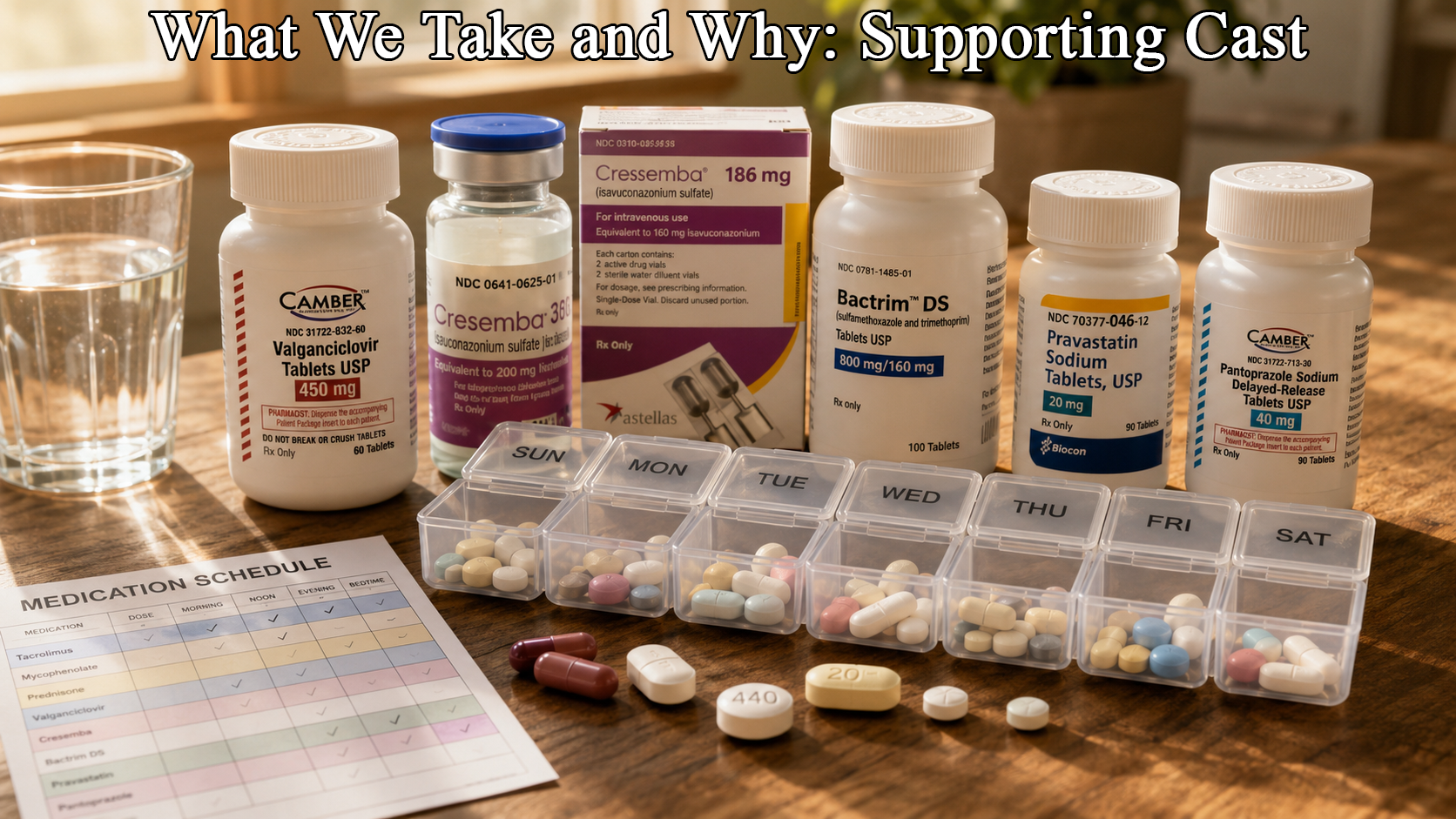
What We Take and Why: Supporting Cast
Immunosuppression gets most of the attention, and it should. But it isn’t the only thing in the bag you bring home. A second tier of medications exists because immunosuppression opens specific doors a healthy immune system keeps closed. Each one is standing guard at a particular door.
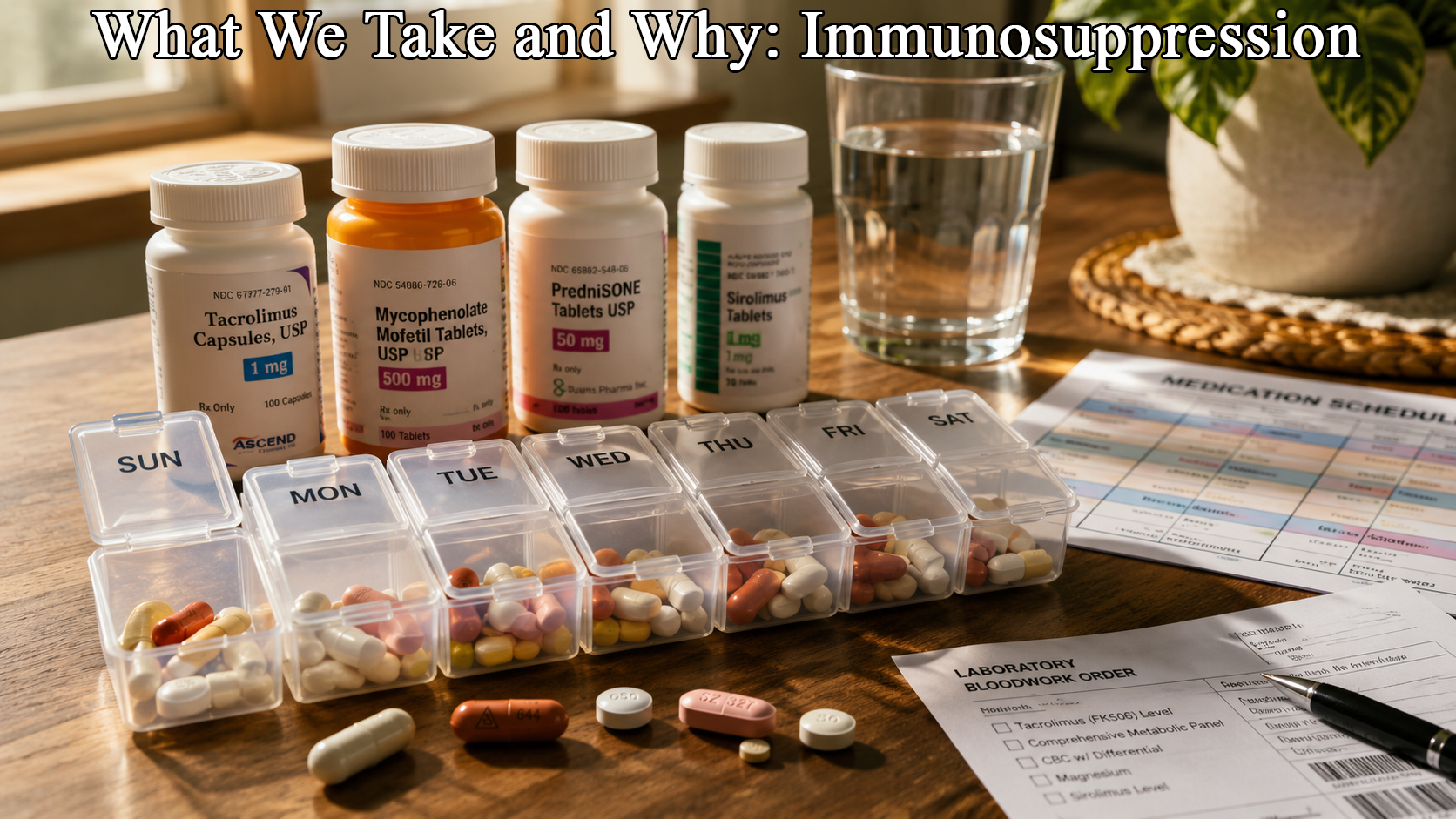
What We Take and Why: Immunosuppression
The transplanted heart is living tissue carrying someone else’s genetic signature, and the immune system was built to treat exactly that as a threat. That isn’t a malfunction. It’s the system doing precisely what it was designed to do.

The Magnesium Problem
Every transplant group has the same post, usually around two in the morning: why am I always low on magnesium, and why doesn’t taking more of it fix anything? The answer runs through kidney physiology, drug pharmacology, and the particular frustration of a supplement doing a job the body keeps undoing.

What to Avoid and Why
Most people carry two assumptions into a transplant: that anything taken for years without incident is safe to continue, and that “natural” occupies a different category from “drug.” Both are wrong afterward, and the consequences run from destabilized medication levels to rejection.

Buying Time: The Impella
I texted Eric that morning to say things had taken another downturn and I might not come back from this. He answered the way Eric answers: a bad joke about the Six Million Dollar Man, then something that cut straight through. I went to the OR a few hours later.
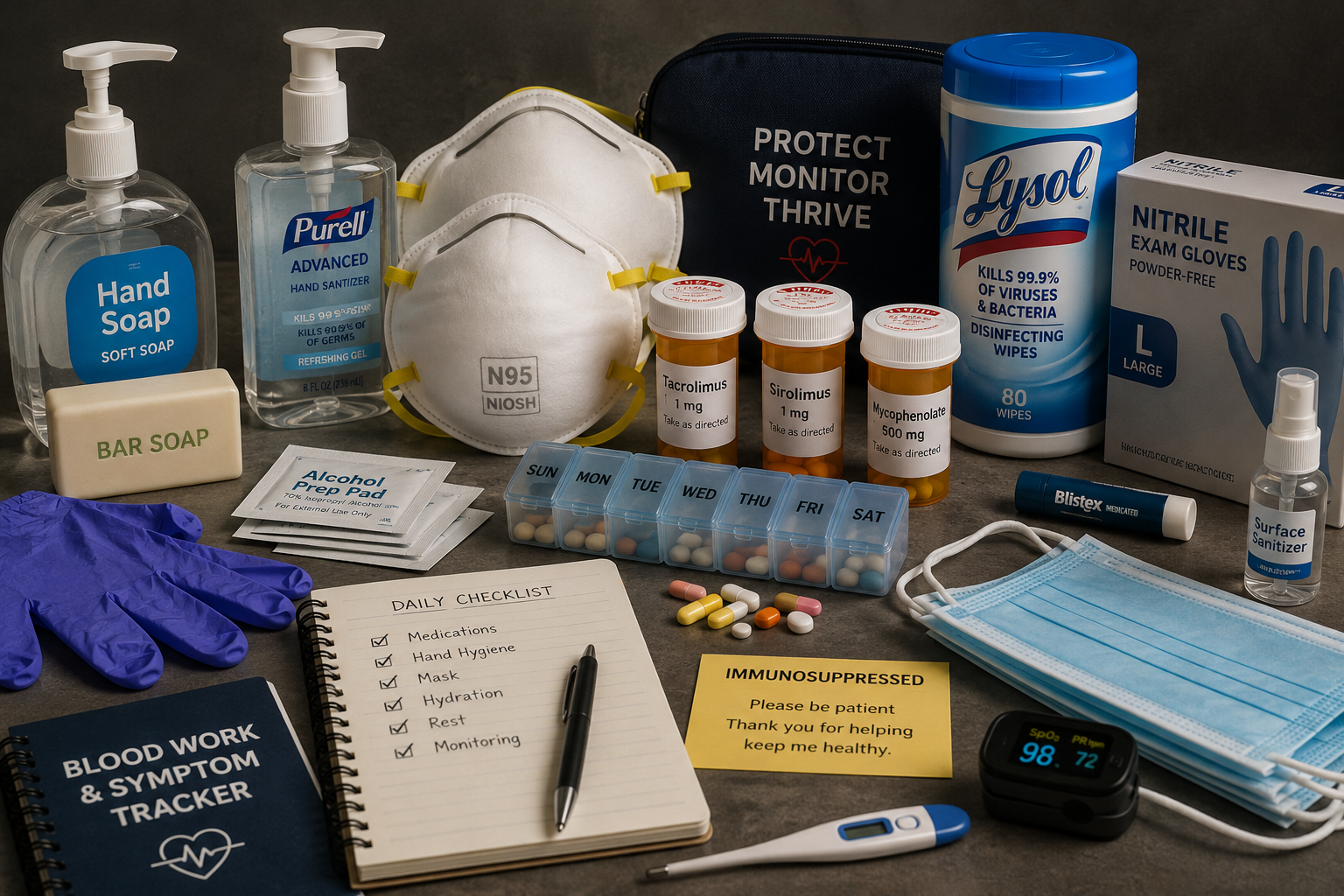
Living with Immunosuppression: What the Science Actually Says
The discharge paperwork is thorough the way a legal document is thorough—complete, technically accurate, and practically insufficient. It tells you what to do. It doesn’t tell you why the restrictions exist, how long they apply, or how the calculus changes as recovery progresses.
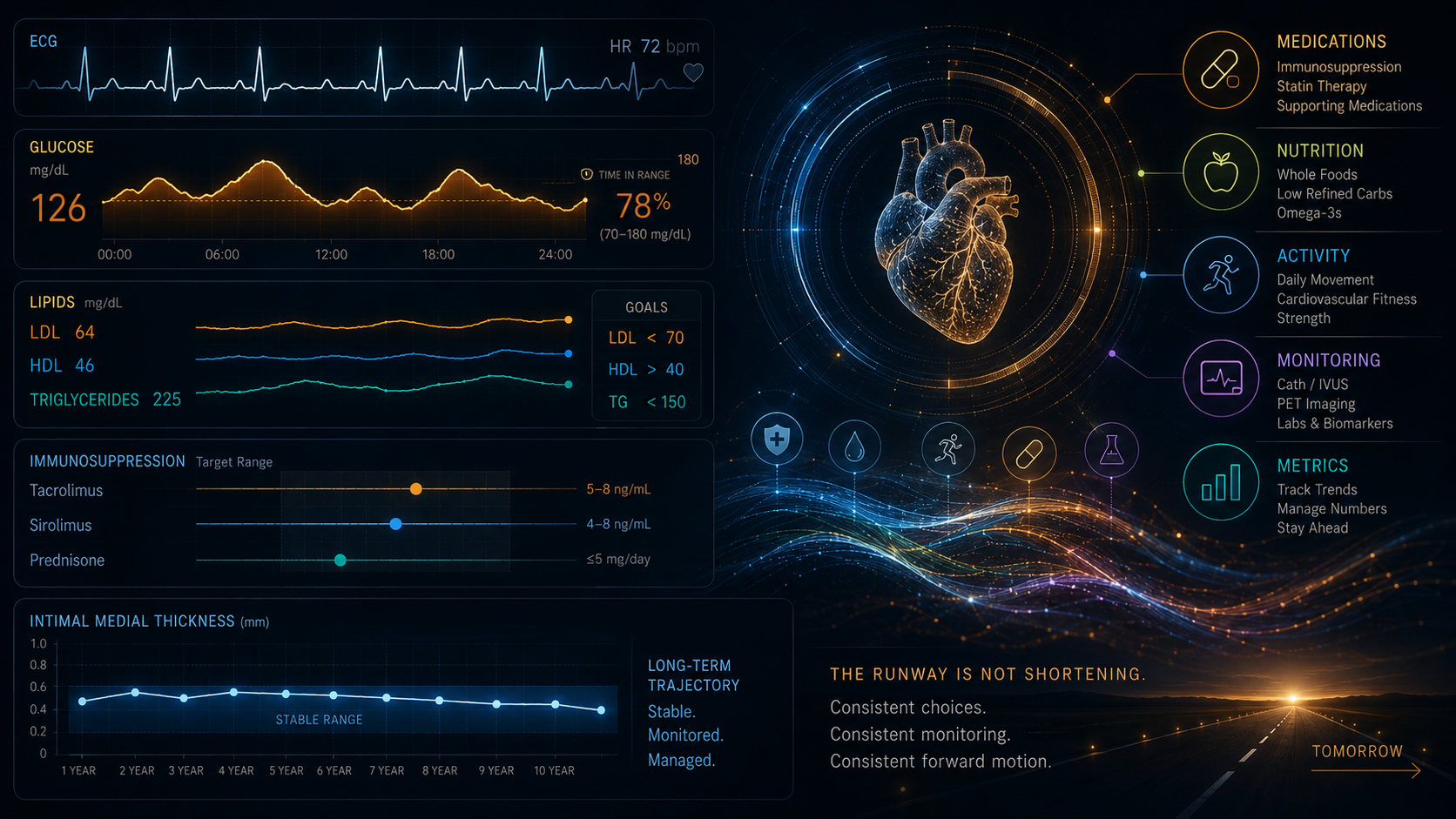
The Long Game: Treatment, Management, and What Comes Next
The diagnosis has landed and the team has already moved. What managing cardiac allograft vasculopathy actually looks like is not a single medication adjustment—it runs across immunosuppression, lipid pharmacology, metabolic management, diet, and surveillance, each piece addressing a different part of the problem.

The Diagnosis Nobody Prepares You For
A year out, the numbers looked the way you hope numbers look. Ejection fraction solid, pressures normal, biopsy clean, bloodwork good across the board. The team was pleased. I was pleased. Then they mentioned something else.
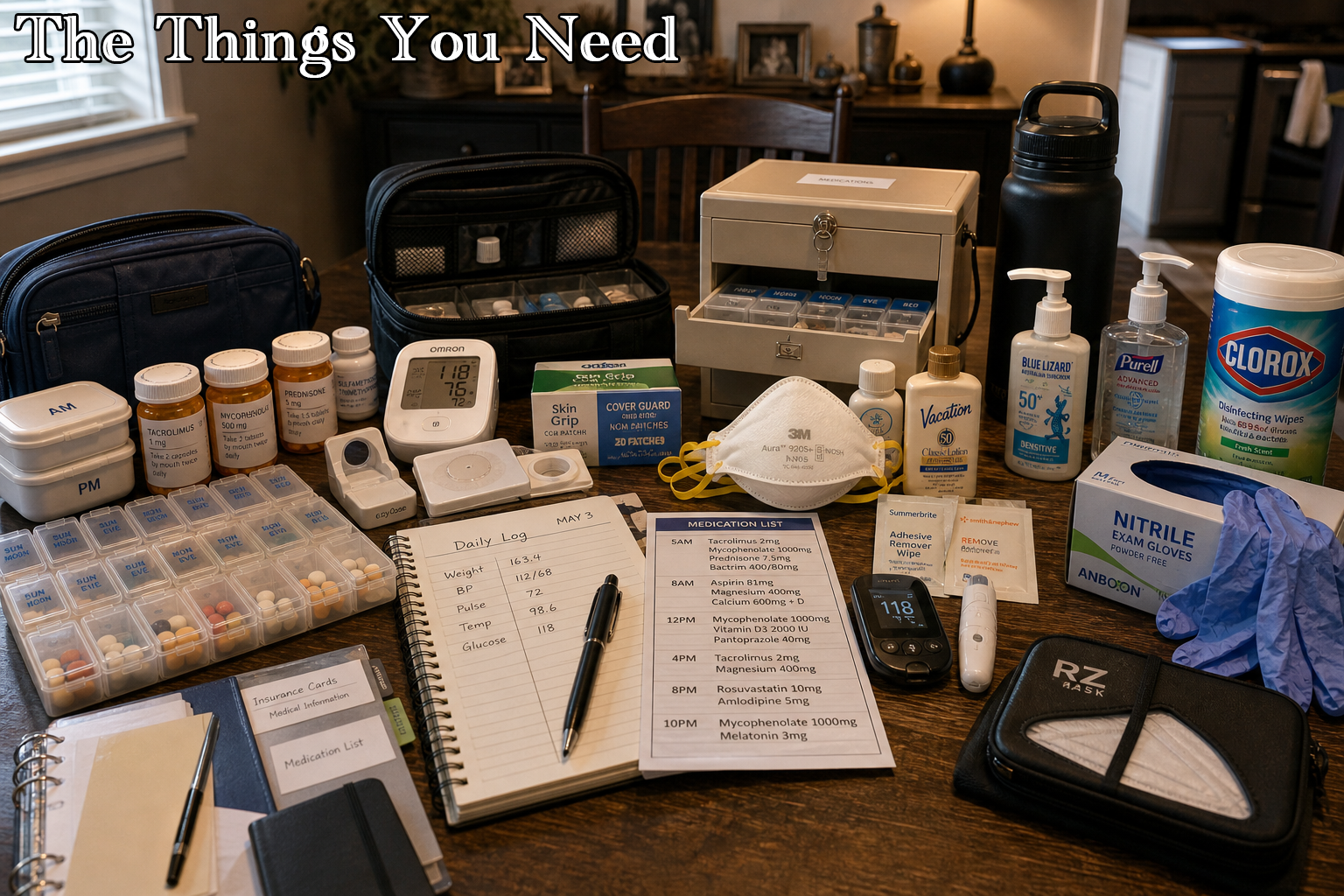
The Things You Need
Nobody hands you a shopping list at discharge. They hand you prescriptions, a follow-up schedule, and a set of dietary restrictions. Everything you actually need to manage the day-to-day—the tools, the devices, the supplies—you work out by trial and error, usually after the error.
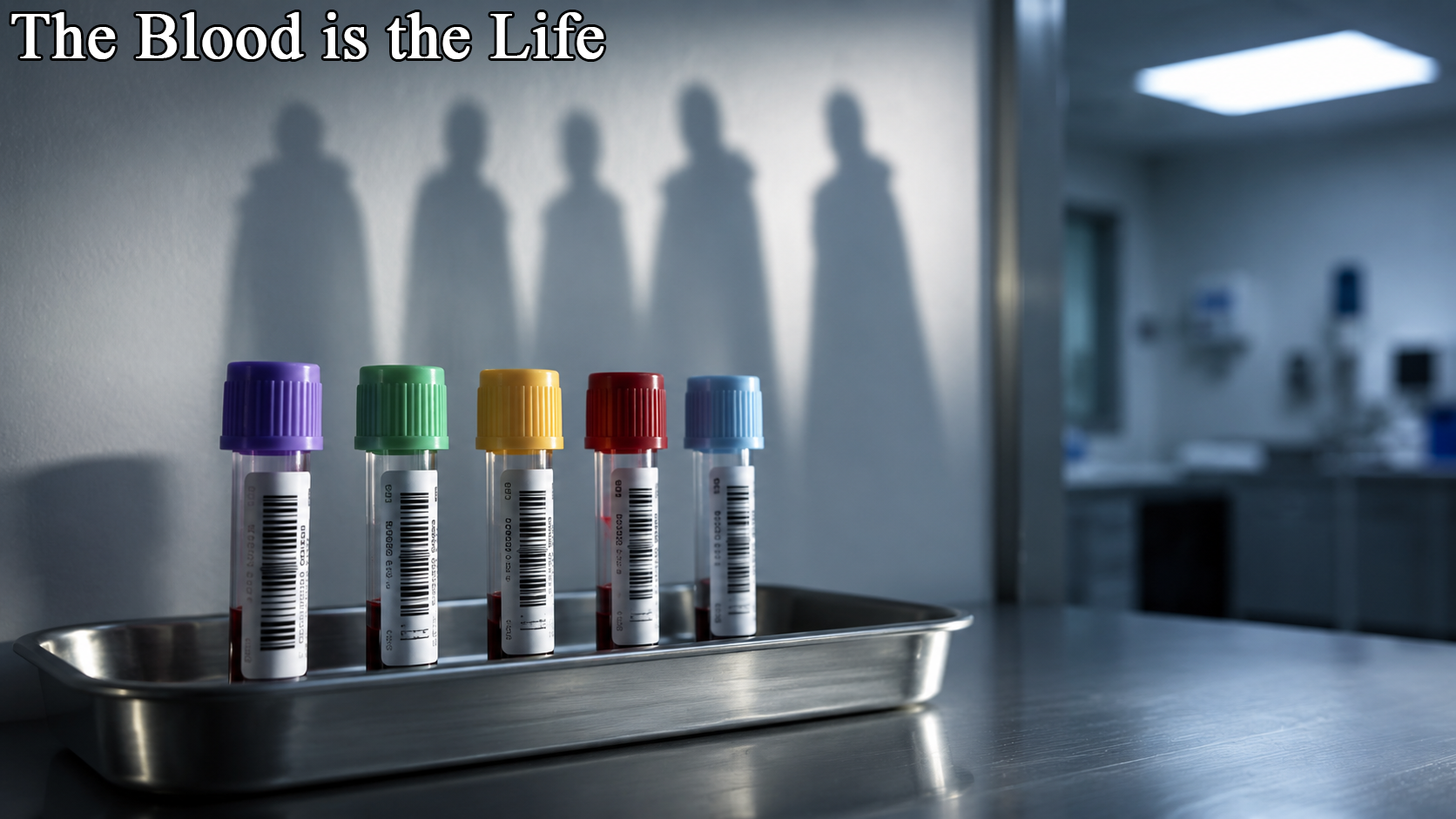
The Blood is the Life
Someone counted during the initial workup—roughly fifty vials in a single sitting. A full cup of yourself, handed over one vacuum-sealed tube at a time. Then near-daily draws, then twice weekly, then weekly, until both arms carry the geography of a patient under close surveillance.

The Fine Print
The discharge packet covers medications, follow-up appointments, dietary restrictions, and warning signs. It does not cover what the next several months are going to feel like: crying without a cause, dread that arrives in the morning attached to nothing, flatness where feeling should be.
Reflections — What survival actually looks like from the inside.

Testing My Limits
Before my heart failed I regularly worked 110-hour weeks. People told me I was working myself to death. What they didn’t understand is that I loved almost every minute of it—and during those years my ejection fraction actually normalized.

Weather Check
It is the first of September. It is ninety-five degrees outside and I am on my second full day of a head cold. That combination is not supposed to happen. Colds belong to the other end of the calendar, filed alongside short days and dry air and everybody packed indoors together. Heat belongs to summer, which is supposed to be the season when the respiratory viruses take a few months off. The two of them showed up together anyway, and I am keeping a closer eye on this one than I would have a few years ago, because immunosuppression makes


The Mortality Clause
There’s a clause in the contract of being alive that everyone carries and almost nobody reads. The arrangement is temporary. It will end. The terms are non-negotiable and the timeline is undisclosed. You signed it the moment you arrived, without reading it.
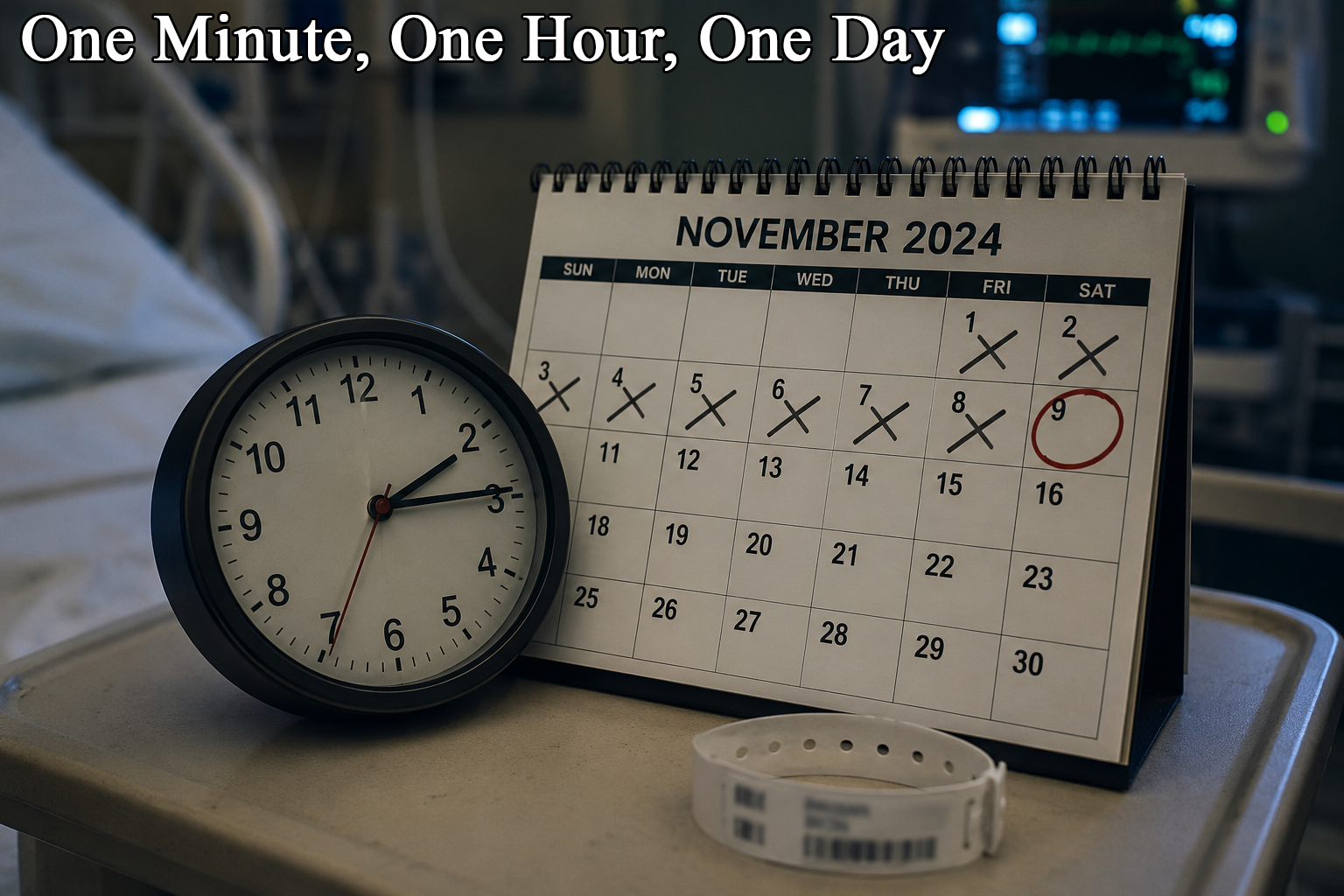
One Minute, One Hour, One Day
There’s a moment when the psychological weight of a transplant lands fully. For some it’s the listing, for others the wait, or the table, or the long recovery after. For me it came before any of that—the moment I said yes.

The Impossible Transaction
Almost every transplant candidate thinks it and almost none of them say it out loud: someone has to die for me to live. It arrives before the testing, before the waitlist, before surgery is anything but an idea. The first crisis is usually moral.


Am I Still Me?
The Egyptians pulled the brain out through the nose with a hook and threw it away. It was packing material. The heart they left exactly where it was, because the heart was where the person lived. They weren’t eccentric in this, and they weren’t alone.
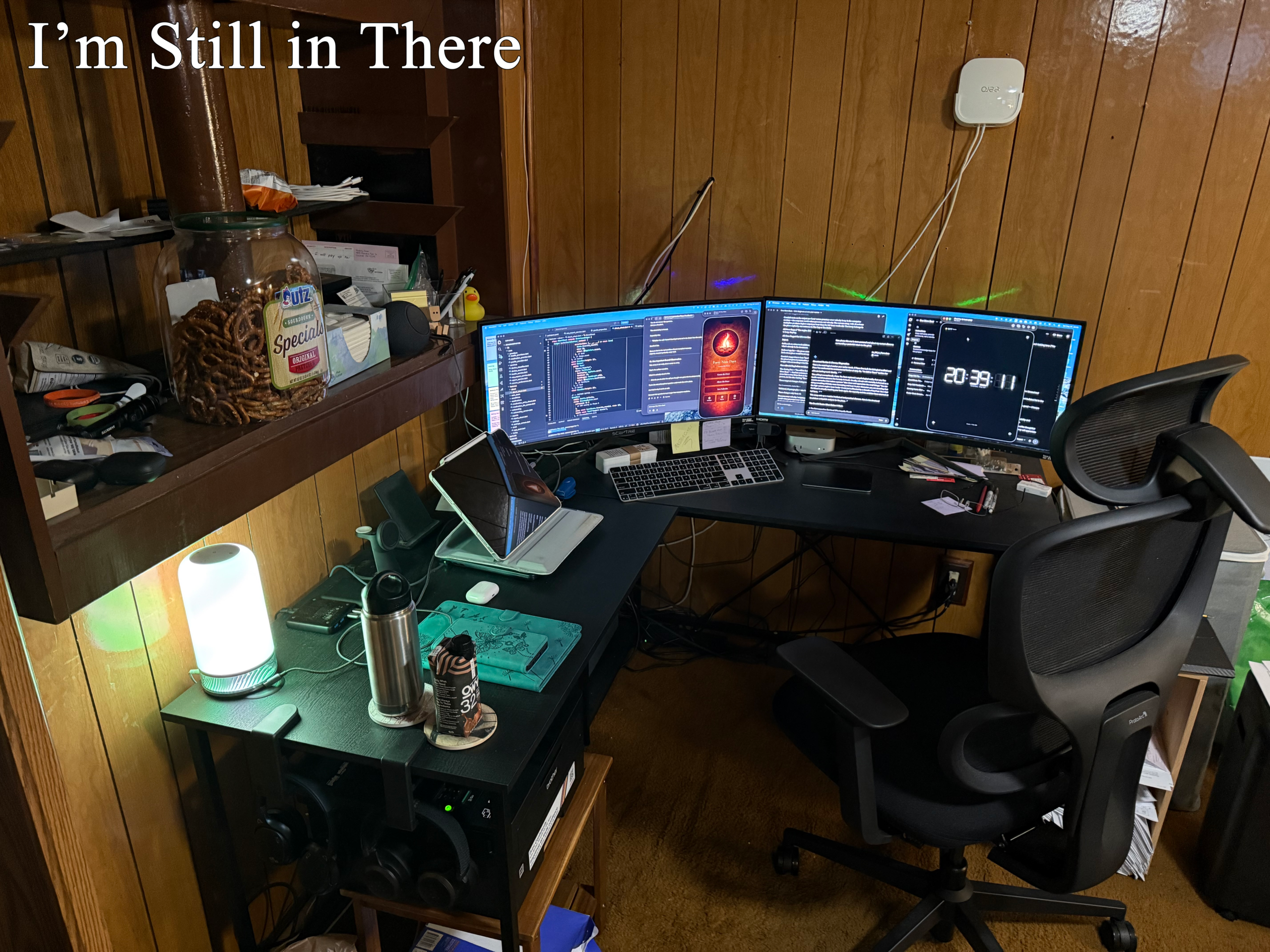
I’m Still in There
There’s a moment in the recovery arc when you realize the person you’ve been looking for was there the whole time. Not rebuilt. Not reconstructed from parts. Retrieved—the way you find something you misplaced and recognize it instantly.


When the Dam Leaks
The heart was beating, the surgery was done, and by every external measure the crisis had passed. What the discharge packet doesn’t cover is that the emotional accounting hasn’t started yet—and that the prednisone exposure began weeks before the transplant did.

Brain Over Heart
The number 55 had been hanging there for years. Not a premonition—a calculation, the kind that runs quietly in the background when you know your body well enough and have been paying attention long enough to see where the line goes. When things fell apart after that birthday, it didn’t surprise me.
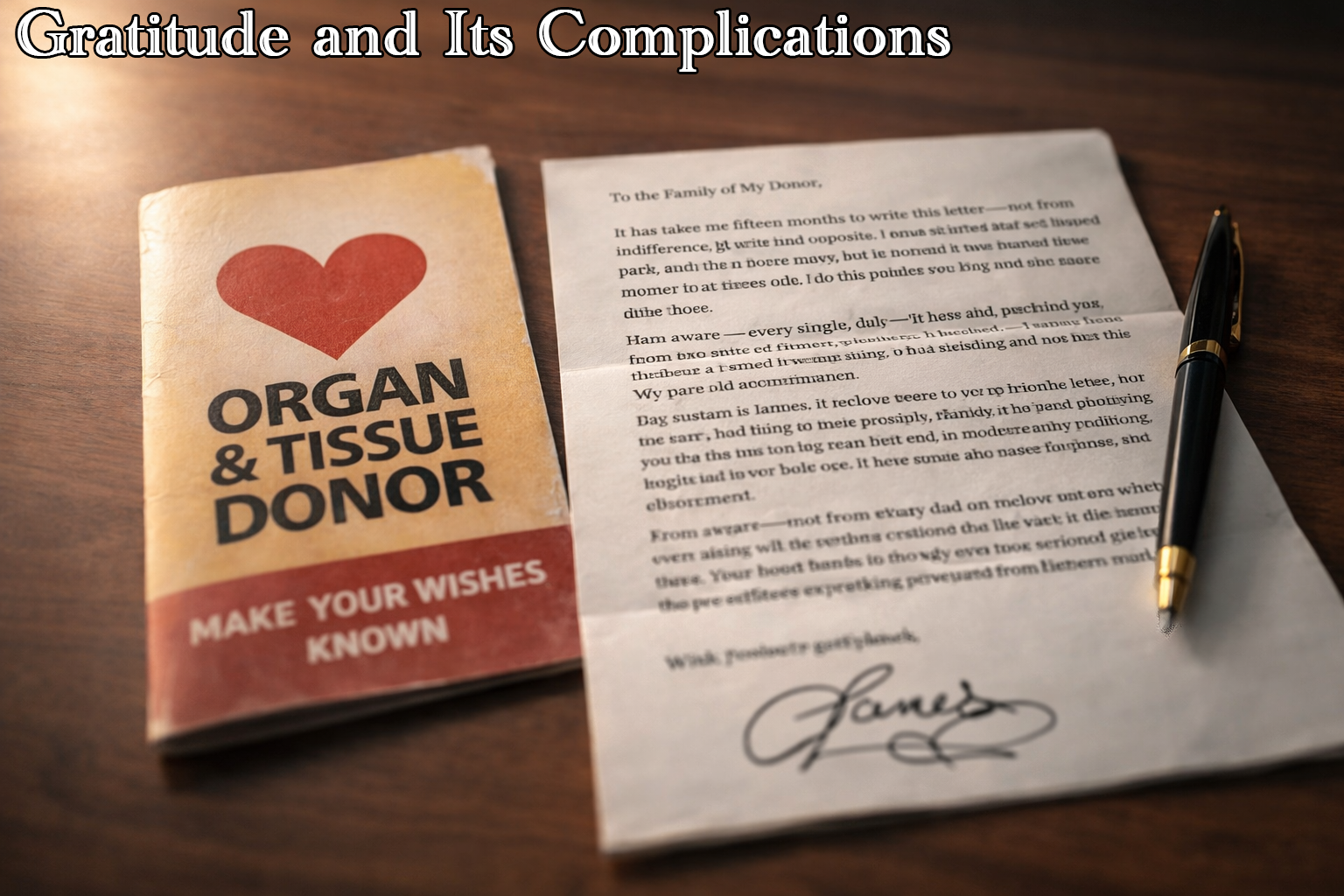
Gratitude and Its Complications
More blood moving, more oxygen reaching places that had been running on fumes for years. I hadn’t known how far gone I was until the contrast arrived. Then, lying in the ICU with nothing to do but think, the questions started accumulating.
Caregivers Corner — For the Other Side of the Bed
Not Everyone Lives Down the Road
There’s an assumption quietly embedded in transplant medicine: the hospital is here, and therefore so are you. Nobody says it out loud. I live fifteen minutes from the building, so distance was never my problem. For a lot of recipients it’s the hardest variable in the entire process.
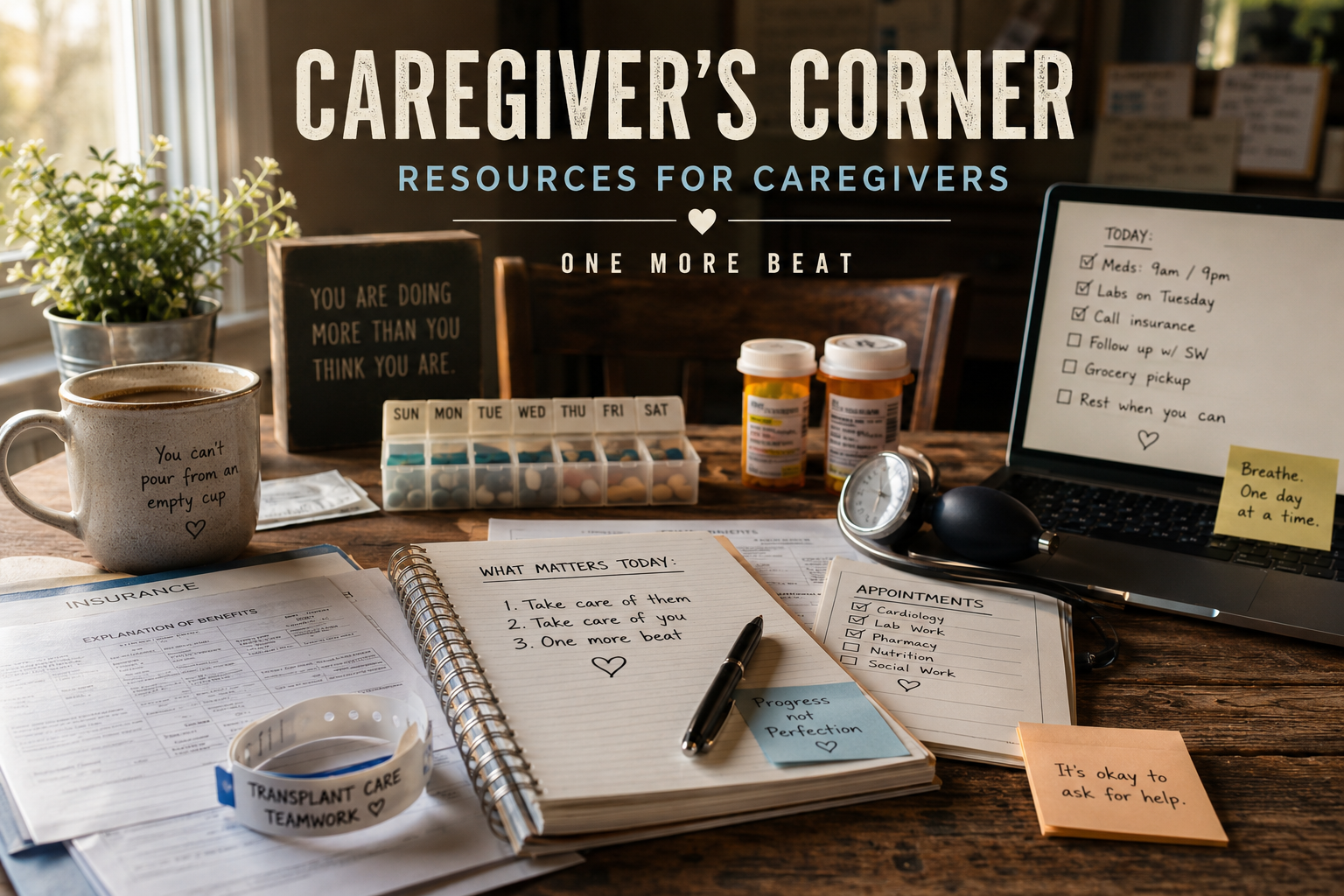
Resources for Caregivers
Transplant centers provide services for families, not just for patients, and most caregivers never learn they can ask. These aren’t perks or extras. Most people find them too late. If you’re reading this before the transplant, that’s the best possible time.

A Child’s View
The medical system focuses on the patient. Friends and family rally around the caregiver. The children get treated as small satellites orbiting an emergency happening somewhere above their heads. They’re inside the same catastrophe with the least power to understand it and the least permission to say so.

Who Am I Now?
The crisis is over, the patient is recovering, and everyone around the caregiver is exhaling. The caregiver is standing in the middle of their own life feeling like a stranger in it—a quiet wrongness that doesn’t respond to the fact that things are better now.
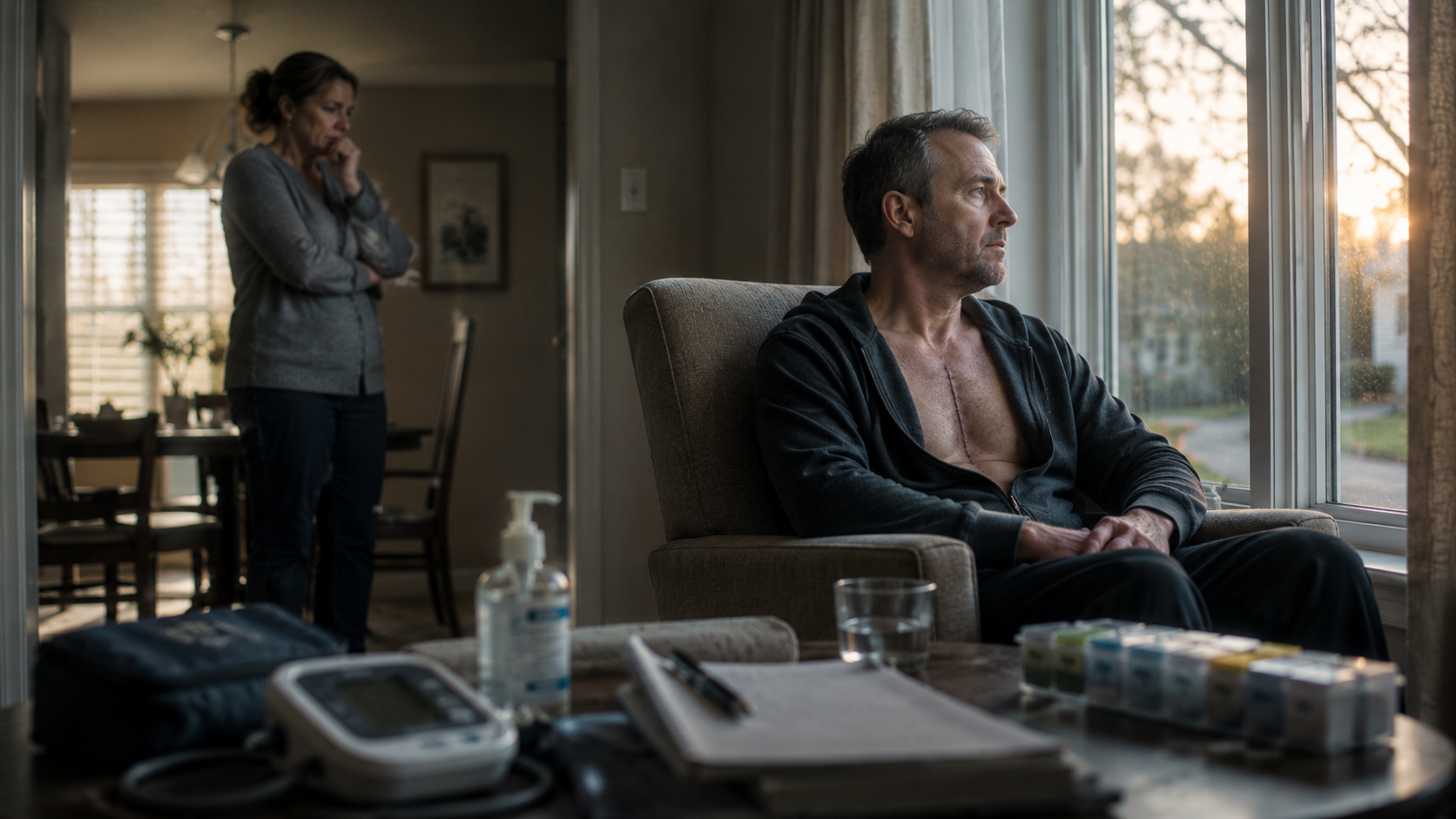
Who Came Home
The door opens, the person you’ve reorganized your entire life around walks through it, and something is immediately, quietly off. Not wrong, exactly. Not alarming. Just different in ways you don’t have language for, because nobody gave you any.
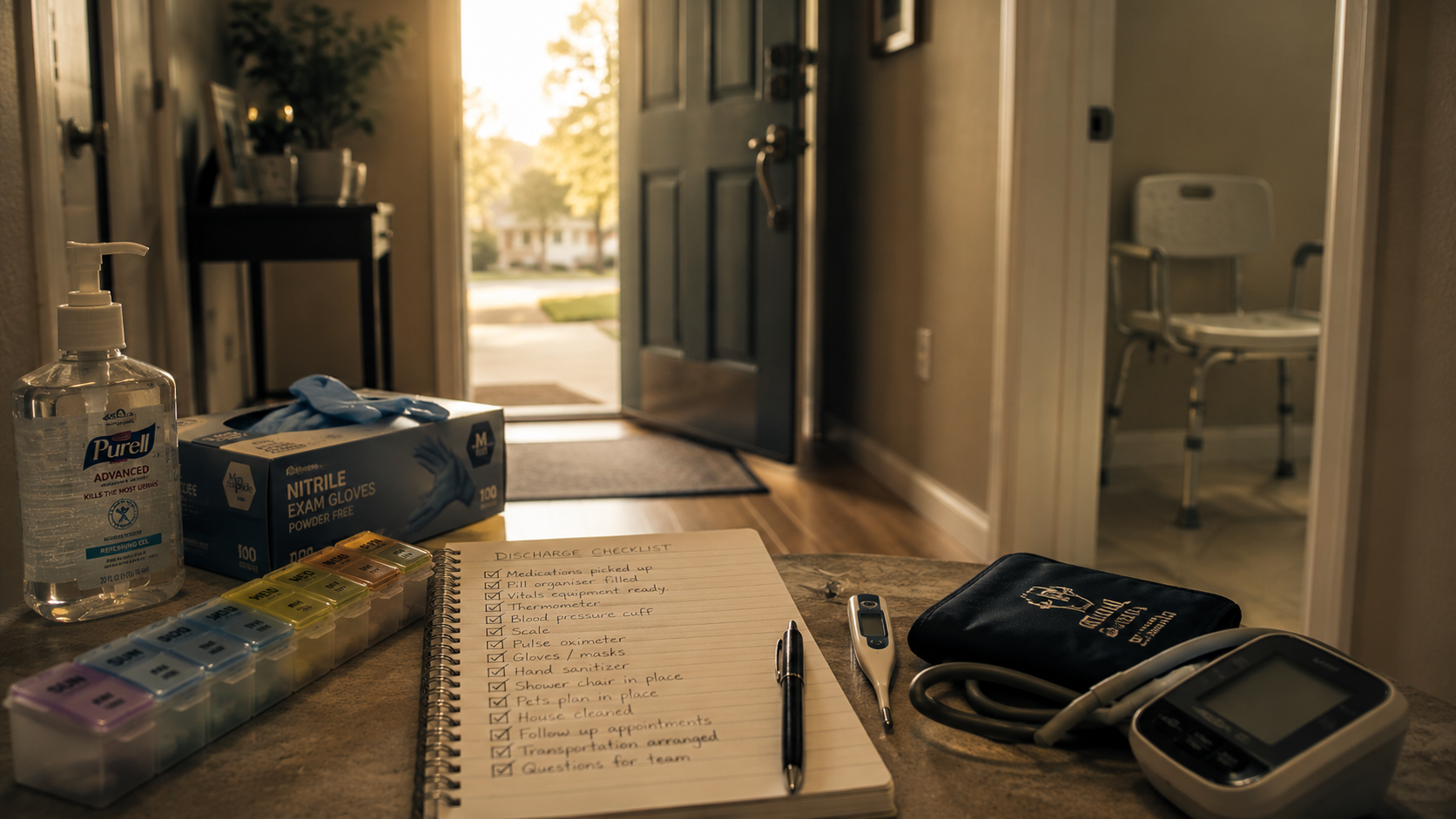
The House Before the Door Opens
The discharge date arrives and the caregiver finally has something concrete and completable to do. So they clean the house, move the furniture, make the lists. What most of them are preparing for is the person who left.
The Hospitalization
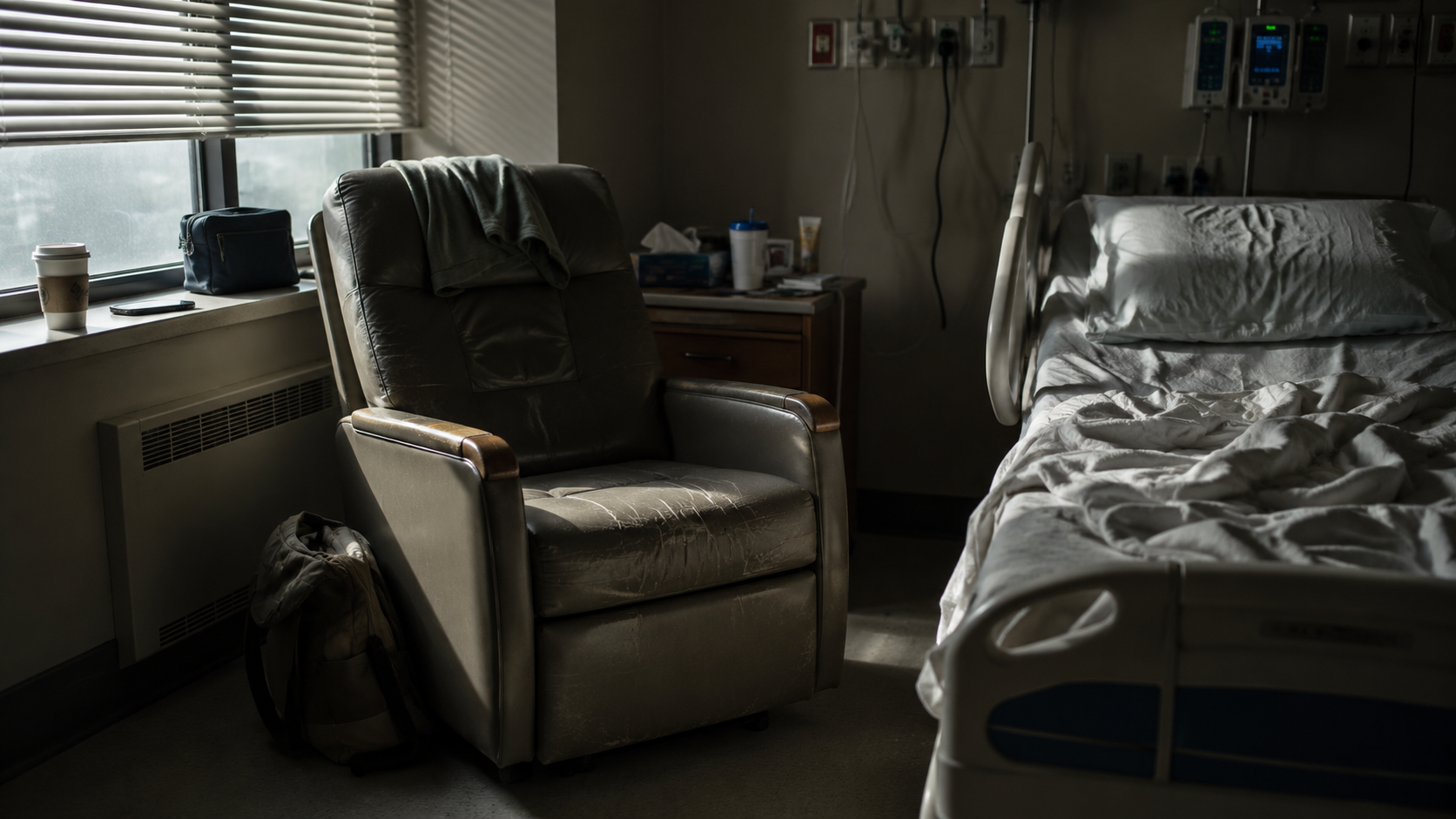
The hospital does not run on normal time. Days are measured in lab draws, rounds, imaging schedules, and shift changes. Tuesday and Thursday become indistinguishable. A week passes and the caregiver cannot account for most of it.

Permission to Feel
Be strong. Be grateful. Be present. Be hopeful. Hold it together for the person in the bed, the children at home, the medical team, and the friends who are watching your face for cues about how worried to be. The actual experience looks nothing like that script.

The Roads In
For the caregiver, the story usually started months before the surgery. Sometimes years. Sometimes so gradually they can’t name the moment it began, only the moment they looked up and saw how far they’d already traveled. There are four roads in.
The Other Side of the Bed
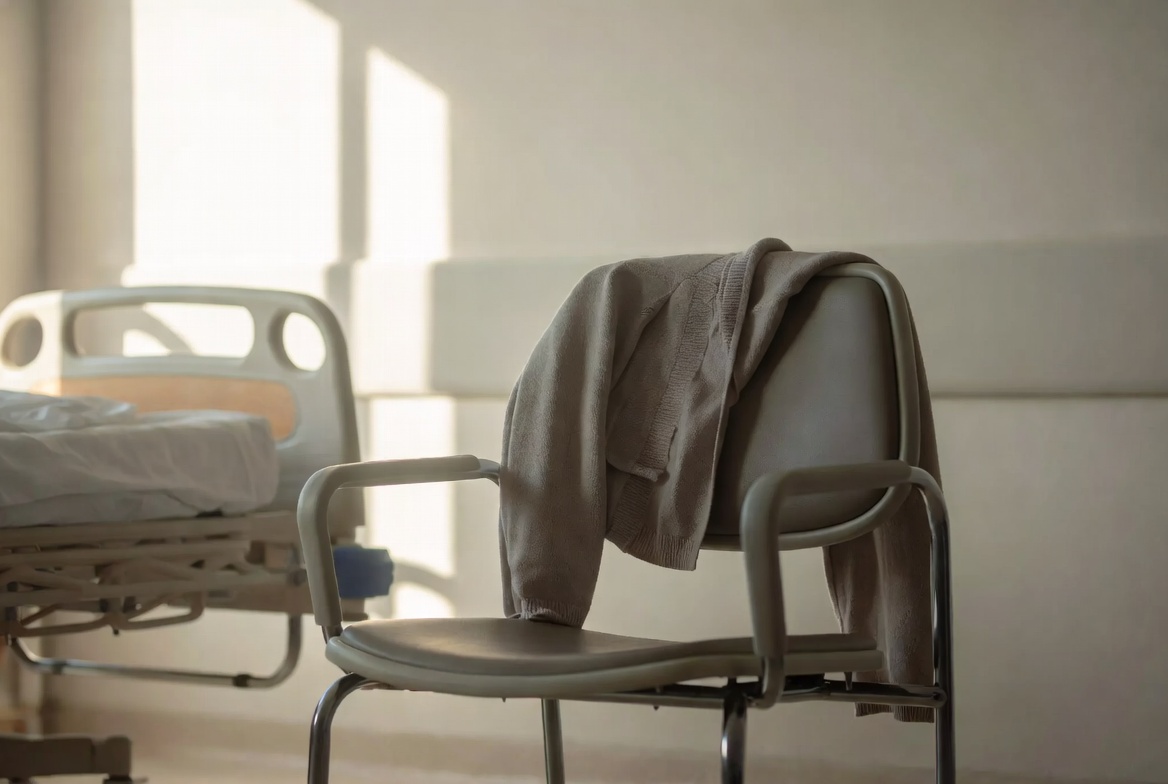
The transplant system is extraordinarily good at keeping the patient alive. What it’s much less good at is supporting the person in the chair beside the bed—treated like a fixed piece of medical equipment, expected to plug in, function flawlessly, and require no maintenance.